


 Francais
 Deutsch
 Italiano

Refine Your Search
Etain France 1944 stock footage and images
- Showing 97 to 102 of 9965 results more
 Hide
Color Sound

German film giving their perspective on Allied invasion of Europe in World War II
Film opens with slate showing date: 6 June 1944, in World War 2. German newspapers report that combined forces of Britain, and the Soviet Union finally decided to launch their invasion of Europe. Headlines say "Invasion launched at Moscow's orders." A map highlights cities along the coast of France. Formations of Allied warplanes shown in flight overhead. Light signals seen in the dark as German forces send information about the attacks. Closeups of German military men communicating by radio and telegraph. Defense forces are called to battle stations by alarms and announcements. Responding soldiers grab rifles from a rack and rush through tunnels in their fortifications. They climb to man weapons atop their bunkers. Artillery shells being raised by hoists to them from bunkers below. Searchlights scan the dark sky for Allied aircraft, and anti-aircraft guns fire in the night, including a 2 cm Flakvierling 38, four-barreled gun. German forces firing on Allied paratroopers. German sailors aboard destroyers and fast attack "E" boats fire at Allied warships. Daylight scenes of Allied ships and German shore batteries firing at them. U.S. Porter-Class, and Benham-class destroyers firing at land targets in France. German soldiers loading and firing Atlantic Wall coastal defense guns. An allied ship explodes off the coast. More views of German coastal guns firing and another Allied ship hit and exploding. More coastal gunfire.

Liberation ceremony by the Mayor of Rennes in France.
August 1944: Liberation ceremony by the Mayor of Rennes in France. The Mayor, Allied officers and other city officials on a balcony. The U.S. and French flag hung from the balcony. People of the city gathered below to celebrate the liberation. French patriots round up collaborationists. Collaborationist men and women with torn clothes and painted faces paraded through the streets. An elderly man and woman with the French flag. (World War II period).

Army units parade and Valéry Marie René Georges Giscard d'Estaing lights a flame in Normandy, France.
A ceremony at a military cemetery near the site of the Allied invasion of Normandy, France(6th June 1944) to mark the 30th anniversary of the D-Day. British and French Army units parade. Gravestones and memorials in the foreground. Spectators stand holding flags. The troops salute. French President Valéry Marie René Georges Giscard d'Estaing lights a flame with others.
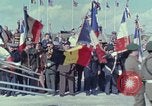
The USAFE band marches while Omar Nelson Bradley with other officers lays wreaths at a memorial in Normandy, France.
A ceremony at a military cemetery near the site of the Allied invasion of Normandy, France(6th June 1944) to mark the 30th anniversary of the D-Day. A band of the United States Air Forces in Europe(USAFE) marches. Girls bring wreaths. U.S. Army General Omar Nelson Bradley and other Allied officers lay wreaths at a memorial. The officers salute.
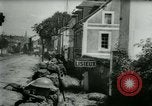
British soldiers fight the Nazis in Lisieux and General Charles De Gaulle visits Chartres en route to Paris liberation
British soldiers enter the town of Lisieux, France. Armed British soldiers patrol the streets. Soldiers walk past the destroyed buildings. Firing and bombardment. Soldiers and British tanks fire at Nazis hiding in the town. A French civilian woman brings a glass of water and a pitcher to a prone British soldier firing at German positions from a street corner. Soldier prone firing a machine gun. People in the town of Chartres, a center of resistance. A young woman resistance soldier talks to an Allied French soldier. French General Charles De Gaulle and other officers greeted by the town on August 23, 1944. De Gaulle addressed the town to commend their resistance. De Gaulle looks at the Chateau de Rambouillet in Rambouillet, France, from where he directed the French armored divisions in their push to Paris. Views of the palace, gardens, and a lake at the Chateau de Rambouillet with Charles De Gaulle standing beside the lake. (World War II period).
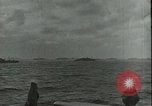
Soldiers of the 1st Infantry Division in England and during the invasion of Normandy and subsequent campaigns toward Germany (WW2)
Soldiers of the 1st Infantry Division training in England under General Clarence R Huebner, in preparation for the D-Day Normandy invasion in World War II. U.S. Navy ships underway at sea. Heavy naval guns bombard the coast of France on D-Day. U.S. Army soldiers seen during assault on Omaha beach with heavy losses on D-Day. U.S. soldiers and tanks encounter heavy German resistance in the "hedge rows." American soldiers digging trenches with shovels and picks and treating wounded comrade. Dead German soldier lying in street as Americans enter the town of Caumont (Caumont l'Eventé). Frenchman civilian pours wine for American soldier after they liberated Caumont l'Eventé from the entrenched German forces. An American helps a French civilian woman to reach a safe place crossing rubble. Damaged French houses along the sides of street. During rest, a soldier gives another a haircut, and another writes a letter. U.S. Air Force B-17s fly overhead and bomb near St. Lo, France on July 25, 1944. Other U.S. Army artillery units, the 4th and 9th Divisions, and General Patton's tanks provided support so the 1st Infantry (First Infantry or Big Red One) could occupy the area. Army combat engineers dig up mines and use construction equipment to clear debris. Wrecked houses and rubble. U.S. soldiers keep advancing through towns and eat and rest as they can. Road sign reads: "Coutances." First Infantry goes through Mortain, Etampes, Meaux, Soissons and across the Belgian border. German prisoners of war walk with their hands raised. German soldier digging out of fox hole. Siegfried Line and dragons teeth. Strong German resistance encountered at Aachen. Tanks fire in the field. House to house fighting in Aachen. Surrender of Aachen. A German flag laying in the street is run over by a U.S. military vehicle. German resistance is heavy during battle scenes in Battle of Hürtgen Forest. German and American artillery are seen in Hurtgen Forest. U.S. wounded treated. The 1st Division is pulled out for rest at the rear, in Belgium.
CRITICALPAST.COM: About Us | Contact Us | FAQs - How to Order | License Agreement | My Account | My Lightboxes | Shopping Cart | Advanced Search | Featured Collections | Website Terms & Conditions | Privacy Policy ©2026 CriticalPast LLC.
License Agreement |
Terms & Conditions |
Privacy Policy
©2026 CriticalPast LLC.