


 Francais
 Deutsch
 Italiano
Refine Your Search
F-86 stock footage and images
- Showing 1099 to 1104 of 2472 results more
more Hide
Hide
During a presidential election debate in the US, John F Kennedy and Richard Nixon comment on the necessity to defend Berlin.
The third Kennedy-Nixon Presidential Debate in the United States. Moderator Bill Shadel introduces the candidates and tells that candidates will not share the same platform. Republican candidate U.S. Vice President Richard M Nixon is in a Los Angeles studio and Democratic candidate Senator John F Kennedy is in New York. He also introduces the panel of correspondents who will question the candidates. The panel includes Frank McGee from NBC News, Charles Van Fremd from CBS News, Douglass Cater from Reporter magazine and Roscoe Drummond from New York Herald Tribune. Frank McGee asks Kennedy whether he would take military action to defend Berlin. Kennedy answers and says that the U.S. has contractual right to be in Berlin coming out of the conversations at Potsdam and of World War II. He states that the United States must meet its commitment on Berlin in order protect the security of Western Europe. He concludes by saying that the U.S. will meet its commitments to maintain the freedom and independence of West Berlin. Nixon disagrees with Kennedy's statement that the Republicans are trigger-happy and lead the nation into wars. He talks about the Democratic presidents who led the U.S. into wars. He concludes and states that he thinks there isn't any question about the necessity of defending Berlin.
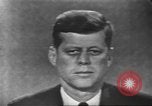
During an election debate in the US, John F Kennedy and Richard Nixon talk about the conduct, temperament, and speech of the U.S. President.
The third Kennedy-Nixon Presidential Debate in the United States. Charles Van Fremd from CBS News asks Democratic candidate Senator John F Kennedy whether he owed an apology to Vice President Nixon and the Republican Party, on behalf of Democrats, after former President Harry Truman "bluntly suggested where the Vice President and the Republican Party could go." Kennedy answers that President Harry S Truman has his methods of expressing things and he has been in politics for fifty years. He says that he could not tell President Truman to change his particular speaking manner, and perhaps only Mrs Truman could. Republican candidate Vice President Richard M Nixon says that U.S. President has an obligation not to lose his temper in public. He speaks of the importance of the standing of the office of the President, and how children all over America are influenced by the behavior and words of the President. He states that he is proud that President Eisenhower has restored dignity and good language to the conduct of U.S. Presidency. He implies that if he wins the election he would be the right kind of role model for children.
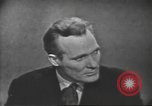
John F Kennedy and Richard Nixon comment on need for labor laws during a presidential election debate in the U.S.
The third Kennedy-Nixon Presidential Debate in the United States. Frank McGee from NBC News asks Republican candidate U.S. Vice President Richard M Nixon to comment on the need and purpose of new laws to protect the public against labor unions' power. Nixon talks about his speech on this topic. He disagrees with Kennedy's statement favoring compulsory arbitration as a President's weapon to stop national emergency strike. He states that in Steelworkers Union speech Kennedy had indicated government seizure as the best way to stop a strike. Nixon states that he does not believe in either compulsory arbitration nor seizure. He says that the management should be involved in dispute settlement. He concludes and urges the need for the greatest cooperation possible between labor and management. Democratic candidate Senator John F Kennedy states that he has never suggested compulsory arbitration as the solution of national emergency disputes. He talks about seizure. He states about president's course and setting up of a fact-finding committee.
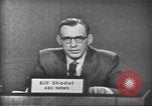
John F Kennedy and Richard Nixon contrast costs of their party platforms during a presidential election debate in the U.S.
The third Kennedy-Nixon Presidential Debate in the United States. Douglass Cater of Reporter magazine asks Democratic candidate Senator John F Kennedy to comment on costing of party platforms calculated by U.S. Vice President Nixon. Kennedy states that he believes in a balanced budget and an unbalanced budget is warranted during a recession or a national emergency. He comments on the cost of his budget and compares it with that of Nixon. He talks about high interest-rate policy that has added huge amounts to interest on debt. He talks about a different monetary policy to reduce the interest-rate burden. He talks about the bill passed by the Congress for the medical care for the aged. He says that more money would be spend on aid to education, housing and defense in his programs. Republican candidate U.S. Vice President Richard M Nixon comments on Kennedy's medical care for aged program under social security. He talks about the cost of his agricultural program and points out resulting rise in food prices. He concludes and states that following Kennedy's program would lead to inflation.
U.S. Secretary of State James F. Byrnes reports in the U.S. on the first meeting of Council of Foreign Ministers in London.
U.S. Secretary of State James F. Byrnes in the United States reports about a London meeting He speaks at his desk and says that the first session of the council of foreign ministers closed in a stalemate in London, England. But that need not and should not deprive them of a second and better chance to get on with peace. The foreign minister of the Soviet Union has not rejected proposal of the United States for a peace conference. Byrnes says that Soviet government will agree that the all the nations that fought the World War II shall have a chance to make world peace. This has been a people's war and it must be a people's peace.
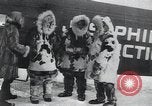
Admiral Richard Byrd and aviator Floyd Bennett, in Spitzbergen after ostensibly flying over North Pole in their Fokker F.VII
Admiral Richard E. Byrd and aviator Floyd Bennett, in Spitzbergen, Norway, being congratulated by other expedition members, after ostensibly making a round-trip flight to the North Pole and back, in their Fokker F.VII trimotor airplane named: " Josephine Ford."