


 Francais
 Deutsch
 Italiano
Refine Your Search
F-86 stock footage and images
- Showing 133 to 138 of 2472 results more
more Hide
Hide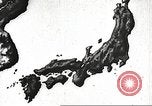
A Japanese film describes her Empire ambitions in the early 1930s
Film opens with animated map showing Japan and its nearby Asian mainland neighbors. Arrows from Japan point to areas and islands that Japan considers part of the Japanese empire. In addition to Pacific islands, they include Asian mainland places, Manchuria, and the Sakhalin Islands. The map shows the Northern limit of Japan's territorial reach with a line drawn on the map at about 47 degrees North latitude. The map shows the reach of Japan's empire extending South to include all of Manchuria and in the Pacific to encompass all the scattered islands in the Pacific accessible to Japan. The map begins drawing a circular boundary to the East encompassing all these areas of the Japanese Empire. Film shifts to Japanese navy warships patrolling the Eastern Pacific boundaries of the Empire, and bi-wing aircraft flying in formation overhead. Rising sun symbol seen on underwings of biplanes. Admiral Tōgō Heihachirō who was later Commander-in-Chief of the Combined Japanese Fleet during the Russo-Japanese War is seen seen as a young Admiral in 1895. Next, he is seen in 1934 at the age of 86, coming out of a barn and walking toward the camera. He is bent over and walks slowly, dressed in woolens and wearing thick eye glasses. (He died on May 30, 1934.)
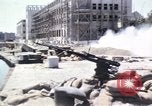
United States Army jeeps drive past a building wall painted with letters 'DUCE' in Sicily, Italy during World War II.
War damage in Sicily, Italy after bombings done by USAAF (United States Army Air Force) 86th Fighter Bomber Group airplanes during World War II. Anti-aircraft gun emplacement along a damaged harbor. A damaged building with a sign reading 'DUCE'. U.S. Army jeeps drive past a building wall painted with letters 'DUCE'. The Union Jack flies from a building.
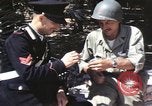
Destruction from U.S. bombing in Messina, Sicily, Italy during World War II.
War damage in Messina, Sicily, Italy from bombing by USAAF (United States Army Air Forces) 86th Fighter Bomber Group airplanes during World War 2. American Army technical sergeant offers a cigarette to a uniformed Italian policeman sitting on a bench with him in Messina, Sicily. Closeup of the Italian Policemen smoking the cigarette. In change of scene, the sergeant points to words "Heil Rommel" written on door of a building. He points out other graffiti on walls. He walks past remains of wrecked vehicles, and pauses to look at them as the camera shows them in closeup. View of a U.S. soldier sitting at waterfront, conferring with an armed Italian provisional military policeman wearing a white armband identifying him as such. Italian citizens stand around them. A sunken steamship sits grounded in the background. View of rowboats on the beach and the sunken steamship.
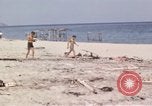
Italian boys play inside a wrecked airplane on a beach in Sicily, Italy during World War II.
War damage in Sicily, Italy after bombings done by USAAF (United States Army Air Force) 86th Fighter Bomber Group airplanes during World War II. Italian boys walk along the debris on a beach. A wrecked airplane on the beach. Men in the wrecked airplane. The Italian boys play in the wrecked airplane and swim.
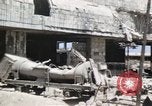
Messina harbor in Sicily, Italy shows various bombed out buildings during World War II.
War damage around Messina harbor, Sicily, Italy, after bombings done by USAAF (United States Army Air Forces) 86th Fighter Bomber Group airplanes during World War II. Damaged and abandoned Italian equipment near a damaged bridge. U.S. soldiers in a jeep drive past the damaged bridge. A drawing of Italian dictator Benito Mussolini. Interiors of a bombed out building. Damaged harbor facilities. A U.S. soldier stands near a sign which reads NSV (Nationalsozialistische Volkswohlfahrt) with a Swastika sign below it. The harbor area shows several bombed out buildings.
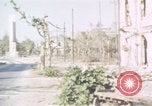
Men of Allied Military Government for Occupied Territories (AMGOT) in Sicily, Italy during World War II.
War damage in Sicily, Italy after bombings done by USAAF (United States Army Air Forces) 86th Fighter Bomber Group airplanes during World War II. Damaged buildings in a Sicilian town. Two men of Allied Military Government for Occupied Territories (AMGOT) walk past abandoned buildings. An arm patch of one man reads 'Civil Police Permit Passage AMGOT'.
CRITICALPAST.COM: About Us | Contact Us | FAQs - How to Order | License Agreement | My Account | My Lightboxes | Shopping Cart | Advanced Search | Featured Collections | Website Terms & Conditions | Privacy Policy ©2026 CriticalPast LLC.
License Agreement |
Terms & Conditions |
Privacy Policy
©2026 CriticalPast LLC.