


 Francais
 Deutsch
 Italiano
Refine Your Search
Florennes Belgium 1945 stock footage and images
- Showing 169 to 174 of 6929 results more
more Hide
Hide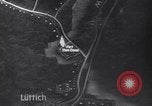
German invasion of Belgium and battle of Rotterdam in World War II
Film opens with animated map showing Fort Eben-Emael in Northeastern Belgium, during World War 2. It higlights the Albert and the Willem Canals nearby. German troops are shown hunkered down near a path by a canal. Their commander orders one squad to advance. They cross the path and go down the canal embankment. A destroyed bridge seen in background. Next, the squad of four is seen in a small boat, passing the destroyed bridge as gunfire sounds.They reach the other shore and scramble up the embankment. A Panzer IV tank firing point blank to the rear, at a building. View from German held bank of a Canal as German shells strike the opposite shore. A Panzer IV tank moving past the camera and onto a bridge crossing a canal.(Narrator notes that the The 18th Army under Generalfeldmarschall Georg von Küchler and the 6th Army under General Walther von Reichenau, are participating in this campaign.) High ranking German officers riding in an open staff car carrying a gunner with a machine gun. German troops marching alongside a road as others in trucks drive past. German towed artillery moving along a road past local refugees carrying their belongings in horse-drawn wagons. Map highlights waterways and Dutch city of Moerdijk, which it reflects as German territory, along with other places as illustrates areas falling under control of the German armies advancing toward Rotterdam in "Fortress Holland." German soldiers fighting in urban Holland. Two hunkered down by a gas station. The sky illuminated by fires raging from German bombardment. German Commanders consulting with their officers. German soldiers climbing over house roofs and entering therefrom. Army trucks and armor advancing into a city. Two Dutch defenders surrendering. A Dutch officer accompanied by a soldier with a white flag, being escorted by a German officer. A Dutch vehicle with a white flag, leading several past a windmill. Dutch Commander,Colonel Pieter Wilhelmus Scharroo, enters a building with several staff, and sits at a table opposite Generalleutnant Rudolf Schmidt and other high ranking officers, to negotiate terms of surrender. The German officers are seen reviewing maps of the area. Numerous Dutch prisoners of war are seen marching along a road.
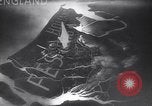
German mechanized infantry and troops attack Belgium.
The German troops attack as light, medium and heavy German tanks advance in Belgium. A map points places. Tanks on the field. Soldiers on jeep pass the street. Soldiers on tanks at a field. German Panzer formations assembled in attack groups at their concentration areas behind the lines. Crews resting, eating and digging slit trenches. German anti-tank gun and field communications set up in operation. A soldier watches through binoculars. Airplanes in the sky drop bombs on the tanks in the field. Dead soldier on the field. German mechanized infantry with personnel carriers in attack under fire. Medium tanks attack. Street fighting in Belgian towns and villages. Burning Allied tanks. Wounded soldiers cured by the medics. Dead soldiers in the field. Houses in the field. Soldiers on motorcycles, tanks and trucks in the street. (World War II period).
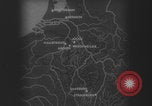
A German Panzer division enters a town in the Ardennes, Belgium; Field Marshal Walter Model talking to soldiers (WW2)
German Panzer division entering a Belgian town in the Ardennes during the Battle of the Bulge (World War 2). A map showing cities (written in German) in the Netherlands, Belgium, North Rhine-Westphalia region of Germany, and the French Grand Est region. A Panzer infantry division enters a Belgian town. German troops stand on top of Panzer tanks parked near houses. Panzer IV tank on a town street as Belgian civilians standing and with bicycles watch the Panzer division enter their town. Low camera angle view looking upward toward an approaching Panzer V ("Panther") tank on a narrow road. German field marshal Walter Model observes German soldier carrying gasoline container. Three German soldiers with Panzerfaust weapons catching their breath during the cold winter. Field marshal Model talks with an officer and a young soldier (wearing a Stahlhelm painted in white for winter camouflage). Close-up view of a Panzer V tank (Panther) moving, with a German soldier wearing headphones standing up through a hatch on top of the moving tank. Panzer tanks moving through the Ardennes region. 7th Army Wehrmacht soldiers wearing winter coats and machine gun belts moving through muddy roads on foot. The first soldier in the line carries a Panzerfaust also. A soldier carries a spade. An abandoned artillery gun. A dead U.S. soldier lies down beside a Browning M1919 machine gun and machine gun belts. A Panzer V tank turning away in the near distance. Smoke beside a destroyed M4 Sherman tank. Destroyed artillery guns in a Belgian town. Destroyed U.S. Army vehicles in front of damaged houses and trees. Dead American soldiers lying beside destroyed vehicles. A German soldier wearing a camouflaged helmet. A Panzer V "Panther" tank rolling on the street.
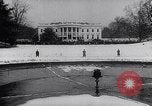
Harry Truman sworn in after death of Roosevelt and surrender of Germany to Allied Nations in World War II during 1945.
A review of significant events that occurred in the year 1945. Scenes from fourth inauguration of Franklin D. Roosevelt as President. Wide view of snow covered lawn of the White House, and guards positioned on the south White House lawn. View of President Roosevelt as he is sworn in as President of the United States, on the south portico of the White House due to wartime austerity measures, on January 20, 1945. Roosevelt, Winston Churchill and Joseph Stalin pose at the Yalta Conference. Death of Roosevelt in April 1945. Burial procession and funeral ceremony of Franklin Roosevelt. Men and women weeping. An African American woman waves her handkerchief as she mourns. Wreath on grave of President Roosevelt. Harry S. Truman sworn in as U.S. President on April 12, 1945. Surrender of the Germans signed by General Jodl and General W.B. Smith in Reims, France. Representatives of Russia, Britain, France and United States at the surrender. General Dwight Eisenhower smiles.
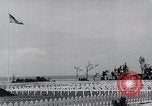
U.S. Army aircraft bombing raids on Japanese cities in 1945, and atomic bomb explosion in World War 2.
Air raids and battle in Japan in the Pacific Theater near the end of World War II. A cemetery of United States military soldiers in the Japanese island of Okinawa. Memorial at the tombstone of Ernie Pyle built by the 77th Infantry Division of the U.S. Army. General Doolittle, General Henry Arnold, General George Kenney, General Ennis Whitehead and other officers during a discussion standing before planes at the 48th Air Force base. B-29 aircraft advances towards Tokyo. Bomber aircraft dropping of a number of guided bombs towards their targets. Targets include Japanese airplane factories, shipping industry, military supply chains in the cities of Tokyo, Nagasaki, Nagoya, Okinawa and Yokohama of Japan. Explosion and smoke arises from bombed targets on ground. Aerial wide and close up views of a B-29 aircraft in flight. Narrator notes that on 05 August 1945, Enola Gay, a B-29, carries the atomic bomb and flies towards Hiroshima. Atomic explosion seen signifying the one in Hiroshima on August 6, 1945, but narrator indicates the image seen is that of the first atomic explosion (the Trinity test) during on July 16, 1945 in New Mexico. Immense cloud of smoke and light. This atomic explosion, the first of two, was pivotal in compelling Japan to surrender unconditionally. Film ending includes public service announcement image "Buy Bonds. Hold Them. Victory Loan."

Allied aircraft bomb the City of Dresden in Germany on February 13, 1945 (British) and again on February 15 (American)
British Royal Air Force Lancaster bomber aircraft drop bombs over German targets in Dresden during night of February 13-14, 1945, during World War 2. Bombs impact and view of explosions and smoke. Two views of German scarecrow bombs exploding, designed to look like the explosion of an Allied bomber aircraft in order to intimidate the enemy. United States Army Air Force B-17 bombers attack the City of Dresden two days later on February 15-16, 1945, focusing on railroad marshaling yards. Relentless bombing by both the American and British forces destroy the city completely.
CRITICALPAST.COM: About Us | Contact Us | FAQs - How to Order | License Agreement | My Account | My Lightboxes | Shopping Cart | Advanced Search | Featured Collections | Website Terms & Conditions | Privacy Policy ©2026 CriticalPast LLC.
License Agreement |
Terms & Conditions |
Privacy Policy
©2026 CriticalPast LLC.