


 Francais
 Deutsch
 Italiano
Refine Your Search
Florennes Belgium 1945 stock footage and images
- Showing 427 to 432 of 6929 results more
more Hide
Hide
Soldiers of the 1st Infantry Division in England and during the invasion of Normandy and subsequent campaigns toward Germany (WW2)
Soldiers of the 1st Infantry Division training in England under General Clarence R Huebner, in preparation for the D-Day Normandy invasion in World War II. U.S. Navy ships underway at sea. Heavy naval guns bombard the coast of France on D-Day. U.S. Army soldiers seen during assault on Omaha beach with heavy losses on D-Day. U.S. soldiers and tanks encounter heavy German resistance in the "hedge rows." American soldiers digging trenches with shovels and picks and treating wounded comrade. Dead German soldier lying in street as Americans enter the town of Caumont (Caumont l'Eventé). Frenchman civilian pours wine for American soldier after they liberated Caumont l'Eventé from the entrenched German forces. An American helps a French civilian woman to reach a safe place crossing rubble. Damaged French houses along the sides of street. During rest, a soldier gives another a haircut, and another writes a letter. U.S. Air Force B-17s fly overhead and bomb near St. Lo, France on July 25, 1944. Other U.S. Army artillery units, the 4th and 9th Divisions, and General Patton's tanks provided support so the 1st Infantry (First Infantry or Big Red One) could occupy the area. Army combat engineers dig up mines and use construction equipment to clear debris. Wrecked houses and rubble. U.S. soldiers keep advancing through towns and eat and rest as they can. Road sign reads: "Coutances." First Infantry goes through Mortain, Etampes, Meaux, Soissons and across the Belgian border. German prisoners of war walk with their hands raised. German soldier digging out of fox hole. Siegfried Line and dragons teeth. Strong German resistance encountered at Aachen. Tanks fire in the field. House to house fighting in Aachen. Surrender of Aachen. A German flag laying in the street is run over by a U.S. military vehicle. German resistance is heavy during battle scenes in Battle of Hürtgen Forest. German and American artillery are seen in Hurtgen Forest. U.S. wounded treated. The 1st Division is pulled out for rest at the rear, in Belgium.
Delegates of the League of Nations leave the Assembly Hall in Geneva, Switzerland.
Public and press eagerly wait outside the League of Nations headquarters (Palace of Nations, Av. de la Paix 14, 1202 Genève, Switzerland) in Geneva to get a glimpse of the delegates leaving the Assembly Hall. Among the delegates leaving the hall include Emile Vanderwelde and Louis de Brouckere of Belgium, Eduard Benes of Czechoslovakia, Guiseppe Motta of Switzerland, Maharajah of Kapurthala India, Louis Loucheur of France, Aristide Briand, Sir Austen Chamberlain of Great Britain, Victoria Scialoja of Italy, Nintchitch of the Serb-Croat-Slovene State, Viscount Cecil of Chelwood in Great Britain, Loudon of Netherlands, Jean Paul-Boncour of France, Joseph Beck of Luxembourg, Prince Arfa of Persia, Guetatcheou of Ethiopia (Abyssinia), Mr. Karl von Schubert of Germany.
Events that initiated World War I and animated map showing involvement of nations from 1914 through 1918
Opening scene shows a man being roughed up by a group of men in an alleyway. A slate comments (in French) that when nations are bellicose, an assassination can cause a world war. Next, a slate shows picture of the world and states (in English) "One murder may start a world war." Another slate (in French) states that In 1914, while Europe's armies and fleets were more powerful than they had ever been, the nephew of the Emperor of Austria (Archduke Ferdinand) was assassinated. A front page is shown of newspaper, "Journal De Geneve" carrying the story. Next scene is a view of the city of Sarajevo. The ancient Emperor's Mosque dominates the scene. A slate appears asking Where is Sarajevo? It is followed by a map of Europe in 1914, which zooms in on Austria and Serbia and identifies and labels Sarajevo,in Austria, close to the Serbian border. Slates (in French) says Austria accused Serbia of War and other nations enter the melee. Animated World map shows the nations getting involved, starting with the German Empire in 1914, including its African colonies, and then successively showing Russia, France, Belgium,Great Britain, Japan, and the Ottoman Empire. Map advances to 1915, showing the Italian empire, Bulgaria,and Central Arabia. In 1916 it adds Portugal, Roumania. Next, the U.S.A. is added in, 1917, along with Central and South America, Greece, Siam, and China. Finally, the slate shows the war ending in 1918. Slate shows Armistice Day, the 11th hour of the 11th day of the 11th Month (November), with time shown on hands of Big Ben in London.
Da Costa and Viscount Ishii deliver opening address at meeting of the Council at the Secretariat in Geneva, Switzerland.
Da Costa as President of session and Viscount Ishii delivering opening address at meeting of the League of Nations Council at the Secretariat in Geneva, Switzerland. Delegates leaving include Briand and Loucheur & Paul-Bancour (France), Sir (Great Britain), Mr Scialoja first delegate for Italy. In a group Mr Quinones de Leon (Spain) and Mr Benes (Czech) Mr Mello France (Brazil) M Vandervelde (Belgium).
Scenes from 16th Assembly of the League of Nations in Geneva, Switzerland.
Sixteenth Assembly of the League of Nations in Geneva,Switzerland. Issue of invasion of Ethiopia by Italy. Assembly President Van Zeeland (Belgium), Massey (Canada), and Bruce (Australia) speak on possibility of withdrawal of sanctions against Italy. De Graef (Netherlands) & De Velies (Hungary) speak. Sebahbodi (Iran) says his nation cannot participate in motions which will abrogate the rights of nations.
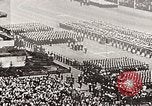
The establishment of NATO with the signing of the North Atlantic Treaty in Washington DC
Brief view of Soviet troops marching in Red Square. Cut to the signing ceremonies for the North Atlantic Treaty, which created The North Atlantic Treaty Organization, or NATO. Representatives from the various signing countries seated at the assembly. A view of the flags of the participating nations. Two officials signing the treaty document while the other representatives look on: Mr Paul-Henri Spaak (Minister of Foreign Affairs) signing on behalf of Belgium; and then another official.
CRITICALPAST.COM: About Us | Contact Us | FAQs - How to Order | License Agreement | My Account | My Lightboxes | Shopping Cart | Advanced Search | Featured Collections | Website Terms & Conditions | Privacy Policy ©2026 CriticalPast LLC.
License Agreement |
Terms & Conditions |
Privacy Policy
©2026 CriticalPast LLC.