


 Francais
 Deutsch
 Italiano
Refine Your Search
Goodenough Island New Guinea 1943 stock footage and images
- Showing 709 to 714 of 13636 results more
more Hide
Hide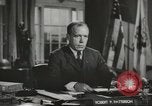
American Undersecretary of War speaks to difficulties facing Allies in confronting Germany and Japan in World War II
Undersecretary of War, Robert Porter Patterson, Sr. speaks about a report from the General staff outlining the needs for combating Germany and Japan in World War 2. He cites Operation Husky, the invasion of Sicily, as an example of what will be needed. He continues to narrate in the background as an animated map appears showing the buildup of supplies and Allied forces in North Africa; Allied air forces flying 60 thousand sorties over Sicily and, the direct amphibious assault using 3,200 vessels. Map also depicts opposing forces of 12 (“unwilling”) Italian Divisions and 3-1/2 German Divisions. View of Allied troops carrying some of their 31 thousand casualties on stretchers from field ambulances. Allied medics attending to the wounded. Some are seen lying on stretchers in a row on the ground near a wall. Interior of a field hospital where surgeons and other medical personnel treat the wounded. Animated map shifts to Europe with Germany at its center, showing , in contrast to Sicily that was only an “outpost,”, the heavily fortified perimeter of Axis controlled areas; the axis industrial might; and the disposition of 300 German Divisions (mostly on the Eastern front) defending the region. Next, the map illustrates Japan’s defended regions in the Pacific Image returns to Undersecretary Patterson i n his office, speaking of the Allied offensives planned for next year (1944), and emphasizing their challenge and difficulty. Scene shifts to General Jonathan Wainwright and his garrison at Corregidor, in the Philippines, surrendering to Japanese forces in 1941. Japanese military camera pans over the Americans being taken prisoner. Other Americans and Filipinos are seen being marched together under guard. Scene shifts to classic views of the Japanese attack on Pearl Harbor, Hawaii, on December 7, 1941. View of Japanese soldiers executing two Chinese civilians in 1937. Dangling bodies of persons hung by Nazis during Operation Barbarossa in Russia, in 1941 A Russian soldier comforts a little girl as he escorts her across a snowy landscape. Time bomb left by German forces retreating from Naples, Italy, in 1943, blows up a Post office building . Views of damage to building and bodies of victims. American Military Police assisting a victim. American soldiers carrying an injured civilian on a litter. Scene shifts to British Foreign Minister, Anthony Eden, Soviet Foreign Minister, Vyacheslav Molotov, and U.S. Secretary of State, Cordell Hull, entering a hall in the Spiridonovka Palace, during the 1943 Moscow Conference in Russia. Close-up of the American, Soviet, and British flags on a table. View of many delegates seated around the table. Close-up of Molotov, Eden, and Hull signing conference document.
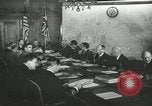
Landing craft, tanks, munitions, and gasoline supplies assembled in England for D-day invasion in World War II
Preparations in year 1943 for the June 1944 invasion of Western Europe by Allied Force during World War 2. Conference at Supreme Headquarters Allied Expeditionary Force in London. U.S. Generals George Marshall, Henry H. Arnold and British Field Marshal Bernard L. Montgomery meet at SHAEF (Supreme Headquarters Allied Expeditionary Force). Montage of war scenes: British Lancaster bombers taking off. British men and women monitors working in a British Command and Intelligence Center, tracking aircraft positions on maps. U.S. B-17 bombers in daylight missions over Germany. Allied pilots and crew members in aircraft. U.S. Army Air Force B-17 aircraft at high altitudes leaving contrails behind. Bombs bursting on German industrial targets. Allied agents being airdropped over France. Allied one-man submarines or solo submarines, torpedo boats and Commandos sampling French beaches and soil conditions in the Normandy region for ability to support 30-ton tanks for the invasion of France. British airman loading reconnaissance camera into a British Spitfire reconnaissance aircraft for photographing the planned invasion region. Woman operating microscope analyzing film. Aerial reconnaissance film images being laid out and attached together to create a large overhead viewing map. Arms and equipment being air dropped to indigenous resistance forces in Nazi-occupied Europe. Mulberry floating harbor segments being designed and built to create invasion ports. Allied landing craft training in Devon, England. Allied aircraft strafing a German ship. Meteorological equipment assessing weather along the invasion coast. Wire netting to pave the beaches. Underwater pipelines to carry gasoline or petrol to France. Allied armored vehicles bearing the White Star. Troops being inoculated or vaccinated. Newly built ship going down the ways at an Allied ship yard that builds Navy warships. View of British intelligence officers with headsets at radio equipment, and personnel monitoring German radio broadcasts. Soviet Embassy in Tehran, Iran, where the Big Three are seen meeting at Tehran Conference to finalize invasion plans. Stalin, Roosevelt, and Churchill sitting on the porch of the Embassy building, in 1943. General Eisenhower and Allied Military leaders planning the D-Day invasion. General Omar Bradley, sitting with a British admiral. General Bernard Law Montgomery Aerial view of formation of U.S. Army Air Force B-17 aircraft, flying through Flak bursts. Pilots in B-17 cockpit .Bombs striking German targets. Polish, Scenes including gun camera footage of Czech, and British in Spitfire aircraft striking German railroads and marshaling yards. B-26 bombers and gunner attacking German Luftwaffe Me-109 aircraft.
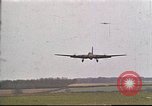
B-17 Flying Fortress bombers of U.S. 8th Army landing in succession on an airfield in England during World War 2.
B-17Fs of the 8th Bomber Command, 1st Bomb Division, 305th Bomb Group, 366th Bomb Squadron, landing at their base, RAF Chelveston, in Northamptonshire, England, during World War II. The first to land displays a dozen yellow bombs, for missions, painted under the pilot's cockpit window, and Squadron code KY, and L, on its fuselage. Its tail number is 42-5053. The second plane to land displays KY and D, on fuselage, and tail number 42-29553. The third, shows the squadron's KY, but other markings are not readable. The fourth to land displays some mission bombs below its cockpit window, the Squadron KY, and J on the fuselage. Its tail number is 41-21624. Bomb Group tail codes and nose art are not seen on any of the aircraft. But, researchers have identified names of three of them: Bloody Tangier Show (42-5053), Arkie II (42-29553),and Madame Betterfly (41-24624), and estimate the film to have been shot between 3/1/1943 and 5/19/1943.
German and Allied forces battle in North Africa; Italians surrender to Montgomery in Tripoli.
Allied troops arrive in Tunisia during Operation Torch of World War II. German aircraft and Allied aircraft engaged in dogfights. Explosions and scenes of aircraft crashing to the ground. Soldiers watch the aircraft through binoculars. Battle of Kasserine Pass in February 1943: Allied tank destroyers blast German tanks "at point blank range" according to narrator, who also notes it was the German's first real battle with American troops. German prisoners of war being marched by Allied soldiers. British troops in Tripoli, Libya in January 1943. Elevated view shows Capitoline Wolf statue in Tripoli with British armor parked below. British Army Field Marshal Bernard Law Montgomery receives surrender of Italian officials. British General Montgomery seated in a jeep passing through the city. People applaud.
German V-1 rocket fails to launch during WW2
Title card says “Erprobungsstelle der Luftwaffe Peenemünde- West” (“Test site of the Peenemünde-West air force” in English). “Flakzielgerät 76 V99 Schnittaufnahmen 4.8. 1943 HK” (“Anti-aircraft target device 76 V99 cut recordings 4.8. 1943 HK” in English). A V-1 rocket, also known as a buzz bomb or doodlebug, on a launch ramp in Germany during World War 2. The Argus engine on the V-1 fires up, but the rocket fails to launch from the ramp.
German animation shows V-1 Argus motor function during WWII.
Title card saying “Flakzielgerät 76 Trickaufnahmen Argus 11. 12. 1943 HK” (“Flak target device 76 trick shots Argus 11.12.1943 HK” in English). An Illustration showing the parts of the Argus engine of the V-1 rocket, an early cruise missile developed in Germany during World War 2, with the parts named in German. Animation demonstrates how the pulse-jet action works on the Argus jet engine.
CRITICALPAST.COM: About Us | Contact Us | FAQs - How to Order | License Agreement | My Account | My Lightboxes | Shopping Cart | Advanced Search | Featured Collections | Website Terms & Conditions | Privacy Policy ©2026 CriticalPast LLC.
License Agreement |
Terms & Conditions |
Privacy Policy
©2026 CriticalPast LLC.