


 Francais
 Deutsch
 Italiano
Refine Your Search
Goodenough Island New Guinea 1943 stock footage and images
- Showing 529 to 534 of 13636 results more
more Hide
Hide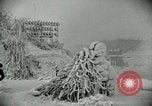
Scenes of Niagara Falls in Winter of 1919
The first scene shows a man and a woman standing on a bluff overlooking the Niagara River at Niagara Falls. The entire area is covered by snow and ice, including large clumps of grass and twigs. Behind them is a battery of 36 high intensity lights aimed at the American Falls. ((In 1907, William D’Arcy Ryan of the General Electric Company of Schenectady, New York designed battery of lights to illuminate the Falls. Comprised of 36 lights, they had the strength of 1,093,815,000 candela and were mounted on the Ontario Power Company access road north of the Ontario Power Generating Station near the base of the gorge.) Below the bluff, the Canadian Ontario Power Generating Station can barely be seen because of heavy mist rising from Niagara Falls. The same man and woman are next seen by an access ramp on Luna Island, where the Niagara Bridal Falls is seen in the foreground. Camera moves to a higher vantage point showing three people on Goat Island with Bridal Falls immediately behind them and the American Falls beyond. Goat and Luna Island are completely snow-covered. Glimpse of a woman standing on the bluff shown at the film start. Views of the boat, "Maid of the Mist," ice-bound at the base of the falls.
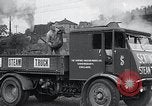
A new high capacity steam truck demonstrated at Bluefield in West Virginia, USA.
A new high capacity steam truck demonstrated at Bluefield in West Virginia, USA. The manufacturer's name, ' THE SENTINEL WAGGON WORKS LTD, SHREWSBURY, ENGLAND ' written on the truck. The loaded truck moves uphill. Additional information on this truck: This is the Sentinel S4 steam waggon, Number 9095. Built 1933 by Sentinel Waggon Works, Shrewsbury, England and exported as a demonstration vehicle to the USA with a works driver. Within a short time the vehicle was involved in an accident and overturned, requiring it to be returned to the UK. Many of the salvageable parts, especially those used to convert it to left hand drive were then fitted to a 6 wheel waggon No 9142 which was sent as a replacement. This vehicle was later purchased by the Pocahontas Coal Company of New Bedford. After a very short working life it was displayed at the Long Island Motor Museum, and Steamtown before being reaptriated to the UK in 2003.
Dirigible USS Akron during its first flight from Lakehurst, New Jersey to Washington DC.
First flight of the dirigible USS Akron from Lakehurst, New Jersey to Washington DC. Airship floats in air, U.S. navy symbol and Akron written on it. The cabin at the bottom of Akron. Buildings and Potomac River shoreline seen from it. Views as it flies over the National Mall, the White House, the Washington National Monument, Lincoln Memorial, Main Navy and Munitions Buildings, and several Potomac River Bridges including the Memorial Bridge. Empty land seen at Gravelly Point where National Airport was later built. Passengers in the dirigible looking out the windows at the sights below. Control room, navigation captain and crew members talk, including good views of the ship's captain, Lieutenant Commander Charles E. Rosendahl, U.S. Navy. A cook checks on roasts cooking in an oven. Airship flies directly over Washington Monument. Views of Union Station from the airship, and then views from directly over the U.S. Capitol. Many views of the airship in flight taken from an adjacent airship or plane. Views of another U.S. city on the east coast, and then views of the airship flying over Manhattan Island. New York City skyscrapers and skyline seen from the airship.
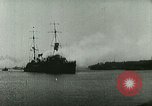
Charles Lindbergh feted in Washington, DC and New York City, upon return to U.S. after his historic transatlantic flight
American aviator Charles A. Lindbergh arrives aboard USS Memphis (CL-13) at the Washington Navy Yard, Washington D.C. upon his return from Europe to the United States following his pioneering trans-Atlantic solo aircraft flight. He comes down the gangplank and is greeted by a phalanx of officials. They drive Lindbergh away in an open car. Two days later, June 13, 1927, the scene shifts to New York harbor, where there is a virtual traffic jam of ships and boats of all sizes and shapes, assembled to greet Lindbergh. Fireboats salute with streams of water as Lindberg arrives (as backseat passenger) in a seaplane from Mitchel Field on Long Island. The seaplane is seen flying over the harbor,and descending to land. The seaplane is seen in the water amongst the flotilla of vessels, as. Lindbergh is picked up by a police launch that takes him to the ship Macom, where he is helped aboard by passengers. (He almost falls into the water while stepping from the launch to the ship.) Lindbergh waves from the deck of the Macom, as they proceed in a parade of vessels toward a Manhattan pier. Upon arriving, Lindbergh is hustled into an open car and driven away surrounded by New york City policemen,including mounted police, who escort the car through mobs of spectators. Police form lines to hold back enthusiastic admirers. The car proceeds along a city street where cheering spectators jam the sidewalks and office workers create a virtual storm of ticker tape and confetti from their windows high above the street.
New U.S. infantrymen learn to fire rifles, make trenches and advance on a battlefield, in preparation for going to war in France
Training of U.S. Army infantrymen in the United States. A newspaper headline reads ' infantrymen arrive in France'. The infantrymen are taught to advance on a battlefield. Recruits in New York's Rainbow Division are seen marching in the mud, at Camp Mills, Long Island, They undergo physical training at the camp. They learn to fire rifles and dig trenches. They inhabit a tent city at the camp. Scenes of Rainbow Division soldiers on a chow line at Camp Mills. After basic training, the soldiers board ships and trains for France. Loved ones give them a sendoff. Upon arrival in France, they are given a warm welcome.They resume training in France, until they are ordered to the Front. Scenes of U.S. infantry in trenches wearing gas masks and firing rifles. Tanks advancing across the trenches. View of the 7th Regiment World War I memorial statue in Central Park, New York City.
During an election debate in the US, Kennedy and Richard Nixon talk about a hypothetical invasion by the Chinese Communists.
The third Kennedy-Nixon Presidential Debate in the United States. Charles Van Fremd from CBS News asks Republican candidate U.S. Vice President Richard M. Nixon that if he were the president would he launch a war if the Chinese Communists began an invasion of Quemoy (Kinmen) and Matsu Islands and if he would authorize the use of nuclear weapons if regular conventional forces failed to halt the invasion. Nixon answers and states that it is irresponsible for a presidential candidate to indicate the course of action and the weapons he would use in the event of such an attack. He states that he would not say in advance how the U.S. would respond. He states that the Chinese Communists do not want just Quemoy and Matsu or Formosa (Republic of China or Taiwan), but the world. He concludes that defense of the free world territories and not surrender will lead to the path of peace. Democratic candidate Senator John F. Kennedy talks about a treaty to defend Formosa (Taiwan) and the Pescadores Island. He states that the U.S. would meet its commitment to Formosa. He disagrees with Nixon's suggestion that the United States should go to war if Quemoy (Kinmen) and Matsu islands are attacked as the treaty does not include these two islands. He concludes and says that the U.S. would defend if Formosa (Taiwan) or the Pescadores Island is under attack.
CRITICALPAST.COM: About Us | Contact Us | FAQs - How to Order | License Agreement | My Account | My Lightboxes | Shopping Cart | Advanced Search | Featured Collections | Website Terms & Conditions | Privacy Policy ©2026 CriticalPast LLC.
License Agreement |
Terms & Conditions |
Privacy Policy
©2026 CriticalPast LLC.