


 Francais
 Deutsch
 Italiano
Refine Your Search
Greek-Civil-War stock footage and images
- Showing 10711 to 10716 of 27487 results more
more Hide
Hide
U.S. Navy's Task Force 58 in the Battle of Okinawa during World War II.
Opening title is: "The Fleet That Came To Stay." Opening scene shows a U.S. warship dimly in darkness, during World War 2. Three American sailors in battle gear, lean over the ship's railing and discuss their destination: "Okinawa.". One sailor walks along the deck, past many more looking over the railing. The men discuss being only 320 miles from Japan, itself. Nose view of a Japanese Kawasaki Ki-61 aircraft with engine running. View of it taking off, followed by a succession of views showing numerous similar Japanese aircraft taking off. A U.S. B-29 bomber taking off and views of B-29s in formation aloft. Bombs dropping from the B-29s and seen from the aircraft as they explode on Japanese targets below.
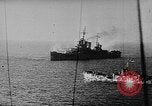
Allied Naval task forces combine efforts in Battle of Okinawa during World War II
Roles of U.S. Navy Task Force 58 and British Task Force 57 during the Battle of Okinawa in World War 2. An LCI (Landing Craft-Infantry) passes in front of the heavy cruiser USS Wichita (CA-45) as it fires its heavy guns. Explosions on Okinawa. Glimpse of Battleship USS Iowa (BB-61) in marine camouflage paint. Naval gun barrels firing and shells exploding on Okinawa. The USS LSM(R)-190, a Landing Ship Medium (Rocket) is seen firing barrages of rockets at Okinawa. Closeup of the rocket pods firing. At time 00:18-00:20 the U.S. heavy cruiser USS Minneapolis,CA-36 is seen firing her main battery. Numerous views of shells bursting on the ground. More views of rocket firing landing ships, with more closeups of the rocket pods firing. Change of scene to the south, where the battleship HMS King George V, flagship of Task Force 57, and battleship HMS Howe, are seen bombarding Japanese air installations on Formosa. British Navy Marlett fighter planes (equivalent to U.S. F4Fs) in formation flight. Anti-aircraft gunfire from British aircraft carriers and other warships. Closeup of British multiple Pom Pom gun batteries firing.
Aircraft of U.S. Navy Task Force 58, attack Kyūshū and Japanese home islands in World War II
Film begins showing sailors in battle gear manning Bofors 40mm anti-aircraft guns beside flight deck of U.S. aircraft carrier, during World War 2. Navy Task Force 58 ships, including a cruiser and another aircraft carrier, are seen in background. View of SBD Douglas Dauntless dive bomber aircraft on the carrier flight deck. Two have engines running.The rest are parked with wings folded. Next, the aircraft are seen being sent on takeoffs by a white shirt on deck. The number "6" on her flight deck identifies her as the USS Enterprise (CV-6). Views of several Douglas Dauntless aircraft flying off her deck. Glimpse of aircraft in formation from a different Squadron, bearing checkerboard markings on their tails. View from above of 5 of the aircraft in formation above the sea below. Gun camera views of U.S. aircraft strafing Japanese ships. One explodes in fireball and smoke. U.S. aircraft firing rockets that strike a Japanese carrier, setting it on fire, and causing an escort ship to blow up. Task Force 58 aircraft strike Japanese coastal installations and strafe several Japanese airfields destroying parked Japanese aircraft. They attack industrial sites causing fires and explosions. Gun cameras show aircraft firing rockets at lines of communication and striking more Japanese airfields.
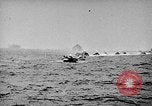
Japan Kamikazes attack U.S. Navy Task Force 58, in battle of Okinawa in World War II
Role of U.S. Navy Task Force 58 in Okinawa, Japan during the Battle of Okinawa in World War 2. Film begins showing amphibious assault by U.S. forces of Navy Task Force 58, against Okinawa, on Easter Sunday, April 1, 1945. Higgins Boats from U.S. transport ships race through the water and discharge troops on the land, with no signs of Japanese resistance. Some of the boats' markings show they came from the U.S transport ship USS Barnett (APA-5). Sailor aboard a transport ship uses ax to cut a line and release a power boat from its davits. The boat drops into the water with a huge splash. View of lines of U.S soldiers and marines wading through shallow water toward mud flats on the land. Closeups of Troops with landing craft behind them. advance overland with no signs of Japanese resistance. Troops sitting on a landing vehicle tracked (LVT) parked in sand. U.S. infantry begin moving inland accompanied by armor and military trucks and other vehicles. The area is very quiet, with no sign of enemy activity. Views of Army and Marine Corps infantry walking beside an M4 Sherman tank. Views of soldiers using binoculars in effort to detect any signs of the enemy. Crews in combat gear, at battle stations aboard Navy ships waiting patiently for enemy action. It came suddenly in the form of Kamikaze attacks on April 6, 1945, when the Navy's radar picket ships were attacked followed by general attacks against U.S. Capital ships. A kamikaze is seen striking an Essex-class aircraft carrier amidst ship, setting off explosions on the ship. Anti-aircraft gunners on various ships are seen firing at the Japanese planes. Another ship is struck by a Kamikaze. Douglas Dauntless and F4F aircraft being launched from carriers. The Battleship, USS Maryland (BB-46), is struck by a kamikaze that knocks out some of her gun emplacements, but she continues her mission in spite of the damage. A kamikaze aircraft is seen attacking the USS Yorktown (CV-10). It is hit by anti-aircraft fire and just misses the ship, splashing into the water nearby. Air is filled by black smoke puffs, from anti-aircraft fire as Japanese aircraft maneuver overhead. One is struck and falls burning to crash in the water, just off the flight deck of a carrier. Gun camera clip showing a multi-engine Japanese aircraft being shot down from behind, by a U.S. aircraft. Closeup of a Japanese Kawasaki Ki-61 aircraft in flight, peeling off to attack. More gun camera footage of a Japanese multi-engine aircraft being shot down from behind. A Kamikaze airplane diving down under anti-aircraft fire and crashing into the sea. Gunners firing Bofors anti-aircraft guns from gun emplacements beside the flight deck of an aircraft carrier. Skies filled with black flak clouds. On 11 April, a low-flying kamikaze Zero, although fired upon, is seen crashing on the battleship, USS Missouri USS (BB-63). It strikes her starboard side, just below her main deck level. The starboard wing of the plane was thrown far forward, starting a gasoline fire at 5 in (127 mm) Gun Mount No. 3. At the same time, another kamikaze crashes into the sea in the foreground. An aircraft carrier's gunners fire anti-aircraft Bofors guns at a Kamikaze plane that swoops over her flight deck and crashes, exploding, into the sea just off the flight deck. A low flying Kamikaze aircraft crashes into the sea off the bow of an escort carrier, underway. Heavy black smoke rises from the airplane blowing up. A huge explosion with a white cloud of smoke is seen above the battleship USS Missouri.
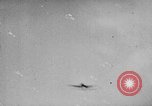
American ships of Task force 58 defend against Japanese Kamikaze attacks during April and May, of 1945 in World War II battle of Okinawa.
Film opens with shaky views of Japanese Kamikaze airplane attacking and being shot down by gunners on a U.S. Navy aircraft carrier of Task Force 58, during the Okinawa campaign of World War 2. Burning wrecked aircraft seen on the carrier flight deck. Firefighters run across flight deck with hoses. A landing F4F fighter plane number 59 runs into the flaming wreckage on the deck, and explodes. View from the side of F4F number 58 engulfed in flames as it sits in a pool of firefighting foam. Black flak clouds in the air. A Kamikaze aircraft crashes harmlessly into the sea. Deck crewmen help a pilot out of the cockpit of a fire scorched F4F. View of sailors standing next to a pair of heavy gun barrels on a U.S. warship. Parachuting U.S. pilot seen touching down in the water after bailing out of his aircraft. Sailors running across the flight deck of a carrier. View of the pilot in his life vest being helped aboard the carrier. More views of flak filled sky and a flaming Japanese airplane diving straight down to crash harmlessly in the water. View of American flag at half mast on a U.S. Navy warship. It is April 12, 1945 and President Franklin D. Roosevelt (FDR) has just died. View of sailors on deck in a memorial service for the President. Closeup of mourners singing with hymnals open. Closeup glimpse of FDR. More views of mourners. Scene changes to Japanese Kamikaze being blasted out of the air in pieces, by anti-aircraft fire from a U.S. carrier. The remains fall into the sea. View from U.S. ship, of a Japanese Nakajima L2D transport aircraft with flames coming out of its right wing, as it descends close to the water near the ship, with its landing gear down. View from a more distant ship of the transport plane exploding in the water near a U.S. Escort aircraft carrier. Twin Bofors anti-aircraft guns firing from a U.S. ship. Tracer bullets fill the sky aimed at a Japanese Kamikaze plane. Slates overlay the scene announcing Japanese aircraft shot down: "April 6th: 277 aircraft; April 12th: 100; May 3rd: 97;" Film ends showing more anti-aircraft fire from ships against attacking Japanese aircraft.
Various South Vietnamese and American aircraft at Tan Son Nhut Air Base during the Vietnam War.
Different types of American and Vietnamese aircraft at Tan Son Nhut Air Base in Vietnam during the Vietnam War. United States Air Force A-1H Skyraider aircraft taxi followed by USAF C-123K Provider, C-7A Caribou aircraft and U-10A Helio Courier aircraft. C-46 Commando aircraft taxi followed by Air Vietnam DC-6 aircraft. VNAF A-1Hs taxi. DC-6 parked as a U-10A Helio Courier taxis past. U-1A Otter parked. A USAF Lockheed C-130E Hercules taxis. VNAF A-1Hs waiting for take off. Airlift 727 and C-130E Hercules aircraft taxi past an inter-section of a road and a runway as seen from a truck.
CRITICALPAST.COM: About Us | Contact Us | FAQs - How to Order | License Agreement | My Account | My Lightboxes | Shopping Cart | Advanced Search | Featured Collections | Website Terms & Conditions | Privacy Policy ©2026 CriticalPast LLC.
License Agreement |
Terms & Conditions |
Privacy Policy
©2026 CriticalPast LLC.