


 Francais
 Deutsch
 Italiano

Refine Your Search
Greek-Civil-War stock footage and images
- Showing 13999 to 14004 of 27563 results more
 Hide
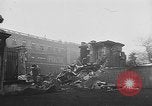
Glimpses at moments in life of King George VI of Great Britain, matching Trafalgar Day speech by his daughter, Queen Elizabeth II
Queen Elizabeth II in her Trafalgar Day speech recounts events in life of King George VI during dedication of his statue in Carleton Gardens, London, England. Audio of the Queen speaking as footage from the life of King George VI is shown. View of the Statue of Brtish King George VI. King George VI and Queen Elizabeth standing in bombing rubble, and visiting suffering London residents during the Blitz by Nazi Germany in 1940 during World War II. As Prince Albert, he stands with companions watching boys engaged in sports activities at a camp for boys that he established after World War I. Prince Albert in bathing suit at the beach, and participating in a group sing with campers. As the first British sovereign to enter the United States of America, King George VI is seen as he rides in an open car with President Franklin D.Roosevelt. The King is seen with British Field Marshal Bernard Montgomery, visiting the war zones and decorating British Colonial troops, during World War II. The Queen says "Today is Trafalgar Day."
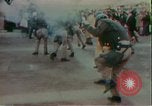
U.S. President Richard Nixon works to solve several domestic and international problems during his tenure as the President.
From a pro-Nixon "documentary" called "The Nixon Years: Change Without Chaos" covering President Richard Nixon's first four years in office. Released during his 1972 reelection campaign. U.S. Police clash with demonstrators at an anti-Vietnam war protest. A U.S. soldier in Vietnam firing a machine gun into the jungle overgrowth. People burning Vietnam draft cards. Ground and aerial views of riots in Washington DC with burning buildings and smoke rising in neighborhoods beyond the U.S. Capitol. A middle aged American woman yells "What nerve! This is America?" Nixon speaking at a campaign rally of Richard Nixon during Presidential elections of 1968. Nixon with his family stands on a stage at a public meeting. He addresses and large crowd of spectators applaud. Nixon walks on the ramp of U.S. Air Force One aircraft (which he called The Spirit of 76) after being elected as the President. Nixon confers to settle the cold war situation aboard. U.S. soldiers march during an operation in Vietnam war. Nixon works in his office to bring down the cost of living and inflation. U.S. Secretary of State Dr. Kissinger and others meet at Paris Peace Conference to talk about the Vietnam war. While addressing the Congress Nixon proposes his initiatives for betterment of civilians. Nixon signs a bill in Congress. He visits the U.S. troops involved in Vietnam. A large number of troops withdrawn from Vietnam. Friends and relatives of American soldiers and sailors receive them with warmth as they return from Vietnam. Happy friends and family at a port kiss and hug soldiers returning from Vietnam.
U.S. soldiers decontaminate combat vehicles and tanks during training; also flashback WW1 mustard gas aftermath scenes
World War 2 training film teaching U.S. soldiers about decontamination of combat vehicles, at Aberdeen Proving Grounds in Maryland. Soldiers during a decontamination procedure with real mustard gas. The soldiers in armored vehicles. A group of soldiers prepares for the decontamination. An aircraft flying at low height. A stationary U.S. Army Pershing tank. Two soldiers in a jeep. Soldiers wearing gas masks decontaminate a vehicle. Flashback scenes to August 1918 in World War I in France, with many mustard gas attack victims being cared for at a field hospital (which narrator says is Field Hospital number 326). Medic washing eyes and face of a World War 1 gas attack victim. Next view is a soldier in 1942 with mustard gas burns on his hand, being treated by a medic. Next scene returns to World War 1 in 1918, showing mustard gas burns on arms, hands, legs, and feet of U.S. Army soldiers.
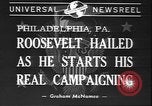
Franklin D. Roosevelt begins his election campaign in Philadelphia, Pennsylvania
Franklin D. Roosevelt begins his election campaign in Philadelphia, Pennsylvania. He delivers a speech at the convention hall. He addresses the prospect of war (early in World War 2) saying, "We are arming ourselves not for any foreign war. We are arming ourselves not for any purpose of conquest or intervention in foreign disputes. I repeat again that I stand on the Platform of our Party: 'We will not participate in foreign wars and we will not send our army, naval or air forces to fight in foreign lands outside of the Americas except in case of attack.'"
British prosecutor Shawcross presents crimes by Nazi leaders during Nuremberg Trials; scenes from Molotov-Ribbentrop Pact signing
Trial of Nazi leaders for war crimes in Nuremberg, Germany soon after the end of World War 2. British Chief Prosecutor Hartly W Shawcross presents count no 2, crimes against peace involving wars of aggression in violation of international treaties and agreements. A document reveals Adolf Hitler's plans to occupy Poland. Footage showing Soviet Leader Joseph Stalin and Germany's Joachim Von Ribbentrop as they sign non-aggression pact between Russia and Germany on August 23, 1939 (also called the Molotov-Ribbentrop Pact). Germany prepares to occupy Poland as Pope Pius XII and President Franklin D Roosevelt appeal for peace just before start of World War II.

President Truman addresses the nation as he gives reason for General MacArthur's dismissal as commander in Korea.
United States President Harry S. Truman dismisses General Douglas MacArthur during the Korean War. President Truman addresses the nation and explains the reasons for the dismissal of General MacArthur as the Supreme Commander of the UN forces in Korea. Truman clarifies in his address that the "cause of world piece is much more important than any individual." He notes his concerns that the Korean War could become a World War III. He says that General MacArthur has been dismissed to uphold the cause of world peace. He however explains that the change in command must not be seen as change in policies. He assures that the Allies will not widen the war. He also affirms his faith in principles of peace, justice and freedom.
CRITICALPAST.COM: About Us | Contact Us | FAQs - How to Order | License Agreement | My Account | My Lightboxes | Shopping Cart | Advanced Search | Featured Collections | Website Terms & Conditions | Privacy Policy ©2026 CriticalPast LLC.
License Agreement |
Terms & Conditions |
Privacy Policy
©2026 CriticalPast LLC.