


 Francais
 Deutsch
 Italiano

Refine Your Search
Greek-Civil-War stock footage and images
- Showing 14011 to 14016 of 27563 results more
 Hide
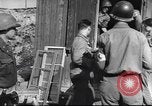
Dead bodies of people piled up and wounded being evacuated from a Nazi concentration camp in Germany.
Concentration camp scenes used in evidence during post-war World War 2 prosecution of Nazi war criminals. A Nazi concentration camp. U.S. troops standing outside a building. Medics treat and carry emaciated prisoners from a camp. A U.S. Naval officer, prisoner at a camp, is interviewed. He speaks about execution of U.S. prisoners of war and describes various atrocities and means used to kill prisoners. Man shows a club with barbed wire on it used to beat prisoners. View of dead bodies of prisoners in rail car under layer of snow. Dead bodies of people piled up on the ground.
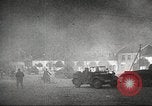
German Operation Barbarossa invasion of the Soviet Union is successful at first but then fails to defeat the Soviets
German forces overrunning Soviet cities and towns during Operation Barbarossa of World War II. View of the city, Pskov, on the Veilakaya river. A steel bridge is seen and city across it with smoke rising. German troops marching in loose formation over a bridge in Novogorod. Views of German armor and troops entering Soviet cities of Brest-litovsk, Minsk, Mogilev, and Vitebsk. View of German Panzer III tank heading toward the camera as it enters a narrow street in Smolensk. Animated map shows progress of these German advances and highlights German forces under German Field Marshal Gerd Von Runstedt attacking deep into the Ukraine. Headline on Chicago Daily News reads: "Nazis Claim Knock-out Victory" with subtitle line reading,"Moscow line cracks." Other newspapers reflect conviction that Soviet forces face imminent defeat by Germany. Slate shows communique issued by the German High Command, stating: "The issue in the East has already been settled. Smolensk is the last halt on the road to Moscow." More views of marching German troops. A battery of Soviet artillery firing from a snow-covered field. Animated map shows German forces movement close to Moscow and Foreign diplomatic representatives being moved from Moscow to city of Kuibyshev. Hitler speaking on October 3, 1941, saying "This enemy is broken and will never rise again." Animated map depicts 500 thousand square miles of Soviet territory occupied by December, 1941, and compares it to the entire west central United States encompassing the states of : South Dakota, Iowa, Nebraska, Kansas, Missouri, and Oklahoma. Glimpse of fires raising much smoke in agricultural area of the Soviet Union, destroyed industrial plants, and huge numbers of Soviet citizens under German occupation. Destroyed Soviet armor, aircraft and artillery pieces. With winter coming on, views of German forces in rain gear moving slowly through cold rainy weather. Some walk beside horses and other ride on horse-drawn caissons along with artillery pieces. Segments of film show contrast between the German military strategies. The German forces would plunge deep into enemy territory and create an area of conquest. This is illustrated by a slate bearing Adolf Hitler's statement that, "A single blow must destroy the enemy, without regard for losses, a gigantic destroying blow." An animated map reminds the viewer of the success of this approach by the Germans in Poland, France, and the Balkans. German Generals seen planning the same "Blitz" approach against the Soviets. Film shifts to the Soviet strategy, showing their military planners idea of defense in depth, with multiple lines of successively stronger defense, taking advantage of the great size of their territory. Views of Soviet troops on the move. View of Shells knocking out a German tanks. Panzer III tanks advancing. Panzer VI tanks completely covered by German troops catching rides. Soviet field artillery and machine guns firing in cities, forcing German soldiers to leave their vehicles and seek them out. Soviet cities bombed out and burning, limiting the ability of armor to navigate in them. Montage of battle scenes cities of Rostov, Kharkov, Kiev, Kursk, Smolensk, standing in the way of the Nazi blitz into the Soviet Union. Battles being waged in cities. (World War II; WW II; World War 2; World War Two)
Inventor of M-1 rifle John Garand displays various rifles produced at the Springfield Armory in Springfield, Massachusetts.
A film about uses and importance of weapons since old times in the United States. United States soldiers fire rifles during a maneuver. Exteriors of the Springfield Armory in Springfield, Massachusetts. John Garand, the inventor of the M-1 rifle, at the Springfield Armory. He speaks about the development of the armory from colonial period to post World War II times. He displays various rifles used by American soldiers from 1795 to World War II. He displays a rifle used in World War II and another automatic rifle used in World War II. A forge used to produce receivers of M-1 rifles.

Harry S. Truman announces V-J day with Japan's acceptance of the terms of surrender, ending WWII; celebrations across America
Title card reads, "Peace, It's Wonderful." People celebrate as Japan accepts peace terms, ending World War 2. President Harry S. Truman of the United States announces Japan's acceptance of peace terms and the end of World War II. Reporters rush out to deliver news. Many scenes of American citizens, soldiers and sailors celebrating V-J Day in various cities of the United States. Crowds celebrate peace on V-J Day (Victory over Japan Day) in Washington DC, Chicago, San Francisco, and New York. Crowd outside White House waving. Woman holds newspaper with headline, "Japan Surrenders." A sailor dances with a girl. In San Francisco's Chinatown, firecrackers are lit up. In Seattle Washington, soldiers grab young women and kiss them. Aerial view of crowds celebrating the end of World War II at Times Square in Manhattan, New York City. Ticker tape falling in the air. Joyous, happy, and excited citizens cheer the end of World War 2. People waving newspapers with headline, "Japs Accept Terms." Spotlights illuminate nighttime crowds celebrating in New York City.
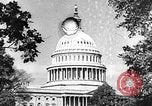
Thomas Woodrow Wilson works at desk and soldiers with John Joseph Pershing on ship in the United States
U.S. troops leave United States during World War I. Exteriors of the United States Capitol. President of the United States Thomas Woodrow Wilson looks out from a window. He works at desk. Close-up view of document that is U.S. declaration of war against Germany. U.S. Soldiers march on city streets, bound for war. American soldiers board ship. Soldiers crowded on deck of the transport ship heading for war in France. U.S. Army General John Joseph Pershing on ship. Sunset at sea.
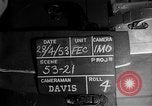
Men carry repatriated injured soldiers aboard ambulances at the Tokyo annex and Mrs. Clark shakes hands with former prisoners.
Operation Little Switch for repatriation of former prisoners of war late in the Korean War (followed by Operation Big Switch in August). Released United States soldiers who were POW (Prisoners Of War) are in transport from Panmunjom, Korea to Tokyo annex in Japan. Medics load sick or injured U.S. Army soldiers aboard ambulances at the Tokyo annex. An African American soldier, former prisoner of war, smiles. Ambulatory former prisoners walk out. Several views of smiling African American patients. Mrs. Maruine Doran Clark, wife of General Mark Clark, shakes hand with repatriated U.S. Army soldiers at the airbase.
CRITICALPAST.COM: About Us | Contact Us | FAQs - How to Order | License Agreement | My Account | My Lightboxes | Shopping Cart | Advanced Search | Featured Collections | Website Terms & Conditions | Privacy Policy ©2026 CriticalPast LLC.
License Agreement |
Terms & Conditions |
Privacy Policy
©2026 CriticalPast LLC.