


 Francais
 Deutsch
 Italiano

Refine Your Search
Greek-Civil-War stock footage and images
- Showing 14077 to 14082 of 27563 results more
 Hide

allied troops occupying destroyed trenches in Flanders. Pulling artillery piece out of mud
British officers watch as American Expeditionary Forces soldiers move single file across a field to occupy bombed out trenches in Flanders, during World War 1. Brief glimpse of British Army chief, Sir John French and Sir Douglas Haig, along with other British high-ranking officers. Troops struggle to free a British 127mm (60 pounder) heavy field artillery piece, from mud. (World War I; World War 1; WWI; WW1)
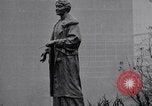
Brief montage of moving images from early 20th Century Women's suffrage and equal rights movement in Great Britain.
Scene opens showing the statue of British Women's suffrage movement leader, Emmeline Pankhurst, located in Victoria Tower Gardens next to the Houses of Parliament, Westminster. (This was erected in her memory, in 1930, two years after her death.) A World War 1 parade of women in clothing of religious orders; nurses; some military; and academics. One group carries a banner reading "Demonstrate-Trained Nurses." It also depicts What appears to be an Angel of Mercy and an appeal to buy war bonds. They are followed by women carrying a large British Union Jack, and by others, in academic garb, carrying banners of academic institutions. (This march was probably organized by the "Women's Party," the 1917 group founded by the Panghursts' to replace their "Women's Social and Political Union." The new party emphasized support for the British war effort.) Scene shifts to suffragist Emmeline Pankhurst (sometimes called a suffragette) viewed from camera behind her right shoulder as she addresses a large crowd. She is standing on a roofed platform in a park-like setting. The audience is mostly civilian, but a soldier is seen here or there. Several London Bobbies are in the audience, close to the speaker's stand. The next scene shows pedestrians gathered near Buckingham Palace, in London. A number of Bobbies (London policemen) are present, some on foot and some on horseback. The Queen Victoria monument is visible in the background. A horse-drawn carriage passes in front of the camera. Next, a woman is seen being arrested by two Bobbies, as passersby watch. An automobile passes and then the woman and police are seen approaching the camera as more officers become involved, keeping spectators away. In the final scene, in the 1920s, a man standing in front of a large group of women, congratulates one (probably Christabel Pankhurst). Closeup shows, from left to right, the man; a somewhat tired-looking Emmeline Pankhurst; and her daughter, Christabel.

British soldiers in trenches respond to gas alarm sounded on Strombos Horn.
British troops in deep reinforced trenches on the Western Front in World War 1, respond to a "gas alarm" sounded on "Strombos" Horn. They don their gas masks and take up firing positions with their rifles. View from the trench through barbed wire shows partially snow-covered no-mans-land in front of the trench. A light cloud of gas passes over the soldiers and a larger cloud of gas is seen further away, in front of the trench. (World War I; World War 1; WWI; WW1)

British sentry detects gas, Sounds alarm, dons gas mask and alerts troops in dugout
British soldiers in France, during World War 1. Sentry in a deep reinforced trench detects gas and puts on gas mask while sounding pedal gong alarm. He closes door of a protected dugout and alerts soldiers, in unprotected dugout of the trench, who don gas masks and come out, as gas cloud drifts over the trench.. (World War I; World War 1; WWI; WW1)

French bombardment of German trenches at Messiges
Animated map showing French bombardment of the German trenches at Messiges during World War I. Next are shown actual scenes of the no man's land and trenches following the bombardment. Everything has been obliterated. (World War I. World War 1. WWI. WW1)

Smoke comes out of a gun factory in Germany; shows steps in gun barrel manufacture from mining through production.
Smoke comes out of a war material factory in Germany where large gun and artillery barrels are manufactured during rearmament of Germany before World War 2. Smoke from chimneys in the factory. View elsewhere of miners digging for iron ore in mines and raw material for steel being mined with pneumatic hammers. Men work inside the steel mill processing raw iron ore. Molten metal runs through ditches dug by workers. Smelting operations shown. Blast furnaces process molten metal. Metal is formed and pressed. Close ups of cams, pistons, wheels, shafts, rods, pulleys, and gears of armament manufacturing operations. Large steel gun barrel is formed, pressed, cut, and finished in war production factory.
CRITICALPAST.COM: About Us | Contact Us | FAQs - How to Order | License Agreement | My Account | My Lightboxes | Shopping Cart | Advanced Search | Featured Collections | Website Terms & Conditions | Privacy Policy ©2026 CriticalPast LLC.
License Agreement |
Terms & Conditions |
Privacy Policy
©2026 CriticalPast LLC.