


 Francais
 Deutsch
 Italiano

Refine Your Search
Greek-Civil-War stock footage and images
- Showing 14119 to 14124 of 27563 results more
 Hide

Navy parade launching Fourth Liberty Loan Drive in Washington DC.
U.S. Navy sailors parade along Pennsylvania Avenue to launch the Fourth Liberty Loan Drive in Washington DC. The U.S. Capitol is seen clearly in the background. A tall sign is seen above the skyline, advertising Kelly Springfield tires. The parade continues past the Post Office Building on the South and the Willard Hotel to the North, and turns North on 14th Street, with a huge brass band playing near the front. A few people ride in a bus festooned with flags and signs reading "Fourth Liberty Loan" and "Buy Your Bond Today." Marchers are seen passing the State, War,and Navy Building, (Old Executive Office Building) at Pennsylvania and 17th Street. (World War I; World War 1; WWI; WW1)

Volunteers in queue to help harvest of food crops in Maine.
Volunteers in queue to help harvest food crops in Maine, United States during World War II. College women plant potatoes. Tractors used for harvesting. String beans or green beans gathered after cutting. Volunteers working at a shed. Packaging and preservation of food. Trucks unload at a storage place. Tomatoes are cleaned. Workers at assembly line canning and packaging machinery, processing tomatoes and other vegetables and canning them, including for use in soldier rations for World War 2. Vegetables treated and stored. Boxes of canned vegetables ready for shipment in the war effort.
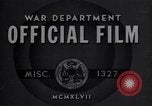
Plan for Peace, 1947. Public information film about U.S. Army Universal Military Training Project
Firing of a V-2 rocket from White Sands, New Mexico. An XP-84 jet aircraft on a test flight in California. Scenes of devastation in Hiroshima and Nagasaki. An atomic bomb test conducted in Bikini Atoll, Marshall Islands. Large smoke cloud rises. Americans expressing disgust with war and confidence in ability to protect against it in future. Newspaper headline about Armistice ending World War I on November 11, 1918. Victory parade in New York City. Close up view of Adolf Hitler as he speaks forcefully to a German audience. V2 rocket being launched in Germany. German Messerschmitt Me 163 Komet rocket plane in flight. Map depicting uranium deposits world wide. An XB-36 bomber in flight with landing gear extended. A huge formation of various warplanes in flight, high overhead. A wartime tank assembly plant. American army troops on parade. A United Nations meeting in session. Peaceful scenes of American soldiers in Hawaii before World War II in the Pacific. Hawaiian Hula dancers. Japanese carrier-based Aichi D3A1 dive bomber in flight during attack on Pearl Harbor, December 7, 1941. Bombed U.S. warships and facilities in Pearl Harbor. American Army officer and civilian discussing wisdom of maintaing large standing army. Army recruits are seen in the U.S. Army Universal Military Training Experimental Unit at Fort Knox, in 1947. They are seen in quarters, studying; taking part in sports (baseball); and attending religious services in a base chapel. Several trainees in a field tent, working with numerous tape decks in some kind of military communications activity.

Henry Ford with House Speaker James Beauchamp Clark and Congresswoman Rankin at pacifist rally.
Large crowd gathers at U.S. Capitol building during World War 1 timeframe. Cars arrive at Capitol building. Henry Ford speaks with Speaker of the House, Congressman James Beauchamp (Champ) Clark. Thomas Edison with other dignitaries stand at the steps of the Capitol and Edison shakes hands with Congressman Clark. Montana Congresswoman Jeannette Rankin (a suffrage movement leader and the first female congress representative), carries flowers in her hand at a peace rally. U.S. flag in the background. Mounted Police on horseback control crowd of anti-war marchers who are protesting involvement in World War I.
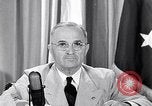
President Harry Truman of United States speaks about peaceful uses of atomic energy, following Potsdam Conference.
President Harry S. Truman of United States addresses the United States people after returning home from the Potsdam Conference, during World War II. President sitting at a desk and speaking into a microphone, talks about atom bombs. He says bombs were dropped against those guilty of the attack on Pearl Harbor, and those who have starved and beaten American Prisoners of Wars. Further he says that the atomic bomb has been used to shorten the duration of war, thereby saving numerous lives. He says the U.S. will continue to use the atomic bomb until Japan surrenders. He notes that the United States, Great Britain and Canada have the technology to produce atomic bomb, but that it will not be revealed until means have been found to control the bomb, so as to protect the world from total destruction. He talks of preventing the misuse of atomic power, and the importance of countries using it for the service and betterment of mankind. He describes it as an awful responsibility, and he thanks God that it has come to the United States and not to its enemies, and that the U.S. prays that God will guide it to use atomic power for His ways and His purposes.
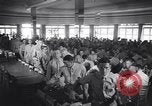
Organization of the United States Army and its divisions responsible for coordination during combat missions.
Organization of the United States Army in World War 2. Men stitch uniforms of soldiers at a factory. Animated flowchart showing various levels of service and departments in the U.S. Army. Secretary of War is the Supreme Commander followed by Chief of Staff and a Deputy Chief. Ground, Air forces and Supply services. Procurement of ammunitions and equipment is directly looked after by Secretary of War. Trucks for supply for army. Soldiers during combat missions. Task Force, Defense Command and Theater command aligns the forces during such missions. Sailors on a navy ship.
CRITICALPAST.COM: About Us | Contact Us | FAQs - How to Order | License Agreement | My Account | My Lightboxes | Shopping Cart | Advanced Search | Featured Collections | Website Terms & Conditions | Privacy Policy ©2026 CriticalPast LLC.
License Agreement |
Terms & Conditions |
Privacy Policy
©2026 CriticalPast LLC.