


 Francais
 Deutsch
 Italiano

Refine Your Search
Greek-Civil-War stock footage and images
- Showing 14239 to 14244 of 27563 results more
 Hide
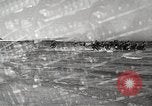
A Pentagon messenger performs his duties in Arlington, Virginia unaware of the vital information he carries.
Contribution of messengers during World War II. Wrecked tanks and equipment on a field. U.S. Army soldiers guarding prisoner of war German soldiers as they march. View of German prisoners at an encampment. Duties of an African American messenger at the Pentagon in Arlington, Virginia. Augustus Johnson walks in various corridors of the Pentagon building, carrying messages. He talks to an African American dispatching supervisor. He places an envelope carrying information on a rack. A sign board reads: 'Army Air Forces'. He meets a visiting official and escorts him to his destination. Narrator extols importance of the messenger job during World War 2.
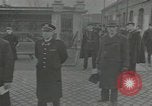
French politician Pierre Laval and German Minister Schleier arrive at the North Station in Paris, France (WW2)
World War II French prisoners of war come out of freight cars and walk towards a railroad platform in Paris, France. Wounded French prisoners arrive at a train station in Paris. Soldiers assist the wounded. French prisoners of war walk with baggage. French politician Pierre Laval arrives from London, England at the North Station along with German Minister Schleier. He shakes hands with other German officers. Debris lying outside German troops barracks.
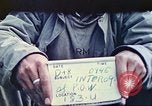
U.S. Marine Corps of 4th Marine Division interrogate Japanese prisoner in Iwo Jima island during Iwo Jima operation in Japan.
United States Marine Corps of the 4th Marine Division in Iwo Jima island during Iwo Jima operation of World War II. The Marines interrogate a Japanese prisoner in a dug out in the Island. The Marine fills a Prisoner of war form. The Marine points at a situation map and interrogates the prisoner. The Marine speaks to another Marine reading the Prisoner of war form. Two United States tanks burning.
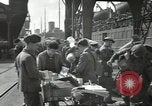
Soldiers of the British Expeditionary Force board a ship while others board trains during the Battle of France during WW2.
The BEF (British Expeditionary Force) being transported to war front in France during Battle of France of World War II. British troops march with their baggage and embark a troop transport ship at a British harbor. Another group of British soldiers waiting on a railway train station platform for the railroad train to arrive to transport them toward the war front.
Armistice Day celebrations in Washington DC
Crowds turn out in the Nation's Capital, Washington, DC, to celebrate the armistice bringing an end to World War I. People waving American flags and expressing joy, fill Lafayette Park across the street from the White House. View from a car moving along street, showing cheering crowds everywhere. Scene shifts to White House, as President Woodrow Wilson, walks from the doorway to his waiting Pierce Arrow limousine, bearing license plate number 80 002. A Secret Service agent steps onto the running board, momentarily, and then the car proceeds. The next scene shows the President's car departing from the grounds of the Capitol, with a Secret Service agent riding the running board and two others running alongside in the roadway. The crowd at the U.S. Capitol begins to disperse. U.S. soldiers form a snaking line and march, holding on to each other's shoulders, led by a flamboyant African American celebrant, acting as drum major, who struts at the head of the line, proceeding in front of a trolley car, on Pennsylvania avenue. A soldier attempts to push the flamboyant man off of the parade route, but he perseveres in leading the parade. Another trolley car passes close to them as it moves in the opposite direction. Next, President Wilson is seen at the West Wing gate of the White house, conversing with Attorney General,Thomas Watt Gregory. A U.S. Army brass band marches past, followed by marching units of sailors, and Salvation Army women. A float with flags and representatives of Allied countries, is seen next in the parade. (World War I; World War 1; WWI; WW1)
President Woodrow Wilson aboard USS George Washington heading from Hoboken Port in New Jersey to France for peace negotiations.
American President Woodrow Wilson heads for the Paris Peace Conference, following the armistice in World War I. USS George Washington leaves Hoboken Port in New Jersey. A board reads "US Army Transport Service'. Small boats along USS George Washington. (World War I; World War 1; WWI; WW1)
CRITICALPAST.COM: About Us | Contact Us | FAQs - How to Order | License Agreement | My Account | My Lightboxes | Shopping Cart | Advanced Search | Featured Collections | Website Terms & Conditions | Privacy Policy ©2026 CriticalPast LLC.
License Agreement |
Terms & Conditions |
Privacy Policy
©2026 CriticalPast LLC.