


 Francais
 Deutsch
 Italiano
Refine Your Search
Greek-Civil-War stock footage and images
- Showing 1471 to 1476 of 27579 results more
more Hide
Hide
U.S. Combat Team work as reinforcement party during War in Korea.
U.S. Combat Team during the War in Korea. Soldiersof airborne regimental combat team jump from aircraft with the help of parachutes and land on the field. War artillery and other essential goods also dropped from the aircraft with the help of parachutes. Army combat team soldiers pick up the supplies and take attacking positions. UN Army officers have a discussion over the working of Combat Team and war artillery used during the Korean War.
U.S. Army soldiers recover German Panzer III Ausf L Flamethrower tank, in a village near Salerno, Italy, in World War II
U.S. Army troops of 179th Infantry entering village at Ponte Barizzo, Salerno, Italy, during World War 2. Some ride in a DUKW amphibious vehicle, and a few trucks are seen. But most soldiers simply walk through the area. An officer in a parked jeep watches as the troops move past. Soldiers hoist one of two captured German Panzer III Ausf L Flamethrower tanks with a U.S. tank recovery truck, and haul it away. Tank has unusual '2 squared' marking - vehicle number is raised above platoon number. A U.S. Army soldier, standing in the turret, steers the German tank as it is being towed. Elements (not seen) of the 753rd Tank Battalion and 645th Tank Destroyer Battalion were also engaged in this operation. (Note: Location has been identified as the intersection of SP11a and SP 278 east of the Sele River.) (World War II; WW II; World War 2; World War Two)
Strikes in various cities, formation of the Communist Parties, and disorder in the U.S. and Soviet Union after World War I.
The aftermath of the World War I. People of America celebrate the end of the war. Soldiers aboard a ship as they return back to America. Several scenes of America before war. A parade. Sketch depicts the era during the presidency of Thomas Woodrow Wilson. Soldiers on the battlefield fight and fire artillery. A parade in America. Sketches depict the willingness of Woodrow Wilson to join the league of nations and America's refusal to join it. Woman of America casts her vote. Sketches depict the financial status of the Americans and the inflation after the war. Steel workers on strike. The policeman go on a strike in Boston. Sketch depicts the unsafe cities of United States. Picture of John Calvin Coolidge, Governor of Massachusetts. The governor inspects new police force after the strike is called off. Sketches of the revolution in Russia. Papers shows the various communist revolutions. Several sketches show the formation of communist party in America. A bomb packet reads name of John Davison Rockefeller, an American industrialist. Explosion occurs in a wagon. People injured and loss of property due to explosion. Police arrests the suspects. Sketches of the various strikes and disorders in America. Sketches of the immigrants to the United States. An official checks the immigrants. The U.S. Senator Warren Gamaliel Harding addresses the people. Harding with Thomas Woodrow Wilson in a car . Sketches compare the two Presidents.
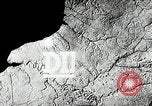
Battle of Dieppe in World War II
The Dieppe Raid, during World War 2. Relief map of France overlayed by Label "DIEPPE." Low-flying British Royal Air Force Spitfire aircraft seen attacking German installations in the area, as German guns fire at them from deep fortifications. Closeup of German antiaircraft gunners on lookout for British aircraft as they fire a Bofors (4 cm Flak 28) point blank, from atop a hill. German gunners firing 2 cm Flakvierling 38 at the attacking aircraft. A German 12.8 cm Flak 40 antiaircraft gun firing. Views on the ground of smoke rising from bomb strikes. German soldiers gathered near a Renault FT tank (one inside it) on deserted street. One soldier holds a hand grenade. A huge explosion throwing up large amount of earth. German Soldier firing MG42 machine gun from inside a building. More huge explosions. Canadian soldiers on beachhead. Some carry a wounded comrade on a stretcher. A German Junkers Ju 88 aircraft bombs vessels near the beachhead. A Churchill tank of the Calgary Regiment near burning landing craft on the beachhead. Glimpse inland of bombed buildings. View shifts to beach, again, and fallen Canadian soldiers lying in front of a burning landing craft. Wounded Canadian soldiers lying on the beach in front of a knocked out Churchill tank. German soldier giving a drink to a wounded Canadian soldier on a landing craft. Canadian soldiers being rounded up as prisoners of war, on the beach and walking under guard with seaside Church of Notre-dame-de-bon-secours in the background. Some prisoners are barefoot. One is being carried on a stretcher. Abandoned Canadian military vehicles on the beach. Canadian prisoners of war with hands raised, being escorted under guard. View of town from beach. Bomb damaged buildings in town. views of allied prisoners under loose guard: walking across a town square; on the beach; and helping injured as they walk from beachhead. View of town from overlooking cliff. Bomb damage is seen. Camera pans across the beach showing beached landing craft and damaged and abandoned military vehicles and equipment littering the shore. View from shore with Church of Notre-dame-de-bon-secours and cliffs in background. Churchill tanks and other equipment at edge of surf. Damaged fortifications in cliffside. Numerous dead Canadian soldiers piled up against a cliff on the beach. Others lying in front of German fortifications. Camera pans across fallen soldiers on the beach. Closeup of surf lapping at two Canadian helmets. More knocked out Canadian armor. A destroyed German fortification and heavy gun near the beach. More destroyed Canadian armor and fallen soldiers lying nearby. More knocked out Churchill tanks. Closeup on one named "Beefy." Closup of manufacturer's label on Churchill tank. A stack of Canadian soldiers' boots. A British Spitfire airplane crashlanded on the beach. Wreckage of a destroyed British aircraft. Closup of bullet holes in fuselage near the aircraft's roundel. A landing craft drifting in the surf. Scene shifts to the town, where canadian prisoners of war are being processed. They remove their helmets. A group of French boys (some in boy scout uniforms) march along a road. Captured Canadian commandoes in black uniforms marching under guard. Ambulatory wounded civilians walking along a sidewalk. POWs assembled in a large open space near a building where a field kitchen has been set up. German soldier puts soup into the helmets of the prisoners. POWs seated on ground eating their meal. Another look at the shore and detritus thereon. View shifts to the undamaged areas of the town and waterfront. Residents continuing on with their lives, as normal. Some conversing as children stand near a street vendor, who appears to be selling ice cream. Other city street scenes. A German soldier at an anti aircraft gun in the hillside overlooking the port. A contingent of German soldiers marching in formation along a beach road. German officers looking over a 12.8 cm Flak 40 antiaircraft gun position overlooking the beach. German troops marching below in background.
Various activities of soldiers and War Bonds in United States (WW2)
Various World War II War Bonds on table. Encourages soldiers to buy war bonds by saying 'For freedom's sake, buy War Bonds '. Views of a baseball match in a large stadium. Babe Ruth playing. Ship at port, 4-5 officials around a desk in office. Statue of a soldier. Soldiers in wooded area, U.S. flag can be seen. Lt General Somerwell, Commanding General ASF in his office, can be seen speaking.
Early life of General George S Patton, and Patton in Africa during World War II.
'The Big Picture' episode narrated by Ronald Reagan depicts the life of U.S. General George S Patton, Jr. Opening scene shows General George S. Patton, Jr. stepping from a landing craft in France, during World War 2. He stands by the side of a road and waves, as elements of his 3rd Army pass in tanks. Patton in a jeep moving with his troops. General Patton pointing with a baton, in North Africa. View of a world globe being circled by a satellite. A baby picture of Patton (called "Georgie"). Patton seen as a boy, fencing, as a cadet at the Virginia Military Institute, and as a cadet at the U.S. Military Academy, West Point. A smiling Patton at West Point. Members of the first football team for soldiers established by Patton. Renault tanks of the 1st Tank Battalion moving with AEF soldiers in World War I. Tank commander George Patton standing in front of a Renault tank. Group picture of American soldiers and tanks, at the Tank School, in Fort Meade, Maryland, after World War I. Closeup of Dwight D. Eisenhower and George S. Patton, in the group. Patton and his wife, Beatrice Banning Ayer, in Old West costumes, for a party, where he displays a pistol in his belt, and in costumes for another party, where they dress as a knight and his lady on horseback. American recruits and draftees being issued uniforms in World War 2. Lieutenant General George S. Patton, Jr. commanding forces for the invasion of North Africa, in November, 1942. U.S. Navy warships fire their guns in advance of an amphibious landing. Landing craft heading toward shore. U.S. troops coming ashore at Casablanca, French Morocco. General Patton accompanied by French officers. Glimpse of U.S. President Franklin D. Roosevelt and British Prime Minister Winston Churchill at their conference in Casablanca in 1943. Patton riding in an armored car with three-star flag displayed. Artillery firing in battle of Tunisia. Lt. Gen. Patton and others observing operations. British General, Sir Harold Alexander, steps from a light airplane to meet with General Patton in North Africa. They converse. General Patton in March 1943 with binoculars observing battle, with Major General Terry Allen on his right, and Brigadier General Theodore Roosevelt Jr. to the right of Allen. They are viewing from a ridge by the village of El Guettar, as allies engage German troops and armor from the 10th Panzer Division. M3 Lee tanks moving in the desert. Knocked out tanks of the German 10th Panzer Division, including German Panzer IV tanks, in the aftermath of the Battle of El Guettar. General Patton coming aboard an American warship, and then standing with an Italian officer and a U.S. Major General. Allied naval bombardment at night. Patton observing though binoculars. Allied warships bombarding Sicily. Allied amphibious forces heading ashore in landing craft. Troops moving ashore. Closeup of troops in a landing craft. Glimpse of Patton in a landing craft. Troops walking across floating dock from a landing ship. U.S. flag flying in sand at beachhead. Landing ships in background. General Patton stepping ashore from small boat, and conversing onshore with a Brigadier General and some troops.
CRITICALPAST.COM: About Us | Contact Us | FAQs - How to Order | License Agreement | My Account | My Lightboxes | Shopping Cart | Advanced Search | Featured Collections | Website Terms & Conditions | Privacy Policy ©2026 CriticalPast LLC.
License Agreement |
Terms & Conditions |
Privacy Policy
©2026 CriticalPast LLC.