


 Francais
 Deutsch
 Italiano
Refine Your Search
Greek-Civil-War stock footage and images
- Showing 1513 to 1518 of 27579 results more
more Hide
Hide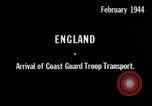
U.S. Transport ships with Coast Guard crews arrive in England during World War II.
United States Coast Guard Troop Transport ships arrive in England during World War II. Troops are all on deck aboard the USS Samuel Chase (APA-26) watching as she approaches the coast of England in February , 1944.Views of soldiers watching from various places on the ship. The last few seconds of the films also shows similar views of troops arriving on the USS Joseph T. Dickman (APA-13) (World War II; WW II; World War 2; World War Two)
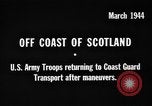
United States soldiers return to their Troop ship after practicing amphibious assaults off Scottish coast during World War II.
Opening scene shows the American transport ship, USS Thomas Jefferson (APA-30) anchored in a bay off Scotland in March, 1944 during World War 2. View from deck of the USS Thomas Jefferson, as some of her Higgins boats return from maneuvers to bring soldiers back on board. The troops climb up landing nets at the side of the ship, with help from U.S. Coastguard crewmen. View from directly overhead shows the landing net clearly. Various views of the Coastguard crewmen helping the soldiers. (World War II; WW II; World War 2; World War Two)
Women on the Warpath: American women working in B-24 Liberator aircraft factory during World War II
American women at work in war production jobs in the United States during World War 2. American women work for the war production to help the soldiers and to increase the manpower. Smoke from the chimneys of factories. Crane at a harbor. Exterior of an ammunition factory. U.S. Army Air Forces B-24 Liberators under construction in a factory. A woman types a document, seated at a desk. Other woman work along with her. Women in uniforms. Women wash cars. Women pumping gas at gas stations. Women work at farms. 3 planes fly in formation. Women watch the planes in flight. Cars arrive outside a building. Women exit the cars. They work in the aircraft factory. Men work in the factory. Woman work along with them. A poster reads: 'Women in the war'. Women being instructed about the engine of the aircraft. They work on different parts of the plane. They work on a tiny equipment. Men serve food to women. Women seated at table as they eat food. Other women work on the tail section of the aircraft. The planes ready to be tested as they are parked outside the factory. A plane taxis on the airfield. Planes fly in formation.
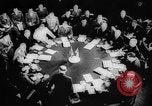
V-J Day: New Yorkers celebrate as President Harry Truman announces Japanese surrender during World War II.
Events surrounding the surrender of Japan during World War II. Scene from the Potsdam Conference meeting. Group of dignitaries together including Clement Attlee, Harry Truman, and Joseph Stalin. U.S. President Harry S. Truman and the General Secretary of the Communist Party of the Soviet Union, Joseph Stalin, in discussion. A parade in Moscow showing Soviet military might (these scenes are from the May 1, 1945 May Day parade just before Germany's surrender). Scene changes to Japanese Emperor Hirohito riding on a white horse in a procession. Next scene shows dignitaries arriving for meeting at the White House in Washington D.C. U.S. Secretary of War Henry Stimson, Secretary of State James Byrnes and Secretary of Navy James Forrestal meet at the White House. Close up view of Secretary Forrestal. View of President Truman with his cabinet in a meeting. Scenes from prior months showing dignitaries involved in the war: Close up of the late President Franklin Roosevelt. A scene of President Roosevelt shaking hands with several Soviet military officers. General Douglas MacArthur seated and talking to President Roosevelt. Close up view of Chairman of Nationalist Government of China, Chiang Kai Shek. View of U.S. Navy Admiral Chester Nimitz shaking hands with a sailor. Views of President Truman meeting in emergency session with his cabinet, and his announcement of the Japanese surrender. View of former Secretary Hull at that meeting. President Truman standing as he reads from a bulletin confirming the Japanese acceptance of the terms of the Potsdam Agreement and their agreement to unconditional surrender. View of media, press, and newsmen running from the White House to file the happy news story. New Yorkers rejoice at the end of war. Daytime scenes of happy, jubilant celebrations on Victory over Japan day, or V-J Day, in the Times Square area of New York City. Crowds cheering, people dancing, soldiers, sailors, and citizens waving hands and American flags. A neon sign with message "Japs Surrender". View of night time celebrations at Times Square as the crowd continues to celebrate VJ Day.

U.S. wartime propaganda film - Japanese people toil in industry and at warfare unified to help Japan win World War II.
United States anti-Japanese propaganda war film about Japan and its people, and its intentions in World War 2. A White actor narrator impersonates a Japanese man, enforcing negative stereotypes and mocking Americans. “You’ve learned that the Japanese do not show their feelings, nor do I have big teeth and thick glasses- how sad to disillusion you” the narrator mocked. Japanese people work to help Japan win war. Japanese people work on a farm. People row in boats on a lake facing Mount Fuji. Snow-capped Mount Fuji. Volcanic explosion. Japanese soldiers seize the United States flag. Japanese flag flying. Sacred fishes in a pool. Soldiers hold Japanese flags as they cheer Banzai in a victory celebration after battle. Modern buildings in a Japanese city. High altitude view of buildings in an area. Bombardment in a city. Destroyed houses, buildings, and rubble on the ground of Japanese cities. United States warplane aircraft fly in formation. Aerial view of a Japanese city. People walk on the street. Vehicles pass on street. Ship 'Argentina Maru' docked at a Japanese harbor. People sow rice seeds on the farm. Narrator (actor impersonating a Japanese person) mocks Americans as being soft. View in an American town of cars parked along the sides of a main street. American 1940's cars. Jockey's Ball banner. People queue at theater box office and in train stations. United States nightclubs, bars, and casinos. United States people at beach. Japanese industry and munitions factories. Ships underway at sea. United States Marines carry a dead soldier on stretcher. United States Marines coming ashore and Japanese soldiers fighting in Pacific islands such as Guadalcanal and Tarawa. Forces of both sides fire guns and artillery. Smoke from bombardment. Ragged Japanese forces surrendering to United States forces. Japan's best forces shown marching in formation and review. Young Japanese soldiers in training. Japanese children study in a school. Burning Japanese city following attack. Japanese citizen refugees flee, a woman crawls across a railroad track. Japanese girls and boys exercise simultaneously outdoors. Japanese soldiers execute two men (possibly in China?). Prisoners held by Japan in forced labor; others executed. Japanese soldier puts his hat on a little girl, other children playing. Remains of a newborn infant wrapped in cloth lying on the street. Forced laborers from Japanese-occupied countries are made to farm rice. Remains of victims of Japanese forces. Heads of decapitated victims lying on the field. United States prisoners emaciated and injured in the Philippines. A United States soldier wipes his tears after losing an arm. Remains of United States troops, Japanese soldiers, and Asia civilians. Japanese soldiers deploy for war at train station. Map showing Japan, China, Manchuria, and Mongolia. A Type 3 Chi-Nu tank rolling up a fortress in China. Soldiers marching on rice fields and climbing rocky cliffs. Japanese soldiers assume prone position, firing rifles.
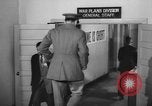
Staff of the War Plans Division pass through a Munitions Building doorway in Washington D.C.
War Plans Division of the U.S. War Department in the Munitions Building in Washington D.C during World War II. A sign on a doorway reads: "War Plans Division General Staff" with a sign in the background: "Time is short." Staff members enter and come out through the door. Closeup view of the sign over the door.
CRITICALPAST.COM: About Us | Contact Us | FAQs - How to Order | License Agreement | My Account | My Lightboxes | Shopping Cart | Advanced Search | Featured Collections | Website Terms & Conditions | Privacy Policy ©2026 CriticalPast LLC.
License Agreement |
Terms & Conditions |
Privacy Policy
©2026 CriticalPast LLC.