


 Francais
 Deutsch
 Italiano
Refine Your Search
Greek-Civil-War stock footage and images
- Showing 1687 to 1692 of 27579 results more
more Hide
Hide
European Relief Council feeds starving children of war effected countries in Europe.
United States' European Relief Council (ERC) along with other American relief organizations feeds starving children in war effected countries of Europe, in the period after World War I. The United States contributes $33,000,000 to meet the needs of 3.5 million war affected children. Volunteers distribute food to children. Men and women watch as boys and girls stand in line and wait for their turn, receiving food aid including hot soup or stew. Children sit around a table as they eat and drink from mugs. View of Herbert Hoover, Program Director of the American Relief Administration (and its predecessor the U.S. Food Administration), working on a document urging the American people to help the children in need.
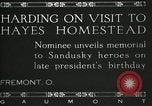
U.S. President W G Harding attends the unveiling of the Sandusky County War Memorial in Fremont, Ohio.
U.S. President Warren G Harding visits the homestead of former President Rutherford B Hayes in Fremont, Ohio. Colonel Webb Hayes (James Webb Cook Hayes), son of former President Hayes, greets them at Spiegel Grove house. Dignitaries proceed for the unveiling ceremony of Sandusky County war memorial on the portico of the Rutherford B Hayes Museum Library. They approach the ceremony area followed by a military band. Colonel Hayes in Army uniform and his wife, Mrs. Hayes (Mary Otis Miller Brinkerhoff Hayes), in YWCA uniform, standing near President Harding. Mrs Hayes does the honor of unveiling the Sandusky County Honor Roll that lists war dead from the region, including those lost in the recently ended World War 1.

Description of Nazi operations during war at Nuremberg trials in Nuremberg Germany. Audio only.
Audio only. Nazi war leaders on trial in Nuremberg Germany. Decisions on how the charges will be grouped. The speaker focuses on major issues during trial: Violation of International law of war, charges for participation in common plan of conspiracy, charges for planning and execution of war and territory loss by Germany.
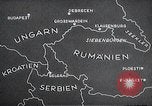
German 23rd Panzer Division engages Soviet and Romanian forces in Hungary (Northern Transylvania) on Eastern Front in World War II
Battle of Grosswardein, precursor to Battle of Debrecen, in World War 2. In late September, 1944, the German 23rd Panzer division was ordered to clear Grosswardein (aka Oradea or Nagyvárad) and environs occupied by Soviet and Romanian forces (who had switched sides a month earlier). In late September, 1944, the German 23rd Panzer division was ordered to clear Grosswardein (aka Oradea or Nagyvárad) and environs occupied by Soviet and Romanian forces (who had switched sides a month earlier). This was prelude to the World War 2 Battle of Debrecen, in October, 1944. Map shows areas of interest and reflects German treatment of Grosswardein and Debrecen as part of Hungary (Northern Transylvania), A German 88mm artillery piece is seen being towed uphill by a SdKfz 6 half-track. Battery of German 15 cm schwere Feldhaubitze 18 cannons being fired from high ground. Their shells striking at edge of wooded area. View of shells being loaded. Chalk writing on one "trotzdem siegen win" or in English "We will win despite all this". German Panther medium tanks move at the head of a column that includes Stug III and other armor. A Stug III camouflaged with tree branches. German armor advancing across and open field. Two tanks parked, and their crew members watching the battlefield. Explosions in the field. German machine gunners firing against Soviet infantry. Romanian soldiers surrendering in a grove of trees, are searched and processed as prisoners of war. German infantry moving through field of corn stalks, along with armored personnel carriers (Schutzenpanzerwagen SdKfz 250/10 Neu). A truck burning in the field, with a field piece attached on a towbar.
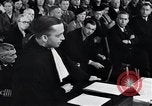
War crimes trial. Closing statements and sentencing of Hanns Albin Rauter in the Hague, Netherlands.
Trial of Nazi German war criminal Hanns Albin Rauter in the Hague, Netherlands, after end of World War 2. Closing statements. One among the attorneys, K.T.M. van Rijckevoorsel, LLM, stands up and reads out some documents. Judges in tribunal listen to the statements. Accused Hanns Albin Rauter stands up and makes a speech, saying that he concluded he was not a war criminal having studied his conscience. The court is then adjourned with the announcement that sentence will be passed in a few weeks and the policemen escort Rauter out of the building and take him to a waiting police van.
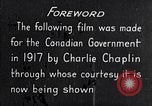
Charlie Chaplin in "Some Bonds I Have Known," promoting War Savings Certificates (WW2)
Famous actor Charlie Chaplin dramatizes four bonds for Canadian audiences, in a short feature called, "Some Bonds I Have Known." It was originally created in 1917 for the Canadian Government and re-released in 1942 as an incentive for Canadians to purchase War Savings Certificates in World War II. The presentation includes four skits with Chaplin describing the bonds of friendship, love, marriage and most importantly the Victory Bond. It concludes with a view of a War Savings Certificate and an appeal to viewers to buy them to "win this one."
CRITICALPAST.COM: About Us | Contact Us | FAQs - How to Order | License Agreement | My Account | My Lightboxes | Shopping Cart | Advanced Search | Featured Collections | Website Terms & Conditions | Privacy Policy ©2026 CriticalPast LLC.
License Agreement |
Terms & Conditions |
Privacy Policy
©2026 CriticalPast LLC.