


 Francais
 Deutsch
 Italiano

Refine Your Search
Greek-Civil-War stock footage and images
- Showing 18325 to 18330 of 27588 results more
 Hide
Color Sound
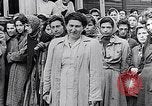
Speech of a woman doctor who was a liberated prisoner and in charge of female section at Belsen concentration camp in Germany
The Bergen-Belsen concentration camp of Nazi Germans in Lower Saxony, Germany after liberation by British Army during World War II. A woman doctor, prisoner and in charge of the female section, describes conditions of the camp. She indicates there were no beds, little food and water a day. Epidemics of typhus spread. No medicine available. More than a thousand died daily. Various gynecologic experiments performed on girls around nineteen years of age. Guards in the men's camp took out liver and heart of dead men and ate them. Food and chocolates distributed by Red Cross just before British forces arrived. Medical experiments included giving heavy Benzene injections to the prisoners. Women liberated from the camp stand around her. Clip is part of Nuremberg Trials prosecution exhibit 230
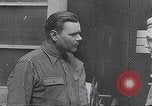
Camp guards arrested and piles of tortured dead bodies moved for burial at Bergen Belsen concentration camp in Germany
The Bergen-Belsen concentration camp operated by Nazi Germany in Lower Saxony, Germany after liberation by British Army during World War II. Narrator identifies Nazi officer by the name Kramer, as the camp commander, who is taken into custody by British troops. Guards of camp arrested by British Army. Prisoners inside the camp starved and sick, including some in a bunk house. Liberated woman weeps and kisses hand of a British soldier. Dead bodies of atrocity victims lie on grounds. Dead bodies of young women. Tortured and severely beaten dead bodies. Prisoner numbers tattooed on the arms of dead bodies. SS guards ordered to toss corpses in trucks. Immense number of dead bodies kept on open ground. SS guards toss dead bodies in a large open mass grave. German women guards at the camp walk out of a barracks, ordered to bury the dead. They drag dead bodies and throw them in a mass grave. A bulldozer sweeps piles of dead bodies in mass grave. Its operator covers his face. Pile of dead bodies swept into a mass grave. A U.S. Navy signed affidavit of authenticity of the footage concludes the clip. Clip is part of Nuremberg Trials prosecution exhibit 230

People walk at a park and black marketers exchange cigarette and food in exchange of valuables in Frankfurt, Germany.
People walk at a park and black market activities in the city of Frankfurt, Germany soon after the end of World War II. Number of cows grazes in an open field. A middle aged couple walks on a lonely path at a park talking to each other. Another man walks with a small child. A man exchanges cigarette carton for a bunch of marks. A black market dealer deals with a man on a road, and refuses to accept money. He takes other man's wrist watch in exchange of food and walks away.

People rummage through dump and buildings of a Displaced Person's Camp at the city of Frankfurt in Germany.
People rummage through dump and buildings of a Displaced Person's Camp at the city of Frankfurt in Germany, soon after the end of World War 2. A building, part of Displaced Person's Camp at Zeilheim. People rummage through dump at Bad Vibel. Tin cans in the dumped waste. Children's Center building and children outside it. Refuse in the dumped waste. Trucks empty loaded garbage near a lump of garbage. Men rummage through in garbage. A two way road. Signboards by the side of road. The drawing room's interior of a prosperous farmer, with table lamps and sofas. Plantation in the fields of the farmer. A girl in the farms.

Large piles of dead bodies at a Nazi concentration and death camp in Mauthausen, Austria after liberation (WW2)
A Nazi concentration and death camp in Mauthausen, Austria after liberation during World War II. Large piles of dead bodies at the camp left behind by German guards. Individual bodies and leaned survivors near them. Piles of leaned, starved and tortured dead bodies scattered on the ground.

Piles of dead bodies and survivor men and women at a Nazi concentration camp in Mauthausen, Austria after liberation (WW2)
A Nazi concentration and death camp in Mauthausen, Austria after liberation during World War II. Inmates in the women section. Leaned and starved survivors of the death camps after the retreat of German guards. Piled dead bodies scattered on the ground. Starved survivors at the camps in torn clothes, including some boy children. Barbed wire fencing and barracks huts along it.
CRITICALPAST.COM: About Us | Contact Us | FAQs - How to Order | License Agreement | My Account | My Lightboxes | Shopping Cart | Advanced Search | Featured Collections | Website Terms & Conditions | Privacy Policy ©2026 CriticalPast LLC.
License Agreement |
Terms & Conditions |
Privacy Policy
©2026 CriticalPast LLC.