


 Francais
 Deutsch
 Italiano

Refine Your Search
Greek-Civil-War stock footage and images
- Showing 2599 to 2604 of 27581 results more
 Hide
Color Sound
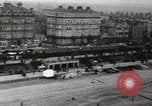
British soldiers with guns at beaches and soldiers check identity of people in England during World War II.
Aerial view of buildings and beaches on coast of England, United Kingdom, during World War 2. Narrator describes preparations by British soldiers for an invasion of England by German forces. British soldiers train for defensive operations. They run holding rifles and take up positions along the coast. Artillery gun barrel as the gun is fired. A group of soldiers run carrying guns. Two soldiers walk. A church and a field. A soldier checks the identity of a woman and a man. Another one stops a vehicle and checks the identity of a civilian driver. Soldiers board vehicles. British aircraft overhead in flight, on patrol against German attack. British troops hold guns and march. New recruits are processed: Man in civilian suit stands in queue to receive military uniform and equipment as he enters the British armed forces. A ship carrying troops from Canada departs its home port bound for the war front. Families of the troops wave from dock and wish them good bye.

Late wave of German men recruited for Volkssturm and receiving uniforms and weapons in Germany, late in World War 2.
German Army units in action in Germany in January 1945. German troops on tanks fire artillery mounted on the tanks. Smoke due to explosions. Front of a gun barrel. A German flag. Youths and old men enlist in Volkssturm, a German military group under the Nazi party, comprised largely of youth and older men. New German soldiers assembled in outdoor square salute and taking an oath. A poster depicts national sacrifices through the Volksopfer program running from 7 - 28 January, 1945. Civilians donate clothing and equipment to the Reich to aid the German war effort and to supply the Volkssturm soldiers with material. A man pulls a trolley filled with donations. German citizens form a long queue to donate surplus clothing and equipment for the war effort. Newly minted Volkssturm soldiers receive uniforms, armbands with slogan "Deutscher Volkssturm Wehrmacht", and weapons. Men take out the uniforms from a stack. They wear their uniforms. Close ups of faces of new soldiers holding rifles. Newly drafted German soldiers receive Panzerfaust anti-tank weapons and are seen marching with rifles.

Some of the captured prisoners of war walk in front of buildings during the Battle of Arras in France.
The Battle of Arras in France during World War I. Some of the captured prisoners of war walk on a road in front of buildings. A mass of prisoners walks accompanied by officers. Some of the prisoners sit and others stand in the back.
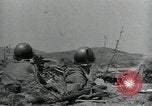
U.S. Army Medical Service at work during the Korean War.
The role of the American Army Medical Service during the Korean war. U.S. Army Captain Carl Zimmerman introduces Major General George E. Armstrong, Surgeon General of the U.S. Army who speaks from Washington, DC, about the work of the medical service. Scenes from the Korean War. U.S. troops rushed from japan, in July 1950 after a Chinese offensive at the 38th Parallel. Troops disembarking from ship and unloading artillery. Medical personnel offloading from assault boats, including doctors, medics, ambulances and drivers. A crane offloads medical equipment and supplies from a ship. Nurses with a mobile surgical hospital unit. Medics remove a casualty from an ambulance, on a stretcher. U.S. infantry slogging through difficult terrain. An ambulance driven on a mud road. Korean refugee families. Children sit and eat. People walk. An old Korean man is helped into a car. U.S. C-54 transport aircraft unloading supplies and evacuating wounded on stretchers. Medical supplies being unloaded from an aircraft and loaded into a truck. Surgeons in a tent hospital. A doctor treats a patient who is receiving blood plasma in an IV. Medics moving with tanks and infantry. Walking wounded being assisted. U.S. wounded lying on the ground, attended by medics. The U.S. medics treat injured soldiers during a tank battle. Soldiers on tanks. Thousands of paratroopers jumping from aircraft, their parachutes filling the skies. U.S. Army wounded being treated on stretchers around the Yalu River. Tenth Corps Troops in long winter withdrawal. U.S. Marine aircraft evacuating wounded. Troops withdrawing by sea in Landing Ships.
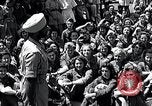
Women's Army Auxiliary Corps (WAAC) training and and contribution to war efforts in different parts of the world (WW2)
The role of Women's Army Auxiliary Corps (WAAC) in the United States Army during World War II. In January 1943, the first posting of WAAC enlisted personnel overseas, was to Algiers. Women disembark a ship. WAAC women walk with orphan children into a convent. A WAAC woman washes utensils; others dry clothes. WAAC women arrive in Scotland and get trained. Women visit India. Women at the Taj Mahal in Agra. Women visit New Delhi. Women on camels in Cairo. Women disembark a ship in Europe. Two women adjust a tent. Woman washes her hair and clothes using her helmet. Women inside a tent. Woman checks injured soldiers. Nurses in hospital as they look after soldiers. Women march. A woman pays homage to the female soldiers who sacrificed their life in war. Soldiers carry another injured soldier on stretcher. Officers check injured women in hospital. Women in uniform march.

Soviet advance and liberation of Warsaw and Poznan during drive toward Berlin in World War 2
Russian attacks on Warsaw and Poznan in World War II in late 1944 and early 1945. Soviet army using tanks, heavy artillery, machine guns and grenades advance forward. Marshal Zhukov and Marshal Rosokofskey inspecting Russian cossacks advancing on horses. A Soviet soldier is shot by a sniper while running through street intersection. A Russian machine gunner firing a Soviet DP-28 light machine gun shoots at building to take out a sniper's nest. Dead bodies of German snipers in rooms next to windows. Views of ruined city of Poznan. Liberated concentration camp victims, including a woman who has been blinded in one eye. Interior of a room in Poznan Prison loaded with torture equipment, including a guillotine. Piles of bodies of persons mass executed during German retreat. Women crying over bodies in coffins of three Polish men that were found hanging in the liberated prison. German Generalmajor Ernst Mattern and his fellow officers seen after surrendering Fort Winiary Citadel (Poznan Citadel). Soviet soldiers. Liberated civilians in Poznan hit and beat German soldier prisoners of war as they are marched under Soviet guard. Scenes of ruined Warsaw include a sign that reads, 'Adolf Hitler Platz.' A wrecked trolley or street car with signs on it that read, ''Wierzeno' and 'Ein u. Ausstieg nur fur Deutsche' which translates to English as, 'On and off exit points only for Germans' The ruined home of Frederic Chopin in Warsaw. The Polish flag flying again after battle.
CRITICALPAST.COM: About Us | Contact Us | FAQs - How to Order | License Agreement | My Account | My Lightboxes | Shopping Cart | Advanced Search | Featured Collections | Website Terms & Conditions | Privacy Policy ©2026 CriticalPast LLC.
License Agreement |
Terms & Conditions |
Privacy Policy
©2026 CriticalPast LLC.