


 Francais
 Deutsch
 Italiano
Refine Your Search
Greek-Civil-War stock footage and images
- Showing 2617 to 2622 of 27482 results more
more Hide
Hide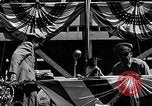
At an Air Show in Spokane, Washington, Major Samuel Grashio, survivor of Bataan Death March, speaks during World War II
Army Air Force Major Samuel Grashio speaks prior to an air show in Spokane, Washington, during World War 2. He is from Spokane, a survivor of the Bataan Death March, and had successfully escaped from a Japanese prison camp. The Major begins to describe his experiences during the fall of Corregidor and Bataan, during the Japanese invasion at the start of World War II in the Pacific. Unfortunately, the sound stops (purposely ?) as he gets into the details of his story.

French troops shell rebel -held towns and mop up the entrenched Vietnamese in Hanoi, Vietnam during Indochina War.
Rebellion flares in Hanoi, Vietnam during Indochina War. French troops shell rebel held towns and then move in for bitter in-fighting with machine guns and small arms to mop up the entrenched Vietnamese. Wounded and dead combatants in the ruins. General Jacques-Philippe LeClerc, in charge of the military operation in Indochina, and French oversea minister, Marius Moutet, inspect the area. They move in towns by jeep and army tanks. General George and others standing outside the Pasteur Hospital building (National Institute of Hygiene and Epidemiology, 1 P. Yec Xanh, Phạm Đình Hổ, Hai Bà Trưng, Hà Nội 100000, Vietnam), which had been vandalized. Debris and wreckage in buildings. French soldier enters a trench and finds a Japanese-made helmet (World War 2 era) that was used by a Viet Minh soldier.
Amputees of World War II meet U.S. President Harry S. Truman in Washington and show their fitness and use of prosthetic limbs.
Partially disabled amputees of World War II meet U.S. President Truman in Washington. A World War II veteran who has both his legs amputated walks in front of President Harry S. Truman with the help of prosthesis artificial limbs. Another veteran with amputated hands lights a cigarette. Both of them shake hands with Truman.
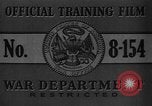
Soldiers gather at the War Department Theater to watch a film on 'Sex Hygiene' in United States (WW2)
Sex education in the United States military during World War II. Soldiers gather in an auditorium to watch a training film titled 'Sex Hygiene'. Dramatization showing soldiers causes of the contraction of the diseases. Soldiers in a club play pool, billiards, snooker, cards and various other games. Close up view of turntable on a vitrola or phonograph record player turning as music plays. A soldier enters the office of Commanding Officer James E Brown. The officer gives him a notice regarding the showing of the film in the War Department Theater. Soldiers march. Buildings along the sides of street. Soldiers gather in the theater. Officer addresses them. The film is shown in the theater. The officer of the Army Medical Corps addresses the soldiers about the causes of the sexual diseases. Doctors test a soldier. They examine the organisms causing diseases through a microscope. A diagram of human body. The officer talks about the inner parts of the body and the sources by which the diseases can be spread. He talks about various diseases like the syphilis, gonorrhea and chancroid.
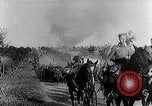
German soldiers advancing; German war production workers; Adolf Hitler greeted by soldiers
German Army soldiers advancing on a road during World War 2. Views of three different burning and destroyed German tanks in a town and on a battlefield. Dead bodies of German soldiers near a destroyed tank. Dead bodies of German soldiers in foxholes and trenches. Scenes inside a German war production factory with workers making rifles. A worker inspects a rifle stock. Newly built German tanks driving up ramps onto rail cars for transport. Adolf Hitler reviews columns of German soldiers marching on a road and delivers Nazi salute to them.

Presenting the trust fund for construction of war memorial in Europe (WW2)
General William Kepner and other officials meet after the end of World War II in Europe. Interior of the British Parliament House shows presiding officials and Generals. A General gives a speech about the trust fund for construction of war memorial.
CRITICALPAST.COM: About Us | Contact Us | FAQs - How to Order | License Agreement | My Account | My Lightboxes | Shopping Cart | Advanced Search | Featured Collections | Website Terms & Conditions | Privacy Policy ©2026 CriticalPast LLC.
License Agreement |
Terms & Conditions |
Privacy Policy
©2026 CriticalPast LLC.