


 Francais
 Deutsch
 Italiano
Refine Your Search
Greek-Civil-War stock footage and images
- Showing 27049 to 27054 of 27481 results more
more Hide
Hide
Cartoon depicts communist fist wrecking buildings and hitting a worker with a stick.
United States Cold War anti-communist propaganda film. Slate reads “IDEOLOGY”. A cartoon depicting a large hand clenching into a fist- symbol of communist threat. The large communist fist wrecking buildings of institutions such as churches and government. The communist fist hits a scared working-class man with a wooden stick. A communist book with words such as “Enemy”, “Line of Attack”, “Direct Reserves” and “Distribution of force” written over it. (Film is example of Anti-communist or so called Red menace propaganda)
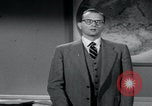
Cartoon Communists create disinformation.
State Department Foreign Service officer Boris Hansen Klosson narrates Cold War propaganda film. He discusses how communist political forces would secretly sponsor a new party under virtually the same name as an existing party in order to confuse voters. A cartoon depicts disinformation campaign. A communist leader accuse a leader of another party of having taken part of a plot against the regime. An accused party leader writes rebuttals using a typewriter on his desk. The word “Rebuttal!!” appears above him. Printer of the communist party newspaper refuses to publish accused party leader’s rebuttal. Newspapers with “ACCUSATION” written on the frontpage are being printed. Men reading communist newspapers. A communist party official confronts and uses direct coercion against an opposition politician. An opposition politician face trumped up charges in a communist court. An accused party leader hanged. An accused party leader flees his country with his family. (Film is example of Anti-communist or so called Red menace propaganda)
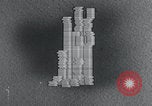
Cartoon shows Communism destroying wealth and enslaving citizens.
State Department Foreign Service officer Boris Hansen Klosson narrates United States propaganda film during the Cold War. A cartoon depicts stacked coins. Stack coins on a man’s bedside are depleted as a man sleeps. Man wakes up and finds his coins depleted. Communist police take men and women away from their apartments to send them to the countryside for state projects. A diagram depicts the political stakeholders and institutions of a country. Professionals working in communist countries are controlled by the state. A doctor chained to a Communist ball and chain treats a patient. The background changed from a clinic to a prison cell. A lawyer chained to a Communist ball speaks to judges during a court hearing. A writer uses a typewriter with paper filled with communist symbols. A ballet dancer with a communist symbol-shaped shadow. A composer plays with a musical piece with communist symbols. A painter paints the communist symbol. A nude model poses in a similar fashion. An intimidated worker is being watched over by a communist officer inside a factory. A couple have dinner inside an overcrowded apartment. Communist citizens lining up outside a state store. (Film is example of Anti-communist or so called Red menace propaganda)
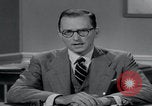
United States anti-communist film warns about isolation of individuals in society.
State Department Foreign Service officer Boris Hansen Klosson narrates anti-communist film during the Cold War. Klosson speaks about the divisiveness and infiltration by communists change the people’s psyche. “The ties that once bound people to each other is systematically severed. In a society pockmarked by unknown informers, suspicion came to replace friendliness” Klosson said. The communist system ensures the individual would feel isolated and helpless without the state. the individual is made to believe that their only choice is carrying the will of the communist state. “Submit or be crushed- This is the ultimate aim of the communist seizure of power” Klosson concludes. Closing slide reads “In our unrelenting fight against the poison of Communism, our greatest weapon is knowledge. The more we know about our enemy, the greater is our strength”. (Film is example of Anti-communist or so called Red menace propaganda)
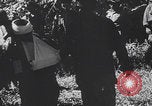
United States troops firing Long Tom inland, shoot down Kamikaze Japanese fighters during the Battle of Leyte Gulf (WWII)
United States troops secure the island of Leyte, Philippines from Japanese control during World War II. apprehend an injured Japanese soldier found in a jungle. The Japanese soldier is taken to a tent. Two semi-naked Japanese soldiers raise their arms upon surrendering. General Douglas MacArthur discussing plans to take over the rest of the Philippines from Japanese occupation. Map of the Philippines. Japanese soldiers arriving in Leyte, with scenes of Japanese troops climbing down ladders from a ship during landing. A hand points to a map as other soldiers surround it. Two soldiers sitting on the mud as they work. United States troops with 155mm Howitzer “Long Toms” firing at enemy positions. Coconut trees lined behind the artillery. Soldier uses a telephone. Artillery fire both at daytime and night. Soldiers cover their ears. Troops begin to move through the jungles of Leyte. Imperial Japanese Navy flag waving. A fleet of Japanese ships heading to Leyte Gulf. Soldiers with binoculars on the lookout. Animated map of the Philippines shows Japanese and United States fleet. United States Navy ships sailing to Leyte Gulf. United States Navy sailors at fire control station. Sailor opens valve. Gun crew removes gunpowder bags from magazine. Hand squeezes fire control trigger. Torpedo released into water. Naval artillery firing during the Battle of Leyte Gulf. United States troops reading maps and reports inland. A soldier talks on the telephone. A general (Likely General Walter Krueger) inspects a map while smoking a cigarette. A 155mm Howitzer “Long Tom” is taken to the shore. Shirtless soldiers adjust the position of the howitzer. Howitzer barrel moves upwards. United States carriers sail to Leyte Gulf. A soldier pointing while other uses binoculars. Japanese land-based bombers and fighters flying to participate in the Battle of Leyte Gulf. A Japanese aircraft is shot down, falling to the sea. Naval anti-aircraft guns firing at enemy bombers and kamikaze fighters. A shot down kamikaze Japanese fighter bursts into flames. Inferno of shot-down Japanese aircraft burning. Anti-aircraft guns strafing at Japanese fighters. Thick smoke rises from bombed United States aircraft carriers on Leyte Gulf. Two United States fighters still flying with little gas. A Grumman F4F “Wildcat” fighter struggles to land on wet runway of Leyte airfield. The F4F stumbles and turns upside down. Another F4F skids off the runway and crashes into another aircraft. Medics carry a wounded pilot on a stretcher.
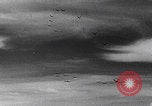
United States forces bomb and strafe Japanese near Luzon, navigate through muddy terrain in Leyte (WWII)
United States troops fight the Japanese forces in the Philippines during World War II. A group of fighters in flight east of Luzon Island in the Philippines. A fighter is strafed and shot down. Aerial view of a dogfight between American and Japanese fighters. A Japanese fighter bursts into flames. A Japanese submarine being strafed. Floating wreckage in the sea. Some Japanese pilots and sailor cling onto wreckage in sea. Japanese soldiers on a lifeboat. United States Navy ships docked on the beachhead of Leyte. United States troops move inland into Leyte Island. Soldiers marching in the mountainous jungles. Troops carrying supplies wade through a swamp. Food is served on a plate to a soldier standing in mud. Soldiers with plates walk on muddy soil. A bored soldier smokes, takes out tissue, while resting in mud. Another soldier smiles and laughs. A soldier crawls into a small tent in muddy terrain to sleep. Muddy boots of sleeping soldiers sticking out of tent. Medics carry an injured patient on a stretcher. Medics walk through muddy terrain. Medics treat a wounded soldier, wrapping his head with gauze. A soldier holds the helmet of his deceased comrade over his face, having just succumbed to injuries. A distraught soldier sits in mud, covering his face as a dead comrade is looked over by medics.
CRITICALPAST.COM: About Us | Contact Us | FAQs - How to Order | License Agreement | My Account | My Lightboxes | Shopping Cart | Advanced Search | Featured Collections | Website Terms & Conditions | Privacy Policy ©2026 CriticalPast LLC.
License Agreement |
Terms & Conditions |
Privacy Policy
©2026 CriticalPast LLC.