


 Francais
 Deutsch
 Italiano
Refine Your Search
Greek-Civil-War stock footage and images
- Showing 3055 to 3060 of 27482 results more
more Hide
Hide
Former U.S. prisoners rescued from Japanese prison at Cabanatuan, arrive at 92nd Evacuation Hospital, in World War II
U.S. prisoners of war, rescued by U.S. Army Rangers of the 6th Battalion, Alamo Scouts, and Filipino guerrillas, from Japanese prison camp at Cabanatuan, Philippines, during World War II. The rescued prisoners arrive at the 92nd Evacuation Hospital, at Guimba, Nueva Ecija, in ambulances and trucks. Soldiers and former prisoners gather outside the hospital buildings. Some of the freed prisoners rest on the ground outside the hospital buildings. The main building displays a sign reading: "Guimba East Central School, Academic Building No.2."
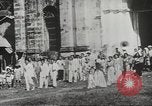
Filipino people at homes and market places in the Philippines before World War 2.
Activities of Filipino people in the Philippines before World War II (from a 1944 film showing earlier scenes). A wedding ceremony in a church in the Philippines. A Roman Catholic priest officiates a Filipino wedding. Children play with see-saw outside a traditional Bahay Kubo house. A man offers ‘ulam’ or dish to accompany with rice. Interior of a house. A Filipino woman cooks pochero, a stewpot dish. Men and women seated at a table eating food. A woman scoops rice to her plate. A man wearing a Barong Tagalog having dinner at home. Filipinos roasting ‘Lechon’ during an outdoor barbecue. Suckling pig cooked over charcoal. Filipinos enjoying barbecue dishes. People buying vegetables such as ampalaya (bitter melon) and jicamas at the wet market. Vegetable in baskets. Houses in the background. Narrator warning about food and water safety and risk of dysentery. Scene closes with wartime views in World War w of Japanese soldiers marching in the Philippines.
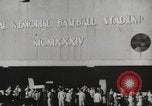
Filipinos attending different sports contests in the Philippines before World War 2.
Sports activities of Filipino people in the Philippines before World War II. Filipinos gather outside the Rizal Memorial Coliseum (Ocampo St, Malate, Manila, 1004 Metro Manila) in Manila, Philippines. Different sports activities of Filipino people. Filipino professional players compete during a baseball competition in Manila. Young indigenous Igorot teenagers play baseball in the Cordilleras Region. Participants swim in a pool during a swimming contest. People gather for a horse-racing contest. They watch the horses and cheer. Filipino men playing Sepak Takraw, also known as kick volleyball. Igorot men engage in amateur boxing outdoors. An American G.I. acts as a commentator during the match. Boys compete in amateur boxing. Filipino boxer Ceferino Garcia participates in a boxing contest. Billboards of American brands such as Chesterfield, Texaco, Camel and Socony to Baguio City. A gas station sign showing the distance to various cities in Northern Philippines. (Film is from 1944, showing scenes from pre-war)
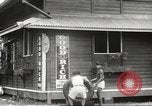
Filipino people working in different jobs, industry, and factories in the Philippines before World War 2
Activities of Filipino people in the Philippines before World War II. A horse-drawn calesa moves through Escolta, the business district of Manila. Billboards advertise Coca-Cola in the Philippines. Activities and quiet scenes at the siesta time. Buildings along the sides of a street. Sign boards outside the buildings read: 'Good Rich' and 'Coca Cola'. A Bahay Kubo (Nipa hut) in the countryside. A horse drinks from trough. A monkey hangs on bamboo pole. A water buffalo (carabao) laze in the mud. Timber trees are felled by men for lumber. Smoke from chimneys of factories. Wooden logs are carried on railroad wagons moving on rails. People work in a sugarcane farm and harvest the sugarcane. Men with Carabaos plow in a sugarcane field. Filipino workers transport sacks of sugar into a ship. Men climb up coconut trees and pick coconuts. The coconuts are loaded into carts. A Filipino man pours out a cup filled with sap from a rubber tree. Men cut tobacco. Filipino women roll tobacco into cigars inside a cigar factory. Men harvesting and slicing abaca (also known as Manila hemp). The processing of hemp. Men shredding Manila hemp into long strands. Shredded abaca are hung outdoors to dry. A machine twines hemp. (Pre war scenes, but from a 1944 film.)
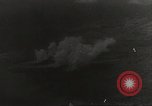
Japanese air operations from Clark Field, after its capture by forces of Japan in World War II
Aerial view from Japanese aircraft of smoke rising from bombs dropped on Philippines, after its occupation by Japanese forces in World War 2. Several Japanese Aichi D3A (Type 99 Navy dive bombers, later called "Val") filmed from Japanese-occupied Clark Field, as they fly overhead in formation. Two of them pitch up and execute a loop, together, as Japanese military personnel on the ground watch them. Momentary view of pilot in cockpit of airplane. Those on the ground cheer and applaud the maneuver. A wrecked U.S. Army B-17 bomber is seen with all four engines removed. Camera shows cockpit interior and "Model B-17D, Air Corps, Serial No. A.C.40-3069" stenciled on the fuselage. (It is believed parts from this aircraft were used by the Japanese to repair B-17 40-3095, which was later flown to Japan as a war prize.) View of a destroyed American B-10 bomber. Interior of wrecked hangar in which Japanese maintenance is being performed on a Mitsubishi Ki.30 and a Mitsubishi Ki-21 twin engine bomber ("Type 97 Heavy Bomber" later called "Sally.") Japanese mechanics work on a bomber outdoors on the ramp. Ground crew meet a Mitsubishi Ki.30 "Ann" single-engine attack plane as it taxis in after landing. They load bombs on it. Momentary glimpse of mechanic climbing into a "Sally bomber." "Sally" bombers lined up on the tarmac.
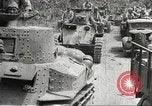
U.S. Army and Filipino prisoners of war are marched to a stockade by occupying Japanese soldiers in the Philippine Islands.
Bataan Death March after the capture of United States and Filipino troops in Bataan during World War II. Japanese troops with pack animals and trucks move along a dusty road. U.S. and Filipino troops surrender. U.S. and Filipino prisoners of war are marched to a stockade. Japanese infantry, staff cars and pack animals cross a bridge and move through ruins towards Mariveles. A sign board reads 'Mariveles'. Mountains in the foreground.
CRITICALPAST.COM: About Us | Contact Us | FAQs - How to Order | License Agreement | My Account | My Lightboxes | Shopping Cart | Advanced Search | Featured Collections | Website Terms & Conditions | Privacy Policy ©2026 CriticalPast LLC.
License Agreement |
Terms & Conditions |
Privacy Policy
©2026 CriticalPast LLC.