


 Francais
 Deutsch
 Italiano
Refine Your Search
Greek-Civil-War stock footage and images
- Showing 307 to 312 of 27563 results more
more Hide
Hide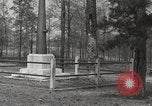
Confederate Soldiers Home; Marietta National Cemetery; and replica of Bobby Burns cottage, in Atlanta, Georgia
An upright civil war cannon barrel tops the civil war Monument memorial to General McPherson, on Monument Avenue in SE Atlanta, close to the site where he died in the battle. Some of the surviving United States Civil War veterans of the Battle of Atlanta pose on the veranda of the Confederate Soldiers Home. View of the grounds around the home showing two civil war field pieces. Entrance to the Marietta National Cemetery (where 10,132 Union Soldiers are buried). View of the many white grave stones in the cemetery. A replica of the cottage of Poet, Bobby Burns. The replica cottage is home to the Burns Club.
President Harry S Truman defends policies at the Civil Defense Conference in Washington DC
U.S. President Harry S Truman makes a speech at the Civil Defense Conference in Washington DC. He says that actions of Korea (during Korean War) must be confined to prevent an Atomic War between the nations of the world. Several other dignitaries seated on the dais. Press, media and photographers take coverage of the President's speech. President Truman defends administration policy actions in face of General MacArthur's criticism.
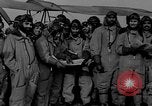
Indian fliers of Civil Disobedience Party suspend their political activities and participate in defense of Britain during WWII
Indian flyers, who are members of Civil Disobedience Party, pose in front of british military airplanes, during World War II. Then, suspending their political cause, because of the war, they climb aboard their airplanes and take off, supporting the defense of Great Britain.
The anti war protests against the United States involvement in the Vietnam War.
Anti-war protests in the United States during the Vietnam War. Protesters march and demonstrate against the United States involvement in the Vietnam War from Central Park to the UN headquarters in New York City. Demonstrators in crowd holding protest signs. A number of African American marchers hold signs that read, "Black men should fight white racism, not Vietnamese freedom fighters." Another sign reads, "They are our brothers whom we kill." Masses of people including doctors, teachers, and businessmen on streets. People dressed in different costumes and 1960s hippie fashion as they protest. Young men participate in burning their draft cards while a crowd gathers around to watch the draft card burning. Pro-war counter protestors (sometimes called "Hawks") also demonstrating and arguing with anti-war activists. Pro-war banner reads, "End Hanoi Sanctuary. Let's bomb Hanoi to win the war and destroy the Communist conspiracy." Another Hawk sign reads, "Anarchy Cannot be Permitted in the USA. Fight Communism and Red Termites." African American civil rights activist Martin Luther King Jr. walks toward the United Nations building with other officials advocating peace. Policemen drag a protester. Scene changes to San Francisco: 50000 people carry banners as they protest the war in Vietnam and march to the Kezar Stadium (670 Kezar Dr, San Francisco, CA 94118, United States) for a mass assembly. People push each other during the protest as pro-war demonstrators clash with anti-war demonstrators and pacifists. A huge crowd gathered at a stadium.
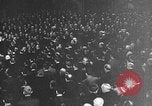
Varying sentiments about war and labor in lead up to World War 2. Roosevelt delivers his war message in the United States.
Disturbances and conflicting views about war versus isolationist approach in the United States prior to World War II. Officials speak about lend lease and officials with anti-war involvement stance advocate protectionism. Speakers include Senator Gerald P. Nye. and Senator Burton K. Wheeler. Wendell Willkie speak advocating a unified approach. Senator Joshua B. Lee of Oklahoma speaks. United States President Franklin D. Roosevelt addresses the Congress and delivers his war message. Pacifist student protestors on street in front of the White House with anti-war banners that read 'Peace Mobilization'. Counter demonstrators also picket, including a man with a sign, "We Americans Protest Communists Picketing the White House." Vehicles drive past in front of the White House. A group of women anti-war protestors are seen seated at an event, and together they pull down black veils in front of their faces. German Bund officials (German-American Bund) are seen meeting at an outdoor rally, and then again at Madison Square Garden in New York City in 1939. A band plays and the leader Fritz Julius Kuhn gives a brief speech during which a protestor leaps the stage and is beaten down by Bund members. Workers on streets protesting for various labor rights. They march and picket on a street. Demonstrators for other causes in American society in the early 1940s, including a woman demonstrator who carries a sign advocating civil rights or equal rights that says "Did Lincoln Free the Slaves?" Clip ends with scenes of violence at various labor strikes, including scabs (strike-breakers) being attacked, beaten, and hit by strikers, and authorities directing water hoses on strikers to repel them away from a building gate.
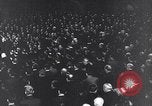
Isolationist versus interventionist sentiments of people in the United States regarding America entering World War 2
Americans express their views about United States entering into World War II after the Pearl Harbor attack. Anti-war isolationist and interventionist views are presented. Senator Gerald P. Nye advocates in favor of an arms embargo. Urging against American involvement in war, Senator Burton K. Wheeler cautions that war mongers and interventioners or intervention advocates control most of the avenues of propaganda. Wendell Willkie speaks advocating unity of purpose in America and importance of assisting the threatened democracies of Europe with war materiel and supplies. Next, Senator Joshua B. Lee of Oklahoma strongly urges support for lend-lease and "setting in motion an industrial blitzkrieg (of war materiel) that will make it possible for England to blast Hitlarism from the face of the earth." View of Congress meeting in the U.S. Capitol chamber. Anti-war college aged students protests against involvement in war and picket at the White House in Washington D.C.,United States. Adjacent to them are other protestors picketing against the peace advocates, with signs like "Americans are against subversive organizations picketing the White House" and "We Americans protest Communists picketing the White House. A women's organization advocating peace or protectionism or isolationism is seen wearing all black. They pull down black veils over their faces in a show of unity against war and the possible loss of American boys to war. An outdoor rally of a fascist organization meeting in America. Also scenes from a German American Bund meeting in 1939 at Madison Square Garden in New York City. Speaker at the meeting is Fritz Julius Kuhn who watches as a protestor leaps on the stage and is subdued by guards. Scenes shown from various other protests in the United States during the same era, including labor strikes and lockouts, and a group holding a rally in favor of equal rights or civil rights, with a woman holding a sign "Did Lincoln Free the Slaves?"
CRITICALPAST.COM: About Us | Contact Us | FAQs - How to Order | License Agreement | My Account | My Lightboxes | Shopping Cart | Advanced Search | Featured Collections | Website Terms & Conditions | Privacy Policy ©2026 CriticalPast LLC.
License Agreement |
Terms & Conditions |
Privacy Policy
©2026 CriticalPast LLC.