


 Francais
 Deutsch
 Italiano
Refine Your Search
Greek-Civil-War stock footage and images
- Showing 409 to 414 of 27563 results more
more Hide
Hide
Fictional enactment of U.S. actions in response to enemy bomber attack against North America
Cold war, nuclear war preparedness film. Air raid alarm sounding and civilians in New York City running down into subway for shelter. Surface-to-air BOMARC missiles raising into firing position. Civil Defense Air Raid Warden, in white helmet, directing people to shelter. BOMARC and NIKE-Hercules missiles readied for launch. F-102 interceptor aircraft in flight. NORAD personnel monitoring radar displays. Formation of F-102s and closeup of a pilot in a cockpit. Activities of personnel inside NORAD command Center, coordinating defense forces. NORAD Commander, General Laurence S. Kuter, on "Red Phone" for conference call receiving White House authority to strike back. SAC bomber crews scramble to their bomber aircraft. B-47s and B-52s taking off. NORAD headquarters authorizing missile sites to commence firing.SM-65 Atlas missiles being launched. Nike-Hercules missiles being raised and BOMARC missiles being fired. Enemy aircraft being destroyed in the air, by missiles. Comments by actor Raymond Massey regarding U.S. military preparedness.
Navy film about amphibious assaults. German films about the building of the German coastal defenses known as the "Atlantic Wall."
U.S. Navy film entitled, "the Battle for the Beaches." Several Higgins boat landing craft arrive at a shore and U.S. soldiers leave them to run ashore. Scene is then overlayed by the title slate. View of the White Cliffs of Dover, England. British civilians preparing defenses during World War 2. Civil Youth loading sand bags and erecting sand bag parapets around buildings. Home guard troops march up a road carrying rifles. British defenders occupying fortified positions They stand along a coastline looking out at sea. Street scene in an English village. Guards walking up along a barbed wire fence erected on the outskirts of the village. Film shifts to the German coastal Atlantic Wall defenses. German troops march along sandy shores containing all manner of obstacles at the water's edge. German officers stand on an overlooking cliff, and peer through binoculars. German sentry and large coastal gun barrel under camouflage net are silhouetted against light sky. Three German officers confer over plans for coastal defenses. View from above of slave laborers working and shoveling sand as they build defenses. German soldiers dismantling wooden forms around completed concrete fortifications. Glimpse of a huge German coastal gun being raised by a crane with heavy steel cables, as it is steadied by dozens of workers with hands on its barrel. German troops manning a machine gun in coastal defense position where a twin mounted antiaircraft gun is also seen. Momentary view of two German soldiers walk past rotating barrel of a huge coastal defense gun under a camouflage net. Workers, with shovels, placing fresh concrete to build up a section of concrete barriers along the coast. Allied troops storming a sandy shore from landing craft, as shells explode near them; possibly related to 1944 D-Day. One contingent are British soldiers. American troops landing at a beach from landing craft. Dead allied soldiers lying in the surf. Film shifts abruptly to U.S. Lieutenant General Mark Clark with some officers in Italy. In another switch of war theaters, General Douglas MacArthur is seen congratulating crew of a B-25 named "Smiling Jack." U.S. troops, in a training exercise, storming ashore from Higgins boats directly and closeup at the camera. They take up defensive positions in the sand, and move a jeep towing a field artillery piece.
Russian troops gathered for outdoor church services in Siberia.
An outdoor church service in Siberia during the Russian Civil War (and World War 1). Russian troops march past. The troops gathered for the outdoor church services. A Bishop undertakes the service. A building in the background.
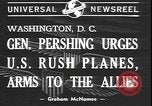
U.S. Army General John J Pershing addresses the nation from Washington DC, U.S. and urges people to help the Allies.
United States Army General John J Pershing addresses the nation from Washington DC, United States during World War II. General Pershing seated at a desk in his office. He urges the nation to help the Allies. He says that the Allies are fighting a war for civilization. He urges the country to send unlimited supply of airplanes, arms and ammunition to the Allies.
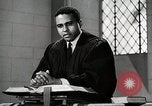
Major events of American history like the Boston Massacre, the independence and establishment of democracy.
A film about the role of African Americans in the history of America. A dramatization shows an African American priest tracing the history of America and the role of African Americans. The Granary Burying Ground in Boston. Pictures of the Boston Massacre. The Bunker Hill Monument (Monument Sq, Charlestown, MA 02129, United States) with soldiers in the foreground. A copy of 'Valley Forge'. Events leading to and after the independence of America. Men cut trees in a forest. Pictures related to the American Civil War of 1861. Ships in water as the war is fought. The Statue of Abraham Lincoln at the Lincoln Memorial (2 Lincoln Memorial Cir NW, Washington, DC 20002, United States) in Washington DC. An African American couple in the countryside. A railroad track is seen.
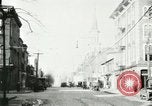
National Theatre, Statue of Lincoln, various equestrian statues and street car traffic on streets in Washington DC.
A business street in Washington DC shows automobile, pedestrian and street car traffic. A man walks along a dirt road, houses and a civil war cannon. Exterior view of the National Theatre building. A street car or trolley passes between the camera position and the National Theater. A mansion and the Department of Agriculture building. The Emancipation Memorial statue of Lincoln with a kneeling slave, in Lincoln Park. View down Pennsylvania Avenue with various buildings visible including the Washington Star (newspaper) Building, old post office and the United States Capitol. The William Tecumseh Sherman equestrian monument in Sherman Square. The General Philip Sheridan equestrian statue on Sheridan Circle in Washington DC. The house of Stephen Decatur which was built in 1814. Cars move on a road. The Brevet Lt. General Winfield Scott equestrian statue at Scott Circle.
CRITICALPAST.COM: About Us | Contact Us | FAQs - How to Order | License Agreement | My Account | My Lightboxes | Shopping Cart | Advanced Search | Featured Collections | Website Terms & Conditions | Privacy Policy ©2026 CriticalPast LLC.
License Agreement |
Terms & Conditions |
Privacy Policy
©2026 CriticalPast LLC.