


 Francais
 Deutsch
 Italiano
Refine Your Search
Greek-Civil-War stock footage and images
- Showing 4237 to 4242 of 27482 results more
more Hide
Hide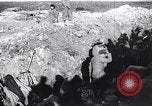
French soldiers dig deep trenches and lay corrugated metal tubes for bomb proof shelter in winter during World War I
French soldiers digging out a trench in France during World War 1. The soldiers use shovels and picks to move earth. A giant corrugated metal cylinder is laid in the trench for extra protection from bombing. French soldiers stand inside a corrugated iron tunnel cylinder in the trench, covered with earth. A French soldier crosses a wooden foot bridge connecting two areas of the trench network.
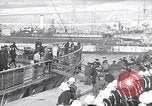
British Field Marshal Douglas Haig reviews Royal Navy guard of honour upon arrival in Dover, late at end of World War I
British Expeditionary Force commander and Field Marshal, Sir Douglas Haig, debarks from a smaller ship onto a dock in Dover in December 1918, soon after the signing of the armistice ending World War 1. White cliffs of Dover seen briefly in background behind a large ship. Victorious Marshal Haig is met by Vice-Admiral Sir Roger Keyes. A man with a royal mace stands behind the officers. British Royal Navy Guard of Honor band in white helmets plays as Commander Haig and Commander Keyes pass by the assembled forces. Civilians are lined up behind the military forces to welcome home Field Marshal Haig.
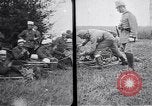
French and German forces in action, including split screen views of French and German troops, during World War I
Views of World War 1 French Army and German Army forces in somewhat parallel activities; some presented in split screen. German soldiers on horses with guns in the field. French Cavalry on the move and German Artillery being moved by horses along a road. French troops attacking in battlefield. French and German artillery fire. French officers talk amongst themselves outside a telegraph station set up in a closed wagon in the field. Officers sit in the telegraph station. An aircraft being flown by aviation pioneer Hubert Latham, and another by French Lieutenant Rene Jost. French Lancers on horseback. People on the roadway.
U.S. Naval bombardment of Iwo Jima, preceding the amphibious assault in World War II.
Naval bombardment of Iwo Jima, preceding the amphibious assault during World War 2. Animation shows a map which locates Iwo Jima. Animation shows the defensive positions of Japanese defenders on Iwo Jima at various dates. U.S. Warships firing naval guns. Other ships in the background. Cruiser USS Salt Lake City (CA-25) seen at time codes 2:18-2:21.
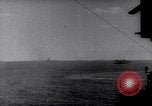
U.S. warships fire moving barrage of naval gunfire to support amphibious assault on Iwo Jima in World War II
World War 2 invasion of Iwo Jima by U.S. amphibious forces. U.S. warships continue bombardment of Japanese fortifications on Iwo Jima, but cease temorarily, allowing U.S. air strikes. U.S. dive bombers attacking Japanese positions.The Cruiser USS Indianapolis (CA-35) is seen maneuvering close to shore. U.S. gunboats firing barrages of rockets that saturate the beach with explosions. Diagram illustrates the way heavy naval gunfire overhead is coordinated with advancing amphibious craft. Views of landing craft and battleships firing overhead in a moving barrage. Landing craft arriving at the beach.
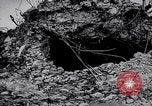
Japanese fortifications destroyed by U.S. naval gunfire on Iwo Jima, Japan, during World War II..
Post-invasion views of Japanese fortifications destroyed by U.S. Naval gunfire prior to the U.S. amphibious assault on Iwo Jima in World War 2. Remains of Japanese defensive positions on Iwo Jima. Steel-reinforced concrete fortifications, including pill boxes, heavy gun emplacements, and block houses, destroyed by U.S. naval heavy guns. A marine stands near destroyed concrete bunker. U.S. Flag flies high above the scene. U.S. battleships underway at sea.
CRITICALPAST.COM: About Us | Contact Us | FAQs - How to Order | License Agreement | My Account | My Lightboxes | Shopping Cart | Advanced Search | Featured Collections | Website Terms & Conditions | Privacy Policy ©2026 CriticalPast LLC.
License Agreement |
Terms & Conditions |
Privacy Policy
©2026 CriticalPast LLC.