


 Francais
 Deutsch
 Italiano

Refine Your Search
Greek-Civil-War stock footage and images
- Showing 4903 to 4908 of 27591 results more
 Hide
Color Sound
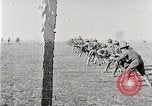
U.S. army troops train to shoot and practice marksmanship skills with rifles during World War I training
Newly recruited U.S. Army troops train for World War 1 deployment. U.S. troops carry rifles and aim during training. U.S. troops practice to aim and shoot in prone position. U.S. troops in a drill session. U.S. troops exercise.
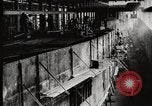
Men work on building military ships at a ship building yard during World War I in the United States
Men work on a long line of military ships in construction at a ship building yard during World War 1. Captain and crew on a new ship with bunting as it emerges from production and readies for launch. Newly built ship at ship commissioning ceremony.

Ford 3-ton tank of World War I being tested in muddy proving grounds at Ford factory
During World War 1, a Ford 2-man (3-ton) tank being tested in mud at Ford Factory proving field. The tank moves forward and seems to operate satisfactorily. Scene shifts to a tank nose down and half submerged in mud. Ford employees stand about watching and several use shovels to clear mud away from the tank.

Ford Patriotic Rally in the United States during World War I
American men march in a street rally and parade to support American forces during World War 1. They carry banners. Banner reads 'Ford Patriotic Rally' another banner reads 'Hell Is Too Good For The Hun'. Men carry American flags. Ford cars parked in background.

United States Air Force unit Personnel arrive in a C-141A plane; Several Air Force personnel came in on C130 (Vietnam War)
United States Air Force pickup truck leads a C-141A 'Starlifter' that taxis to a halt. U.S. Air Force signalman signals the aircraft to a halt. United States Air Force unit personnel get off the plane. Unit personnel board buses. Personnel get off the United States Air Force blue colored buses. (Vietnam War period).
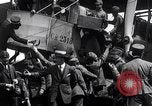
Aerial views of Verdun and Fort Douaumont during World War I
French soldiers and airmen gather around a Caproni Ca.3 bomber preparing for an aerial photography mission in World War 1. The identification number "Ca 2318" is stenciled on the airplane fuselage. The men load camera cases and equipment for the motion picture photographer, as officers watch. The Pilot takes his position in the front of the open cockpit as the photographer and second crewman sit side-by-side behind him. The pilot waves as they taxi out for takeoff. The next sequence contains views from the aircraft as it flies among clouds, and then shows Fort Douaumont clearly below, followed by the city of Verdun-sur-Meuse, and environs, including the Meuse River, bridges, buildings, and roads, without noticeable signs of any battles or damage, since the German offensive would not begin until the following year (1916).
CRITICALPAST.COM: About Us | Contact Us | FAQs - How to Order | License Agreement | My Account | My Lightboxes | Shopping Cart | Advanced Search | Featured Collections | Website Terms & Conditions | Privacy Policy ©2026 CriticalPast LLC.
License Agreement |
Terms & Conditions |
Privacy Policy
©2026 CriticalPast LLC.