


 Francais
 Deutsch
 Italiano
Refine Your Search
Haustenbeck Germany 1945 stock footage and images
- Showing 37 to 42 of 10471 results more
more Hide
Hide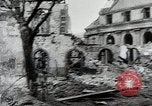
End of World War 2 in Germany, with Allied forces advancing in Germany; destruction of German areas and German forces surrender
American Troops occupying Germany in 1945, near the end of World War II in Europe. Ruins of German cities. White flags displayed from windows. German civilians distraught over destruction of their homes and towns. Towns ablaze in the night with ambulances passing through. Scenes of utter destruction in Basel, and Wurtzburg. Destruction of Essen, Germany, including the Krupp munitions works. German ME-109 plane by the roadside.A truck passes by. Abandoned Marder II Panzerjaeger in the woods. Bombed columns of German soldiers, with equipment and dead German soldiers along roadways. Massive groups of German soldiers surrendering under guard of Allied forces.
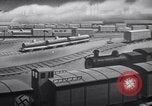
Allied bombing missions to destroy railroads and marshaling yards in occupied France and Germany during World War II
Cartoon representation of German rail yards and war factories, opens the film. Cities of : Anklam; Bremen; and Frankfurt are highlighted as critical factory and railroad junctions. Animated map shows Allied air strikes against French marshaling yards in Spring of 1944 in preparation for the invasion at Normandy. In February, 1945 Allied officers use large wall map to discuss and plan the destruction of all railroad operations in the Ruhr and surrounding areas. View of U.S. bombers in formation (with fighter cover overhead) on bombing missions in Operation Clarion, against all small and medium rail junctions in Germany. View from Allied bomber of Bombs falling and exploding at a rail junction. More aerial views of bombs exploding in numerous places during this operation. An American B-17 Flying Fortress bomber dropping bombs on a railroad marshaling yard. Aerial view of bombs exploding on targets in Essen. Views of wide destruction wrought at German railroad facilities. A US Army Air Forces P-51 fighter plane descending to strafe a target. Gun camera views of aircraft strafing lines of communication in Germany, including road and barge traffic. Closeup of runs firing from P-51 aircraft. Railroad trains being strafed and dramatic explosions at target rail sites.
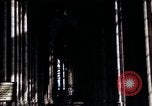
Cologne Cathedral; queue of German citizens in German town; Victor pontoon bridge and wrecked Remagen Bridge in Germany
View from a ground level entrance of the partially wrecked Cathedral of Cologne in Cologne, Germany during World War 2. Scene shifts to a town or village with U.S. Army trucks passing by and German civilians in a queue, a few doors down from the Konditorei (patisserie or bakery). Directional sign pointing toward 67th Medical Evacuation Hospital implies the location is in or near Bonn, as the 67th was located there until March 31, 1945. Scene changes to an elevated view of the Rhine River from the Northwest looking toward the Victor Bridge pontoon bridge, one other pontoon bridge, and the wrecked Ludendorff Bridge (also known as the Remagen Bridge), in the distance, at Remagen, Germany.
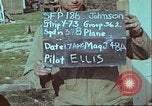
U.S. fighter planes strafe targets of opportunity in Germany, near end of Second World War
March and April, 1945. Near the end of World War 2, P-47s of the U.S. 9th and 8th Air Forces attacking ground targets in Germany. They strafe various ground targets virtually at will. One chases a German Me-109. Rapid succession of identifying slates and fragments of gun camera footage. The first involves P-47 of the 100th Fighter Wing, 362nd Fighter Group, 378th Fighter Squadron, operating out of Frankfurt, Rhein Main Airbase (Y-73) Germany. Others involve the 8th Air Force, P-51s of the 338th Fighter Squadron and possibly other units.
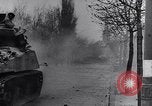
End of World War 2 in Germany, the Four-power occupation of Germany after World War II, and the Berlin Airlift
Allied tank and tank destroyer firing and Allied infantry in Germany during World War 2. British, American, and Soviet troops escorting German Prisoners of war at the end of the War. Animated map shows line where U.S. and Russian troops met and zones of occupation in Germany and Berlin. It depicts routs of access into the Soviet zone of Berlin View from a vehicle driving through utterly destroyed part of Germany in 1945 with rubble and ruin of many buildings seen. Desperate German citizens facing shortages of food and necessities after the war, cooking on outdoor fire in a city street, and trying to clear some debris of destroyed buildings by hand and using buckets in a "bucket brigade." Bus service being restored and German citizens boarding. Vehicle traffic moving with a German police officer directing. Doctors perform physical examination of a German boy as a group of German boys wait in queue for examination. Soviet Leader, Joseph Stalin, with U.S. President, Harry Truman, British Prime Minister, Winston Churchill, at the Potsdam Conference. Children receiving soup at a school in Berlin. Animated map shows routes through the Soviet occupation zone, used by Western Allies, to supply essential food and supplies through the Soviet zone of occupation to sustain West Berlin residents. It then depicts Soviet action blockading the road and rail routes to isolate West Berlin. Views of empty roads, rails, and canals. A DC-3 (US Air Force C-47) transport aircraft taking off. Men loading supplies on aircraft for delivery to West Berlin. A C-54 transport airplane taking off. A British Short S.25 Sunderland flying boat carrying cargo in the Berlin Airlift. Troops carrying supplies for airlift. A British Avro York transport aircraft taking off. A warehouse filled with barrels for Berlin. View from overflying airplane. Trucks resuming travel to Berlin after the Soviets finally lift the 9-month blockade. Normal supplies of food seen again, in West Berlin shops. Vehicle stopped at a checkpoint. Sign warning that: "You are leaving the American Sector." and similar ones at the French and British sector borders. Old road sign pointing to Potsdam, beside another sign warning of entering the Russian zone. Traffic moving between East and West Berlin.
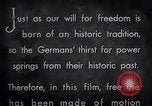
U.S. Army orientation film "Here is Germany" showing the contrast in life in Germany pre-war and during World War 2
U.S. Army training film titled 'Here is Germany'. Circa 1930 - 1938 views of pre-war German countryside, and German cities including Berlin and others before destruction in World War 2. Shots include famous German landmarks and buildings in major cities including Brandenburg Gate and Victory Column sculpture close-ups and other monuments all before bombing of World War II. Lifestyle of German people with families and children in their routine lives in the decade of 1930 before the war. Farmers working fields, mined coal transported by rail, potatoes poured from a full sack, a boy shepherd with geese; a farmer counting pigs descending a ramp at a farm. City port or harbor scene with ships and a modern looking railroad train arriving at a station, sign on side reads Deutsche Reichsbahn (German Reich Railway). High speed highway roads like the Autobahn. German cruise ship at sea. Aerial view of airport with "Berlin" sign on ground. German schools, offices, factories and markets. German woman braiding a girl's hair. German woman taking in washed clothing from a clothesline. German men, women, and children cleaning and polishing work areas and possessions. A German library with people studying and others at book shelves. German classroom with a teacher instructing children and writing on a blackboard. Scenes of German musicians and symphony orchestra and musical instruments, artisans, masons, cooks. Busy roads with cars. Narrator then presents a darker other side, showing an arms factory during rearmament of Germany, German soldiers escorting away a religious priest. German military officials. Scenes circa 1945 of victims of German armies and of the concentration camps. Lumps of dead bodies from massive public shootings, a man being tortured, burning chambers, prisoners of war, concentration camps, human ovens, gas chambers. Survivors of the German custody in relief camps of Red Cross. Evidence of atrocities committed by Nazi Germany. Articles made of human skin and bones. Daily utility items like toys and brushes made from human body parts. Scenes of survivors of concentration camps. Polish people dead from Nazi atrocities at Lublin Castle. Italians and Belgians murdered by Germans, American POWs murdered by Germans. Scenes return again to 1930s views of peaceful German citizens and German lifestyle juxtaposed with views of German soldiers and military actions in World War 2. Some famous Americans of German roots: Wendell Willkie, Admiral Chester Nimitz, Henry J. Kaiser. Narrator talking about American customs and values. View of two teenage American boy students viewing a housing area and taking notes. One of the teenage boys is African American. Some men gathered at a bar in an American town. A man holding a long fly fishing pole preparing to depart on a fishing trip. Woman neighbors in discussion. Young American women walking down a sidewalk in an American town as a group of American boys watch and admire them.
CRITICALPAST.COM: About Us | Contact Us | FAQs - How to Order | License Agreement | My Account | My Lightboxes | Shopping Cart | Advanced Search | Featured Collections | Website Terms & Conditions | Privacy Policy ©2026 CriticalPast LLC.
License Agreement |
Terms & Conditions |
Privacy Policy
©2026 CriticalPast LLC.