


 Francais
 Deutsch
 Italiano
Refine Your Search
Herne Germany 1945 stock footage and images
- Showing 4531 to 4536 of 10472 results more
more Hide
Hide
America test fires the M65 atomic cannon in the Nevada Test Site; 1953 East German uprising and Trieste Crisis in Europe
Major events of the year 1953. The first atomic artillery test fired in United States on May 25, 1953. The M65 atomic cannon moving in the Nevada Test Site (specifically Frenchman Flat). A mushroom cloud rises after the M65 Atomic Cannon, sometimes called Atomic Annie, is fired and atomic bomb explodes. The M65 atomic cannon test is done as part of the Upshot–Knothole series of nuclear tests. East German uprising of 1953 (“Volksaufstand vom 17. Juni 1953”). Riots in East Germany against the increase in work quotas and withholding of American food. East German police escort a man away during a riot. People protest in streets as police try to crush the revolt. A stack of StarLac boxes bound for East Germany with sign in front. Sign reads “First Food Relief Shipment to East Germany by M.S.A. United States Lines S.S. American Inventor”. East Germans line up to receive food relief from the United States. An East German woman receives a food aid pack from the United States. The Trieste Crisis of 1953. Sign in front of a house reads “Trsta ne damo”. Officials inspect a car in the United Nations Security Council-controlled Free Territory of Trieste. Students riot in the streets of Trieste over the issue of Adriatic area between Italy and Yugoslavia. (Cold War period.)
The challenges of reconstruction and rise of communism in Europe after World War II
Reconstruction problems in Europe in the aftermath of World War II. Examples of prewar Germany's industrial and commercial prowess, showing its consumer products and famous cameras. A German coal-burning power plant and miners extracting coal from Germany's vast natural supplies. Coal being transported by conveyer belt. Open rail cars loaded to capacity with German coal. A German iron and steel plant dependent on coal. Shift to postwar destruction including destroyed: German factory; locomotive; rail yards; trucks; farm machinery; fertilizer plant; farm fields lacking crops. Shift to prewar era with view of British coal cars getting ready to be emptied for export to Europe. Current postwar view of British coal cars and coal, that narrator says are barely enough for her own needs. View of prewar German coke being loaded onto conveyers. Coal miners receiving food ration cards. Animated map showing "Iron Curtain," of Soviet occupation, separating traditional German regions of agriculture from those of industry. British Foreign Secretary, Ernest Bevin; French Foreign Minister, Georges Bidault; Soviet Foreign Minister Vyacheslav Molotov; and U.S. Secretary of State, George Marshall; are seen at the Paris Conference in 1946 where they negotiated the postwar future of Germany. Reminder footage of Hitler with brownshirts in 1930s. Italian police coping with communist inspired unrest in Italy. Bombed out buildings in snow. Europeans literally scratching for bits of food from pavement and trash heaps. Two women fighting with each other during time of shortages and ration. Dejected woman. French Communist party leader, Maurice Thorez, speaking to a large crowd. Party flag with hammer and sickle behind him.
United States interests in South America and Latin America just before World War 2, and German presence in the Americas
Opening scene shows U.S. State Department officials of the Division of the American Republics in a meeting. They examine a map titled "Inter-American Highway" showing a proposed highway running from the border of the U.S. and Mexico at Laredo Texas, all the way through Mexico, Latin America, and into South America. View of South American farmers loading hay into a horse cart, then of cattle in a stockyard being herded by a cowboy on a horse. Aerial view of city of Rio de Janeiro Brazil circa 1938. Narrator discusses threat of dictatorships in countries of South America. Views of German ships and German contracted ships loading and unloading at Buenos Aires harbor. Narrator describes system of barter where Argentina sends goods to Germany in exchange for German-made goods. Swastika flag on one of the cargo ships. Dock crane with German sign "Deutsche Maschinenfabrik A.G. Duisburg". Letters on side of a ship reads 'Buenos Aires Maru'. Supplies unloaded from ship. Cargo stacked including wooden boxes with German writing labeled "Vorsicht - San Paulo Brasilien". In a Latin American or South American city, view of the storefront for luxury goods by Herm Stoltz & Co. A Nazi German flag hangs above the store entrance. Fine leather goods, cameras, figurines, steins, etc from Germany are shown in store window displays. View of Nazi German books on display in storefronts, including closeup of translated book "Mein Kampf" ("Mi Lucha") by Adolf Hitler, bearing an image of Hitler on front cover. A German passenger aircraft parked at an airfield, which narrator describes as being part of a German airline offering service to South America within two days of Berlin, Germany. More German airplanes are shown at an airport in South America. View of government offices in Rio de Janeiro Brazil. Large crest with a bird atop an entrance. Interior office view of President Getúlio Vargas of Brazil seated in discussion with American diplomats. Narrator indicates that Vargas learned of German colonists in Brazil planning his overthrow by assassination, and therefore outlawed all Nazi activity. Poster of Vargas communicating his policies. Scene switches to exterior view of the State, War, and Navy Building (later the Executive Office Building) in Washington DC, with the First Division Monument in the foreground. Interior view of office door bearing sign for Under Secretary of State. Inside, Sumner Welles is seen in discussion with officials. He is asked about the American attitude toward Latin America. Welles describes the importance of strengthening ties between the countries of the Americas. Under Secretary Welles states that the welfare of all of the countries in the region may depend on their continued solidarity.

Farming, marketing and recreation activities of citizens in the town of Madison, Indiana, alongside the Ohio River in the U.S.
Life in the town of Madison, Indiana, on the banks of the Ohio River. Scenes in and around the town: View of the Milton-Madison bridge across the Ohio River (US-421, Milton, KY 40045, United States) ; the town of Madison on hillside across the river; Church steeples protruding above tree tops in view from above; tree lined and shaded sidewalk; a tower with ramparts; Italian Campanille- style tower; gothic doorway on a church; slate rooftops with chimneys protruding and towers and cupola building top visible; Greek-inspired column; a renaissance-style fountain with statuary. A fraternal building with ramparts; the Madison Fair Play Fire Company fire department building with Italian-style tower (403-405 E. Main St. Madison, IN 47250, USA); Roman columns on the Jackson safe deposit and trust Company “National Branch Bank” building. Children play in the fountain on a hot afternoon. A Stern-wheeler Riverboat plying the river with dense black smoke streaming from its twin stacks. Men from Greece, Ireland, Germany and other parts of the world have settled in Madison. They include a confectioner, a county agent and others. A Greek confectioner inside his shop. A journalist works on a typewriter in an office. He speaks on the phone during a telephone call. A county agent of Dutch descent speaks to clients. An elderly couple from Germany chat and have drinks at a restaurant. A toddler eats pasta while sitting on a highchair. An Italian family eats pasta together at a dining table. Effigy of James Madison, a founding father and the namesake of Madison, Indiana. Farming activities: Farms and houses. Farmer and other men harvest grapes from grapevines. Other farmers harvest tobacco. A woman brings eggs from a hen house. A farmer loads baskets and milk containers on a truck for market day. Market day activities: An open market is set up around the Madison courthouse. A produce merchant sells his products to customers. View of the main street. Buildings seen on either side of the street. Mountains in the background. Recreation activities: Citizens bowling in a club. Ball seen hitting pins up close. They drink at a bar and play billiards and checkers. They dance and watch a movie. Citizens outside the box office, beneath the movie theatre marquee. People inside a movie theater watching a movie. Faces of audience members as they watch the movie screen. Customers get refreshed at a corner drug store where a crowded soda fountain bar area and tables are shown. Students play band instruments during a school concert. View of churches. Parishioners enter a church gate. They worship and pray. A man holds a fishing rod. He walks towards a lake. (World War II period).Life in the town of Madison, Indiana, on the banks of the Ohio River, in the United States. Scenes in and around the town: Steel highway bridge across river; the town on hillside across the river; Church steeples protruding above tree tops in view from above; tree lined and shaded sidewalk; a tower with ramparts; italian-medieval style tower; gothic doorway on a church; slate rooftops with chimneys protruding and towers and cupola building top visible; Greek-inspired column ; a renaissance-style fountain with statuary. A fraternal building with ramparts; the fire department building with Italian-style tower; Roman columns on the Jackson safe deposit and trust Company building. Children play in the fountain. A Stern-wheeler Riverboat plying the river with dense black smoke streaming from its twin stacks. Men from Greece, Ireland, Germany and other parts of the world have settled in Madison. They include a confectioner, a county agent and others. A man works on a typewriter in an office. He speaks on the phone during a telephone call. A man and a woman chat and have drinks at a restaurant. A family eats dinner or another meal together at a dining table. Farming activities: Farms and houses. Farmer and other men harvest grapes from grapevines. Other farmers harvest tobacco. A woman brings eggs from a hen house. A farmer loads baskets and milk containers on a truck for market day. Market day activities: An open market is set up around the Madison court house. A produce merchant sells his products to customers. View of the main street. Buildings seen on either side of the street. Mountains in the background. Recreation activities: Citizens bowling in a club. Ball seen hitting pins up close. They drink at a bar and play pool and checkers. They dance and watch a movie. Citizens outside the box office, beneath the movie theatre marquee. People inside a movie theater watching a movie. Faces of people as they watch the movie screen. Customers get refreshed at a corner drug store where a crowded soda fountain bar area and tables are shown. Students play band instruments during a school concert. View of churches. Parishioners enter a church gate. They worship and pray. A man holds a fishing rod. He walks towards a lake. (World War II period)
Allied Army paratroopers land at Arnhem Netherlands and advance inwards fighting with enemy during World War II.
United States Army and British Army airlifts paratroopers from England to the border of Holland during World War II. British and American transport airplanes and gliders land near Arnhem Holland (Netherlands). Soldiers, tanks and guns supplies offloaded and soldiers begin fighting with the enemy. Soldiers of Dutch Army aid the Allied forces. Allied soldiers rescue injured soldiers and advance towards enemy lines. Allied soldiers meet with Dutch Resistance or Dutch Underground Army members wearing identifying armbands. Group of German Army prisoners is seen including many young boy soldiers. Allied landing draws attention of German units allowing U.S. Army units to cross border into Germany. American soldiers near a bridge and crossing into Germany. They pass near railroad station at Roetgen Germany. Nazi German prisoners use horse carts and bicycle transport while being led away under Allied guard.
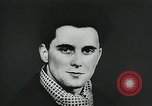
Shooting of Bernt Leuton in 1961 explained in context of Soviet history, beginning with Czar Nicholas II and Russian Revolution of 1917
A picture of Bernt Leuton, a resident of East Berlin East Germany, who fled to West Berlin West Germany. Border guards at the Communist side of Berlin in East Germany. View of Leuton on August 13, 1961 after being shot by an East German guard, after successfully swimming across the connecting canal. He is hauled out by West German guards. A map of the world. Narrator begins to trace history of Bernt Leuton's shooting by recounting prior events in history of Russia and Soviet Union. View of the Winter Palace of Czar Nicholas II, with the Czar and Czarina Alexandra standing on a balcony. Saint Petersburg, Russia on January 22nd , 1905 : Peasants and workers, with their leader Russian Orthodox Priest, Father Georgi Gapon, gathered outside the palace to deliver a petition to Czar Nicholas II. A number of the people carry banners. A picture of Czar Nicholas II. Reenactment of Czar's armed cossack cavalry dispersing the crowd, The words 'My autocracy will remain unchanged' issued by the Czar to which Father Gapon replies that they "no longer have a Czar." Picture of Father George Gapon. Picture of Vladimir Ilyich Lenin, and moving images of Lenin speaking. The Czar Nicholas II and his wife, escorted by guards, moving on a path during a ceremony. The Czar mounting a horse and the guards saluting him. A picture of the Czar's wife and hemophiliac son. Picture of Russian mystic Grigori Rasputin, whose occult powers were believed to have kept the Czar's son alive.
CRITICALPAST.COM: About Us | Contact Us | FAQs - How to Order | License Agreement | My Account | My Lightboxes | Shopping Cart | Advanced Search | Featured Collections | Website Terms & Conditions | Privacy Policy ©2026 CriticalPast LLC.
License Agreement |
Terms & Conditions |
Privacy Policy
©2026 CriticalPast LLC.