


 Francais
 Deutsch
 Italiano
Refine Your Search
Hoboken New Jersey 1918 stock footage and images
- Showing 7447 to 7452 of 9472 results more
more Hide
Hide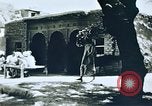
USIA film explaining its mission, inter alia, to correct misconceptions that people in foreign countries may have about America
Opening scenes shows men in in a South Asian village having intense discussions. (USIA wishes to inform such discussions.) The free world also has practical interests throughout the globe. Film shows two geologists holding up what appear to be sheets of mica. Women at work in a factory. Narrator suggests they are using scarce industrial materials (like tungsten). Men in a factory cutting mica. A man shoveling an agricultural product. Men carrying hemp and placing it on poles to dry. Impoverished Asian families. A man (ostensibly Communist agitator) speaking to Arabs. Marchers carrying large cartoon signs in Arabic, depicting "workers" striking down Uncle Sam and other Western powers. Narrator says deeds are more important than words. An American agricultural adviser is shown in a field with a native farmer. President Dwight D. Eisenhower seen standing with him, while Theodore Streibert is sworn in as first Director of the new U.S. Information Agency. Chart shows USIA absorbing information programs formerly administered by the Mutual Security Agency and State Department. Chart stating USIA mission is to: 1. Unite the free world; 2. Get the facts to people behind the iron Curtain; 3. Bring hope to captive peoples.
USIA film describing the ways it conducts its world-wide operations
Segment of U.S. Information Agency film describing its world-wide operations. Map shows 217 overseas posts in 17 countries, of the USIA (also known abroad, as the U.S. Information Service). Animated map zooms in on one post, in Rio de Janeiro, Brazil. Aerial view of Sugar Loaf Mountain overlooking the harbor and city. Street scene in Rio. USIA Public Affairs Officer, William A. Wieland, is seen walking along a sidewalk in the city. Next he is seen in the office of Ambassador James S. Kemper, briefing him about USIA activities. View of the Brazilian Foreign Office building. Mr. Wieland meets with the Chief of the Cultural Division there. Book stacks in the USIA Thomas Jefferson Library in Rio de Janeiro. Mr. Wieland conferring with a librarian. He is also seen at the USIA broadcast facility in the U.S. Embassy. Film shifts to street scene in Cebu, the Philippines. A building displaying American and Philippine flags, is labeled: " United States Information Service." Inside, and American and a Filipino worker give bundles of literature to local workers for distribution. One, a bus driver, carries his bundle onto his open-sided bus, displaying the name, "Cebu, Autobus." He waves as he drives away. The USIA Public Affairs Officer is seen visiting the Mayor of Cebu City, Vincente S. del Rosario; giving a news release to the editor of a newspaper; broadcasting on local radio;and socializing with local editors. USIA drive a mobile movie van into a remote village where many children are playing. They set up a screen and projector. Almost everyone in town attends the showing. Scene shifts to USIA headquarters building at 1778 Pennsylvanis Avenue,in Washington, DC. Director Theodore Streibert holds a staff meeting. View of President Eisenhower addressing U.S. public media leaders about confronting the Soviet Union with truthful information about the U.S. and the West, on April 16, 1953,in Washington, DC. A USIA technician transmitting text of the speech to its public affairs officers around the world. Views of newspapers carrying the story in Paraquay, Ireland,Algeria, and Burma. The President's speech was printed in a pamphlet entitled "The Peace We Seek," ahd sent abroad where it was translated into Arabic,Japanese, Persian, and 20 other languages. Four million copies were distributed. Posters about the speech were also distributed.
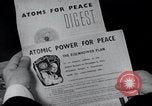
Voice of America broadcasts President's speech and USIS "Atoms for Peace" exhibits are presented worldwide
President Eisenhower of the United States addresses United Nations on December 8, 1953 about atomic bomb and atomic weapon dilemma in the nuclear age (part of Atoms for Peace initiative). Operators in radio transmission control rooms note down readings. View of time clocks of various places in the world including Honolulu, New York, London, Moscow, Calcutta, Bangkok and Tokyo displayed. The Voice of America broadcasts program in different languages by announcers. Scene of a family sitting in a living room as they listen to the president's speech on a console radio. People work at typing, printing, and translating the speech. USIA motion pictures service prepare newsreel of president's speech. A man views air mail of USIA films. Exterior views of several different United States embassy buildings worldwide. A guard standing outside the building. A Public Affairs Officer at the U.S. embassy in Japan, in Tokyo, meets with U.S. Ambassador to Japan Robert Murphy. USIA members seated around table for meeting, and, in Washington DC, creating publications about the Atoms for Peace program. People seated in a USIA library in Brazil read books and various USIA materials. Architects design 30 foot high Atoms for Peace exhibits. An exhibit being setup in a foreign country (possibly in North Africa). Exterior and interior views of the West Berlin, Germany Atoms for Peace exhibit. Prime Minister Jawahar Lal Nehru in India is seen arriving in a jeep to view the Atoms for Peace exhibit in India. Prime Minister Nehru inside the exhibit hall watching a presentation. In Japan, a woman operates remote-controlled robotic hands to hold radioactive materials, at a demonstration for Japanese citizens. In a city in Italy, a view of a mobile van unit carrying an Atoms for Peace exhibit. Scenes from a film "A is for Atom" that was translated into 30 languages and shown all over the world. Wide view of the Kremlin in Moscow, Russia, Soviet Union. A Russian radio commentator speaking at a microphone. Propaganda dramatization showing the Russian announcer attacking American plans for Atoms for Peace.
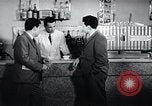
U.S. Information Agency informs people abroad about American life and culture through radio, libraries, concerts, and exhibits
Worlwide activities of the U.S. Information Agency. Four men in a bar in Italy. Narrator refers to European apprehension right after the war about America and the atom. The Italian men are polled and now understand about peaceful uses of atomic energy. Maps showing 200 U.S. Information Agency posts in 80 countries. An "Amerika Haus"in a major German city. Germans enter and peruse books and newspapers. An "Amerika Hause" book mobile (autobucherei) drives into a German village. Local people enter and browse the bookshelves. A boy selects a book entitled "Christoph Kolumbus" (Christopher Columbus). A german policeman perusing a book. A man walking out with several books. A discussion group, under auspices of USIA, gathered around a table. A concert with orchestra and chorus (Conductor appears to be Wilhelm Furtwängler, of the Berlin Philharmonic, who died in 1954, so this is likely a shot from 1953-1954 range). A sign on building in Berlin reads: "RIAS" (Radio in American Sector). A German speaking radio announcer in RIAS broadcasting. People visiting the "Family of Man" exhibit which originated in the Museum of Modern Art in New York City and shown in 37 countries abroad, under USIA sponsorship.
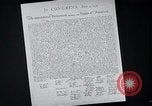
USIA tells the story of America, its democracy and diplomacy through ideas, people and pictures.
USIA tells the story of America. The Unanimous Declaration for the States of America by the Congress on July 4, 1776. The Statue of Liberty in New York. Atomic bomb explodes in Japan during the world war. U.S. troops prepare to defend America. U.S. State diplomats sign documents as they deal with Diplomacy. United States information Agency (USIA) tells the story of America through various means dealing with ideas, people and pictures. A person reads a book, announcers broadcast over radio, and cameramen record events. The USIA seal.
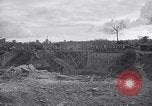
U.S. 5th Army vehicles traverse bridges at Volturno River near Mignano, Italy, in World War II
U.S. 5th Army vehicles cross two small bridges across the Volturno River, near Mignano, Italy, during World War 2. An MP (Military Policeman) monitors and directs traffic from side of the muddy road. Army engineers repair another bridge and use compressed air gun to drive fasteners. Closeup of the new bridge boards and construction work. Jeeps, trucks, personnel carriers, and other vehicles are all on the move. A destroyed civilian vehicle is seen at side of road.
CRITICALPAST.COM: About Us | Contact Us | FAQs - How to Order | License Agreement | My Account | My Lightboxes | Shopping Cart | Advanced Search | Featured Collections | Website Terms & Conditions | Privacy Policy ©2026 CriticalPast LLC.
License Agreement |
Terms & Conditions |
Privacy Policy
©2026 CriticalPast LLC.