


 Francais
 Deutsch
 Italiano
Refine Your Search
Hoboken New Jersey 1918 stock footage and images
- Showing 571 to 576 of 9472 results more
more Hide
Hide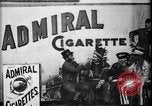
Pioneering use of motion pictures for advertising (cigarettes)
Early advertising: Admiral Cigarette (1897) in the United States. A commercial. Four men in various costumes sit and converse in front of a billboard for Admiral Cigarettes. The billboard fills the entire background. Beside them is a large box, marked Admiral Cigarettes. A cross section of men: one dressed as an American Indian, with feather headdress, another a military outfit, a third, as Uncle Sam in striped pants, and the fourth (with pork-chop whiskers) is in a suit, vest, tie, and hat. Suddenly, the box pops open and a woman in tight-fitting costume emerges. She hands out cigarettes to the men and scatters dozens of cigarettes in front of them. She and the men smoke cigarettes and the men unfurl a banner saying, "We all smoke." (Edison Studio, New Jersey)
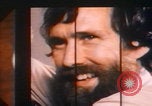
View of Thomas Alva Edison’s West Orange factory; various inventions by Edison
An Edison phonograph playing a record. American inventor Thomas Alva Edison and his wife Mina Miller Edison at the porch of a house. Edison taking his hat off. Edison punching his timecard in timeclock as he arrives in his office. View of Thomas Edison’s West Orange Laboratory (211 Main St, West Orange, NJ 07052, United States) in New Jersey. Thomas Edison shakes hands with an employee inside his factory. Edison watches his employees working. A hole being drilled. A lathe machine scrapes a block of metal. Wheels of belt driven machines moving inside a factory. Cylinder phonograph playing ‘Mary had a Little Lamb’. Illustration depicting Thomas Edison with gramophone by Poyet. A wax cylinder phonograph playing music. Still image of a male opera singer and an orchestra perform in a recording studio. A glowing lightbulb.
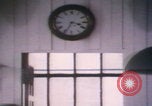
Early filmmaking in Thomas Alva Edison’s Black Maria studio; Edison showing lightbulbs
A wall clock hanging on top of a window. Camera shows American inventor Thomas Alva Edison’s laboratory. Glass laboratory bottles and tubes on display. Footage circa 1920 of Thomas Alva Edison showing early lightbulbs to colleagues. A carbon filament light bulb lights up. Camera moves closer to show the glowing carbon filament inside the lamp. Early filmmaking in the United States. A man cranks a Kinetograph, the first movie camera invented by Edison. A belly dancer performs in one of Edison’s early films. A film rolling. A boxing match filmed by Thomas Edison. A cameraman records the boxing match inside Edison’s Black Maria film studio in West Orange, New Jersey. Exteriors of the Black Maria studio showing the turntable and wheels underneath. 19th century women wearing summer dresses strolling in film captured by Edison. Cameramen sent by Edison films people on the beach and in amusement park rides. Edison having lunch with other inventors Henry Ford Sr., Harvey Firestone Sr., and Alexander Graham Bell. View of Edison’s study. A light bulb is turned off.
The United States mobilizes and joins Allies in World War II. A montage of numerous World War 2 period images.
Film opens with views of goosestepping German, Italian, and Japanese soldiers during parade reviews in their respective countries. Emperor Hirohito, on a white horse. American battleships burning in the Japanese attack on Pearl Harbor. U.S. General Douglas MacArthur decorating a soldier in Manila, Philippines. Air raid sirens sounding in Manila and residents hurrying to take cover. Heavy black smoke rising from a bombed site and emergency vehicles responding and rushing to several bombed and burning locations. A burning rickshaw amidst other bombing rubble and bodies of victims. U.S. Army General MacArthur greeted by Australian officials at his headquarters in Brisbane, Australia. Sign reads: Headquarters UNITED STATES ARMY FORCES in Australia. American flag flying on tall flagpole. View from ship underway in supply convoy. A battleship seen on horizon and a destroyer passing the camera ship. U.S. President, Franklin D. Roosevelt signing the "Lend Lease Act" of 1941. A U.S. industrial plant with four tall stacks emitting smoke. A steam locomotive belching steam. A locomotive pulling an open car and some tank cars. New 1941 Plymouth automobiles coming off a production line. A new M3 Medium Tank in a U.S. factory. View of Liberty Ships, including the "Zebulon Pike" and the "Henry Knox" under construction at the California Shipbuilding Corporation yard, Terminal Island, California. U.S. Navy Destroyers constructed at Federal Shipbuilding & Dry Dock Company, Kearny, New Jersey. One is being launched, next to DD-446 (the USS Radford). A formation of U.S. Navy aircraft including Curtiss SBC Helldiver scout bombers and Douglas TBD Devastator torpedo bombers. A tight formation of U.S. Army Douglas B-18 Bolo medium bombers in flight. A formation of U.S. Army Curtiss P-36 Hawk aircraft in flight. Closeup of a U.S. Army Lockheed P-38 Lightning aircraft in flight. Several huge gun barrels for guns under construction at a U.S. war plant. Large artillery shells lined up in a manufacturing plant. U.S. Army M3 Medium tanks under construction at a factory. Steam and smoke rising from a U.S. industrial plant. Aerial view of open pit iron mine. Sparks shooting up inside a steel plant. A virtual "forest" of oil derricks in the Western U.S. Coal being transported by railway. View from stern of a warship in a convoy. An Atlanta-class light cruiser leading three destroyers at sea. Transport ships in convoys to places like Australia, Britain, and the Middle East. Troops on a pier near a large transport ship. A stack of wartime supplies on a pier next to a ship destined for Russia. Glimpse of wake from a U.S. warship having triple guns astern. Silhouette of a U.S. Navy Enterprise-class Aircraft carrier, with an aircraft taking off from her deck. The aircraft carrier, USS Saratoga. U.S. Army soldiers marching on parade, followed by numerous jeeps with machine guns mounted in their rears. Young men being drafted into the U.S. military. A draft lottery being conducted. New recruits doing calisthenics. Trucks pulling artillery pieces. B-18 Bolo bombers flying over U.S. tanks. Closeup of M3 tank. Cavalry fording a stream. Soldiers on motorcycles. Troops crossing a pontoon bridge. A loaded troop ship. A troop transport at Newfoundland. Sentry in Trinidad. Troops encamped in Bermuda.Troopship docked in Greenland. Troops disembarking in Iceland. Formations of Curtis P-36 Hawk aircraft. Douglas DC-2 aircraft factory. P-36s with engines running. M3 tank suspended on factory crane. Officials of Pan American nations siding with Allies. Allied troops including Dutch, Belgian, Yugoslav, Greek, Czech, Filipino, Polish, Norwegian, Free French, Australian, New Zealand, South African and Canadian. British warships. British Hawker Tempest aircraft. British commandos. Russian troops on parade. Chinese troops on the Great Wall of China.
J.Edgar Hoover describes the problem of enemy agents and Nazi sympathizers in the United States in 1940.
Director of the U.S Federal Bureau of Investigation (FBI), J.Edgar Hoover, addresses Americans in military service in 1940. He speaks about enemy agents sent to the United States to undermine the war effort. Scene shifts to a 1940 nighttime view of New York City with lights on in its buildings. Sound of Benny Goodman's orchestra in background. Glimpse of water displays at the New York World's Fair. Brooklyn Dodgers Baseball team playing a game at Ebbets Field. A large field of wheat being harvested by a mechanical reaper, in an American western state. American soldiers putting on civilian clothes for weekend passes. Views of various American cities and towns with cars driving on parkways, shoppers and pedestrians walking in business districts. Closeup of a German agent, ostensibly being apprehended while beaming information to Germany via shortwave radio. German documents are on his desk. A submarine periscope tracks across surface of water. A torpedo races through the water leaving a trail of bubbles. An American ship, ostensibly being torpedoed in the Caribbean. Letters being mailed to so-called "mail drops" in Spain and South America. An intercepted letter with military information being highlighted. A brick house, outside Los Angeles, where an unidentified man is seen, whom narrator (J.Edgar Hoover) describes as " This self-appointed Dictator, who set himself up in the business of promoting Nazism." A picture of Adolf Hitler is seen on his wall. Near Chicago, a wooden sign reads, "Camp Hindenburg., Two miles." American Nazi youth are seen parading there. A newspaper shows a picture of Nazi youth at Camp Nordland, in New Jersey where young American Nazi girls are seen parading. In Yaphank, on long Island, New York, American Nazis are seen parading. The head of the German-American Bund, Fritz Kuhn, is seen at an outdoor podium giving a speech, while surrounded and guarded by uniformed Bund members. He is enthusiastically applauded by members of the audience. Several women with babies in carriages, cross at a corner in New York City. Some receive notices being passed out by a young man, announcing a "Mass Demonstration for true Americans" (to be held at Madison Square Garden). A swastika appears on each notice. View from a high point overlooking a crowd of 22 thousand American Nazis gathered in Madison Square Garden, on Feb. 20, 1939. An honor guard parades as drummers play from the stage. A mass of men holding American flags, and one holding a banner showing a swastika and words in German. Audience members all render the Nazi salute and shout "Heil." Files in the FBI offices labeled "German Agents." The file of Walter Kappe, one of the leaders of the Chicago Free Society of Teutonia and German American Bund is shown. Narrator, Hoover, says, " he was a Lieutenant in the German Army and the Leader of German sabotage in the United States." View of a vast array of desks and files in the FBI where men and women work on fingerprints. A man projects fingerprints on a screen, as Hoover speaks of the files revealing that "innocent appearing persons, applying for work in United States war plants, had been convicted of espionage in the last world war."Two men look over an FBI chart showing the location of every key spy and mail drop in North and South America
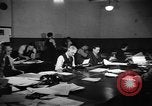
Herbert Roslyn (Bud) Ekins describes plan to fly around the world by commercial craft, including the Hindenburg
Herbert Roslyn "Bud" Ekins and other newsmen and reporters working at desks in the newsroom offices of the New York World Telegram newspaper (Scripps-Howard Newspapers). Ekins smokes while he types. He is going to be a passenger on the LZ-129 Hindenburg as part of his plan to circle the globe entirely by commercial air carriers. The event is sponsored by his employer, the NY World Telegram and Scripps-Howard Newspapers .Elkins describes the planned itinerary. Editor, Roy Wilson Howard, walks in and wishes Elkins good luck, telling him to make the trip in 21 days or less. Elkins puts on his suit jacket and overcoat, and departs for Lakehurst New Jersey, where he will board the Hindenburg for the first leg of his journey.
CRITICALPAST.COM: About Us | Contact Us | FAQs - How to Order | License Agreement | My Account | My Lightboxes | Shopping Cart | Advanced Search | Featured Collections | Website Terms & Conditions | Privacy Policy ©2026 CriticalPast LLC.
License Agreement |
Terms & Conditions |
Privacy Policy
©2026 CriticalPast LLC.