


 Francais
 Deutsch
 Italiano
Refine Your Search
Iran 1951 stock footage and images
- Showing 205 to 210 of 1204 results more
more Hide
Hide
United States Army personnel and dependents swim and play golf in Tehran, Iran
United States Army personnel and wives sit poolside on patio chairs Tehran, Iran. A baby sleeps in the carriage beside one of the women. Man catches boy jumping into swimming pool. A woman and man in casual wear putting on golf green while caddy holds flag. American woman tees off on desert golf course in Tehran while caddies look on.
United States children attend the American Dependents School (Tehran American School) in Tehran, Iran
United States dependent children attend the American Dependents School (later known as Tehran American School) in Tehran, Iran before the revolution. An Iranian school bus is parked outside the school gate. The children and women cross the school yard. Snow-capped mountain range is seen behind the school. American teachers and personnel exit a GMC school bus labeled “School Bus 4”. Boys playing basketball in school yard. A teacher watches over students playing on monkey bars of school playground. Sign reads “American Dependents School”
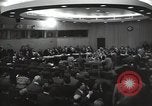
Dr. Mohammad Mosaddegh,Premier of Iran, attends meeting of the UN Security Council in Flushing Meadows, New York.
The UN Security Council in meeting at Flushing Meadows, New York. Dr. Mohammad Mosaddegh, Premier of Iran is assisted as he enters the chamber, walking with a cane. British representative Gladwyn Jebb is seen sitting at the table. Dr. Mosaddegh reads a statement to the Council. Ambassador Jebb responds, as Mosaddegh listens using a headset to hear translation.

Mohammed Mosaddegh, Premier of Iran enters a car in New York City.
Premier of Iran, Mohammed Mosaddegh steps down plane with his supporters to plead his case of oil exploration before the United Nations in New York City. People wave flags. He enters a car. British technicians evacuate with their possessions. British Navy and Paratroop forces personnel step on a boat. Navy people board a ship at sea. People wave from a ship.
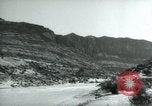
Construction of an oil drilling tower in Masjed Soleyman, Iran by the British syndicate organized by William D'Arcy
Activities setting up an oil drilling system in Masjed Soleyman, Iran, led by George B. Reynolds who was working for a British syndicate led by William Knox D'Arcy. Herds of camel, sheep and animals in desert. A laborer skimming oil from a natural surface-bubbling well. Men on horse guide laborers digging ground in desert. Laborers stand on scaffolds and work together. A machinery system set up for drilling on the rig. Laborers rotate shaft and the underground oil comes out. A man observes quality of drilled oil. Man on horses move up a ridge followed by laborers carrying their equipment.
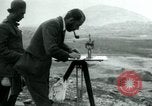
British geologist George B. Reynolds and workers drilling for oil and striking oil in Masjed Soleyman, Iran, Persia.
Activities of George B. Reynolds and his team operating an oil drilling mechanism in Masjed Soleyman, Iran. Reynolds, representing the Anglo-Persian Oil Company or APOC, (which later became British Petroleum in 1954, or BP), studies maps while smoking a pipe. An oil rig set up in the desert at the location Masjid-i-Sulaiman. Workers and mechanics working at the rig. Close views of the diary records of George B. Reynolds. Men work on oil rigs under intense sun. The oil rig working and striking oil; a cloud of smoke and fire from the ground. Close views of a binder holding letter from Lewis Mallet to the British foreign office announcing the successful oil discovery. A seemingly unrelated two-second view of 1908-era motor cars on a street follows.