


 Francais
 Deutsch
 Italiano
Refine Your Search
Iserlohn Germany 1945 stock footage and images
- Showing 151 to 156 of 10471 results more
more Hide
Hide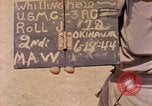
Wounded U.S. Marines being loaded aboard Stinson L-5B Sentinel ambulance aircraft in Okinawa , June 1945.
Air evacuation of wounded United States Marines in Okinawa, Japan during World War II. Marines unload a litter patient from an ambulance and load it aboard U.S. Army Air Forces L-5B aircraft of the 163rd Liaison Squadron. Aircraft taxis for take off. A signalman with flags with numerous Marine and Air Force L-5 aircraft in the background. Marines unload a wounded marine on a stretcher from the ambulance and load it aboard L-5B aircraft. Another litter patient being loaded aboard the L-5B aircraft. Identifiable aircraft serial numbers: 44-16995, 163rd Liaison Squadron
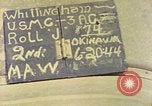
Wounded U.S. Marines being unloaded from Stinson L-5B aircraft on Okinawa in June 1945.
Air evacuation of wounded United States Marines on Okinawa by U.S. Army Air Forces Stinson and Marine Corps L-5B during World War 2. Various shots of wounded Marines on stretchers being unloaded from the aircraft. Medics carrying the wounded to a medical hut. More L-5B's land. A wounded Marine on a stretcher in L-5B talks with men standing outside the aircraft. Marine on a stretcher being released from harness. Stretcher being carried to a medical tent. L-5B aircraft lands and a litter case being loaded aboard Red Cross ambulance. Ambulance pulls away from the area with tents in the background. A shark-mouthed Marine Corps OY-1 (Stinson L-5) with the name "Budie" painted on nose taxis in front of camera. Identifiable aircraft in this clip: 44-16952 and 44-17164, both of the 163rd Liaison Squadron.
Allied victories over Nazis in European Theater in 1944 and 1945 during World War 2
Eastern Front battle of Soviet army as it repels the German Wehrmacht from a Soviet city, and captures German POW's. The German prisoners are marched into Soviet camps in winter snow covered landscape under guard of Russian Army soldiers. Aerial view of massive invasion force in English Channel on D-Day for the the Invasion of Normandy. View from landing craft of American infantry going ashore. Allied soldiers taking fire from German enemy during D-Day beach landings. Allied armies moving inland through France seen in combat with Germans in French villages and towns. Many German prisoners rounded-up and seen marching toward prison camps under British and U.S. Army guard.
American Army troops entering area of Dachau Concentration Camp, Dachau, Germany, near end of World War II
U.S. troops of the 45th Division, 157th Infantry Regiment, 3rd Battalion, I Company, entering the area of Dachau concentration camp, in the final days of World War 2. They are seen escorting German prisoners of war, with their hands raised, along a railroad siding. U.S. troops in front of a railroad train of boxcars. A dead German soldier, face down on the ground. The U.S. troops follow the railroad track into area of buildings, and run to take cover due to incoming fire. One fires a browning automatic rifle from an elevated walkway. Other American soldiers hunker down behind the walkway wall. U.S. Army soldier fires rifle while standing on a roadway. Surrendering German soldier, carrying a white flag, is attacked by a concentration camp inmate, as several other liberated inmates and U.S. Army soldiers stand nearby, watching. (Note: Opening cameraman slate states date as 04-27-1945, but historical records indicate this took place on 04-29-1945.)
Events of World War 2, and creation of United Nations Organization following the surrender of Germany and Japan
Summary of World War II events and formation of the United Nations Organization. Soviet troops on Eastern Front of Europe fire artillery on German positions in 1944. Russian troops advance. German soldiers come out of buildings and surrender. Allied Forces land in France on D-Day. Allied troops and tanks fight Germans on streets in towns and villages of France. U.S. Army tanks fire at German positions. Various groups of German prisoners of war march along roads and are herded into prison camps operated by American and British forces. In 1945, the Allied leaders meet at Yalta on the Crimean Peninsula to discuss Allied military strategy in the final months of WWII. Leaders included British PM Winston Churchill, U.S. President Franklin D Roosevelt and Soviet Premier Joseph Stalin. The meeting of U.S. and Soviet Russian troops at the Elbe River. German Nazi Swastika symbol blown up in explosion atop Zeppelinfeld Nazi party rally grounds in Nuremberg. Aerial view of Berlin in ruins, as seen from low-flying aircraft flying directly over the Unter den Linden boulevard and the Brandenburg Gate. Wrecked and bombed German buildings seen everywhere. German officials signing surrender instrument at Rheims. U.S. President Harry S Truman, Winston Churchill and Joseph Stalin at Potsdam Conference. U.S. Marines battling on beaches of Pacific Islands. Iconic shot of U.S. Marines raising the American flag on Mount Suribachi at Iwo Jima. Aerial view of bombed and ruined city of Tokyo, Japan. The Japanese surrender to MacArthur aboard the battleship USS Missouri. General MacArthur speaks aboard Missouri. Victory celebrations all across the world, with some scenes from earlier V-E Day (Victory in Europe) day in May 1945, including crowds celebrating in Paris, France, and some scenes on V-J Day (Victory over Japan day) in August 1945. Crowds on streets celebrate. Happy crowds jam streets. Delegates of Nations, among them Andrei Gromyko and Vyascheslav Molotov meet in San Francisco and create a United Nations organization. Truman arrives at signing of UN charter. Various delegates sign charter. U.S. troops disembark troop carrier ships at U.S. ports and are discharged after completing military service in World War 2. Group of U.S. Army soldiers exits a church (the Chapel at Fort Dix, New Jersey), waving their discharge papers in hand.
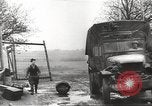
U.S. 4th Armored Division Commander Col. Hayden Sears forces German civilians to visit the Ohrdruf Concentration Camp in Germany (WW2)
The liberation of the first Nazi concentration camp Ohrdruf near the end of World War II. On April 6, 1945, troops from U.S. Combat Command A, 4th Armored Division, commanded by Colonel Hayden Sears forced local town's people to tour the camp. Captured Nazi German officials get out of an army truck. A German Major (Doctor) also accompanies the group. Dead bodies on ground. Nazi officials are forced to watch heaps of bodies found inside a room. Burned bodies of Polish, Czechoslovakian, Russian, German Jews and political prisoners. The policy of requiring local German officials to view every captured concentration camp began with this episode. The rationale was the "They will never be able to say they didn't know what happened here." (Col Sears as reported by his son.)
CRITICALPAST.COM: About Us | Contact Us | FAQs - How to Order | License Agreement | My Account | My Lightboxes | Shopping Cart | Advanced Search | Featured Collections | Website Terms & Conditions | Privacy Policy ©2026 CriticalPast LLC.
License Agreement |
Terms & Conditions |
Privacy Policy
©2026 CriticalPast LLC.