


 Francais
 Deutsch
 Italiano

Refine Your Search
John-F.-Kennedy stock footage and images
- Showing 3655 to 3660 of 3762 results more
 Hide

U.S. Seaplanes in operation during World War I
U.S.Seaplane operations during World War 1. Curtiss F-5L seaplane being moved out of a hangar. Several Curtiss HS-2L seaplanes being launched from the shore by teams of sailors who use long lines to retrieve rolling dollies after the seaplanes float. Crew starts engines on a flying boat which then taxis out in the water. The seaplane has three propellers (one a pusher) and a triple box tail (similar to later Curtiss NC series seaplanes). View from above of the flying boat in flight with gunner visible in front cockpit. View from below of a Curtiss HS-2L seaplane dropping a bomb. (World War I; World War 1; WWI; WW1)
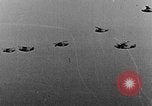
German Battleship Ostfriesland is sunk by U.S. Army Air Corps bombers during test
A medium bomb (probably dropped by a U.S. Navy aircraft) is seen hitting the German Battleship Ostfriesland on July 20, 1921 in the Atlantic Ocean off the coast of Cape Hatteras, North Carolina, United States. A formation of U.S. Navy Curtiss F5L flying boats is seen in the air. The following day, July 21, 1921, 2000 lb. bomb is seen exploding near the Ostfriesland. The bomb is dropped by an airplane from an Air Corps unit commanded by Army Brigadier General Billy Mitchell (neither seen). Several other 2000 lb. bombs explode on and near the Ostfriesland, causing it to roll over and sink.

Bombing of German Battleship Ostfriesland in U.S. Army and Navy tests
The German Battleship Ostfriesland being bombed in U.S. Army/Navy tests of ability to destroy a battleship from the air. A formation of U.S. Navy Curtiss F5L seaplanes is seen flying above. Medium size (not over 600 lb bombs hit on and near the Ostfriesland.

Captain James Jahara of Kansas, ranking American jet aircraft pilot, returns to his home base after his latest battle in Korea.
Captain James Jahara of Kansas returns to his home base in Korea during the Korean War. American F-86 Sabre jet aircraft taxis. Captain James Jahara of Kansas, ranking American jet pilot in the Korean Theater of operations, returns to his home base after his latest battle with Russian MIGs over the Yalu River. A man signals for the landing of the jet. Captain James Jahara is in the cockpit. He gets off from the jet. His friends congratulate him.
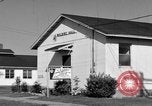
U.S. Military Police experts at work in the Criminal Investigation Laboratory, Fort Gordon, Georgia, United States.
Activities of the U.S. Army Military Police at U.S. Army Criminal Investigation Laboratory, Fort Gordon, Georgia, United States. A sign: 'U.S. Army Criminal Investigation Laboratory, Commanding Officer , Document and Fingerprint Section, Administrative and Firearm section'. SP-6 Holford, at his desk, examines a pistol. He shows how each weapon barrel creates distinct markings on bullets. Chief Warrant Officer-4, R.F. Roscoe at his desk. He moves to the laboratory, where he applies flame to a weapon, bringing out fingerprints on it. Laboratory personnel demonstrate use of other devices, including special photographic equipment, used to link weapons to crimes.

Fire fighters douse fire with water hoses as a building burns in aftermath of rioting in Washington, DC; citizens loot stores
A building burns during race riots in Washington, DC following assassination death of Martin Luther King, Jr. A fire truck arrives and firemen douse the fire with water hoses. Letters "D.C.F.D." standing for District of Columbia Fire Department, seen on jackets of firemen. African American citizens on sidewalks and streets outside buildings. People looting stores and stealing goods from stores with destroyed entry ways. Three men stand near a car and they open the trunk of the car.
CRITICALPAST.COM: About Us | Contact Us | FAQs - How to Order | License Agreement | My Account | My Lightboxes | Shopping Cart | Advanced Search | Featured Collections | Website Terms & Conditions | Privacy Policy ©2026 CriticalPast LLC.
License Agreement |
Terms & Conditions |
Privacy Policy
©2026 CriticalPast LLC.