


 Francais
 Deutsch
 Italiano
Refine Your Search
John-F.-Kennedy stock footage and images
- Showing 3715 to 3720 of 3762 results more
more Hide
Hide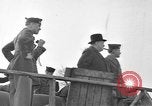
U.S. General Eisenhower and British Prime Minister Churchill inspect equipment, supplies and review a parachute jump in England.
U.S. 101st Airborne Division in England during World War 2.British Prime Minister Winston Churchill, U.S. Army General Dwight D Eisenhower, and Lieutenant General Omar Bradley, with other officials and officers, visit RAF Welford airfield in Berkshire County, England (then home to the 435th Troop Carrier Group). They are hosted by Brigadier General Maxwell Davenport Taylor, Commander of the 101st Airborne Division, together with members of his staff, including: Brigadier General Don F Pratt and Brigadier General Anthony C. McAuliffe. They tour various exhibits of engineers, artillery, anti aircraft and paratroop units. They inspect equipment, gliders, and supplies. From a reviewing stand, they observe a paratroop exercise involving formations of C-47 transport planes, from which large numbers of paratroopers jump, filling the skies with parachutes. Generals Eisenhower, Brigadier General Taylor and Prime Minister Churchill salute colors as they review troops. They walk among displays of troopers, equipment, and U.S. CG-4A gliders. Assisted by General Taylor, Prime Minister Churchill climbs aboard a British Horsa glider to examine it. He shakes hands and converses with Colonels of the 101st, including: Col.George S. Wear, commander, 327th Glider Infantry Regiment; Col. George V. H. Moseley, Jr., Commander, 502nd Parachute Infantry Regiment; Colonel Howard R.Johnson, commander, 501st Parachute Infantry Regiment; and Col. Thomas L. Sherburne, 101st Airborne Division's Artillery Commander.
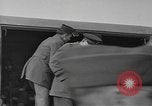
General Eisenhower and Prime Minister Churchill visit the 101st Airborne Division in England during World War II
While visiting the U.S. 101st Airborne Division, at RAF Welford in Berkshire, England, in World War 2, Prime Minister Winston Churchill, and General Eisenhower, inspect the inside of a British Horsa glider. Eisenhower steps down from the cabin as Brigadier General Maxwell Taylor, Commander of the 101st, assists Prime Minister Churchill down the steps. Churchill then peers into the open back of a U.S. CG-4A glider. He stops to look at paratrooper rations displayed on a table, as Brigadier General Anthony C. McAuliffe explains them. Churchill and Eisenhower then review formation of paratroopers, accompanied by Brigadier Maxwell Taylor, and followed by Brigadier General Don F. Pratt. They walk among the troopers, one of whom is a British paratrooper. The Generals salute as they pass the unit colors. Further on they pass a color guard and the Generals salute, as Churchill removes his hat. Churchill is seen at a microphone. Change of scene shows C-47s flying overhead with paratroopers descending and spectators watching them. another view of Churchill and Eisenhower entering Dodge 3/4-ton T214 vehicle, after the paratroop drop, and driving among troops seen in combat positions on the field.
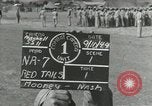
General Benjamin Oliver Davis awards medals to the 332nd Fighter Group at Ramitelli Airfield in Italy during World War II.
The 332nd Fighter Group is awarded at Ramitelli Airfield in Italy during World War II. Airplanes parked on the field. U.S. Army General Benjamin Oliver Davis, Sr. in Washington DC along with other officials arrives on the field. He bestows the Distinguished Flying Cross on his son Colonel Benjamin O Davis Jr. and three other pilots. Other dignitaries include Commander-in-Chief of the Mediterranean Allied Air Forces Lieutenant General Ira C Eaker, Commander of the 15th Air Force Major General Nathan F Twining and Commander of the 306th Fighter Wing Brigadier General Dean C Strother. Tents in the background. A band playing in the background.
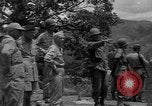
U.S. and British Army officers arrive at 43rd Division sector in Luzon, Philippines (WW2)
United States Army soldiers in Norzagaray, Bulacan, Philippine Islands during World War II. Commanding General of the 43rd Infantry Division Major General Leonard F Wing, British Army Liaison Officer Lieutenant General Charles H Gairdner, Commanding General of the Sixth U.S. Army General Walter E Krueger, and Commanding General of the XI Corps Major General Charles P. Hall talk. They stand at a ridge overlooking the Ipo Dam in Norzagaray, Bulacan near Manila, Philippines. An officer looks at a map and points towards a location.
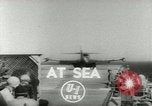
A bomb from a landing aircraft explodes on the flight deck of carrier USS Oriskany underway at sea in Korea
A bomb explodes on aircraft carrier USS Oriskany (CV/CVA-34) underway at sea off the coast of Korea. An aircraft takes off from the carrier. The F4U Corsair lands and a general-purpose bomb is released accidentally while landing. The bomb explodes and several men including the cameraman (Thomas McGrath) who was taking photographs are killed.
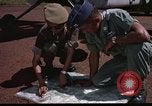
FAC Captain Lawrence Reed does preflight checking of an aircraft and boards it in Vietnam.
United States Air Force (USAF) Forward Air Controllers (FACs) in Vietnam during the Vietnam War. USAF and Vietnam Air Force (VNAF) FACs checking a map. USAF O-1F Bird Dog aircraft parked in the background. FAC Captain Lawrence Reed does preflight checking of the aircraft and smoke rockets. He boards the aircraft.
CRITICALPAST.COM: About Us | Contact Us | FAQs - How to Order | License Agreement | My Account | My Lightboxes | Shopping Cart | Advanced Search | Featured Collections | Website Terms & Conditions | Privacy Policy ©2026 CriticalPast LLC.
License Agreement |
Terms & Conditions |
Privacy Policy
©2026 CriticalPast LLC.