


 Francais
 Deutsch
 Italiano

Refine Your Search
Kaiserslautern Germany 1962 stock footage and images
- Showing 133 to 138 of 6824 results more
 Hide
United States and Russian troops in Germany after World war 2; division of West Germany and East Germany
Bomb damaged and ruined buildings of Nazi Germany in 1945, including the Reichstag. Nazi Eagle symbol of Third Reich pulled down from building and crashes to the ground at end of World War 2. United States Army of occupation marches into city as German population lines sidewalks and watches them parade. Sign on a shop reads "Gaststatte Schosser." Many buildings in view are damaged or destroyed from bomb attacks during World War 2. American soldiers occupying German give candy to German children who at first hide from them. Nazi leaders including Hermann Göring, Rudolf Hess, Joachim von Ribbentrop, and Wilhelm Keitel, seen on trial in the Nuremberg war crimes trials. German people struggling to rebuild. women and children trying to gather wood from stumps of trees for fuel. A woman sawing a log. Women and children scraping food from inside trash cans and refuse bins, to stay alive during scarcity and shortages after the war. Americans providing food assistance and feeding German children in relief lines. Close up of a smiling boy as he receives food or drink. Soviet Russian Army soldiers occupying East Berlin and marching in formation. Russians removing an industrial lathe and other machinery and tools from Germany as the Soviet Union continues to strip Germany of resources after the war. A map of Germany and Berlin seen with divided regions as American, British, French and Soviet zones. Views of empty streets and heavily damaged buildings of Berlin after the end of the war. Children play amidst the desolation and destruction in East Berlin. View of Kammergericht, Headquarters of the Allied Control Council. Leaders seen meeting inside include American General Joseph T. McNarney, French General Marie Pierre Kœnig (Marie-Pierre Koenig), Soviet General Georgy Konstantinovich Zhukov,. British Field Marshal Bernard Law Montgomery. View of Spandau Prison guarded by troops of occupying powers. Soviet and American troops drill and march on the grounds of Spandau Prison. An American soldier relieves a Soviet soldier at a watch post. Soviet blockade of West Berlin begins in June 1948. View of a man shutting down power in a power plant and lights going dark in Berlin. Blackout conditions in Berlin during the blockade. Germans plant vegetables in city to survive. Germans exchange goods in black market setting. A man plants vegetables in view of the Brandenburg Gate. The Berlin Airlift operations underway. U.S. Air Force C-54 aircraft flying low and arriving in Berlin, bringing supplies to West Berlin. C-97 landing. U.S. military forces unloading relief supplies and food from airlift aircraft. American C-47s and C-54s in the Berlin Airlift. Soap and milk being unloaded from airplanes. German children gather on a hill and watch low-flying American airlift planes as they approach to land at Tempelhof Aerodrome in Berlin. An Air Force airman throws a package out of the aircraft. It is a very small parachute with candy that drops from the American airplane to the waiting children. Children run to retrieve it and they share and eat the candy. Blockade is lifted in 1949 and rebuilding of West Berlin resumes. View of railroad tracks being re-linked, a locomotive running on tracks, and trains cross between East and West Berlin. Ships loading goods onto trains for Berlin. A coal processing factory running again in Germany. German workers producing industrial parts and goods again in production factories. West German construction workers rebuilding structures in West Germany. German people cast votes, establishing Federated German Republic (West Germany). Figures seen include U.S. General Alfred B. Gruenther with Konrad Adenauer, President of the new German Republic, together in Bonn, Germany. Soviet Russian troops marching on parade in East Germany. East German workers rioting in 1953, in protest of increased production quotas in Communist controlled East Germany. Soviet forces in armored vehicles patrol the streets and disperse the crowd. A large electronic billboard banner flashes West German messages and propaganda to those who can view it in East Berlin. Citizen refugees from East Germany arriving in a processing center in West Germany, carrying bags and luggage. East German refugees laying on the ground on blankets in a crowded immigration processing center of West Germany. A woman irons clothes in the immigration center, while a child plays with dolls.

The West Germans bid farewell to the Military Governor of the U.S. Zone of Germany General Clay on his retirement in Germany.
General Lucius D. Clay retires in Germany. General Clay shakes hands with people outside the West Berlin Schöneberg Town Hall (John-F.-Kennedy-Platz 1 10825 Berlin). West Berlin Mayor Willy Brandt accompanies General Clay. A torch light demonstration outside the General's house. General Clay waves to the crowd. People hold a banner that reads 'Thank You Lucius Clay'. General Clay shakes hands with the crowd.

A large number of refugees flee East Berlin under the regime of Communist rule and reach West Berlin, in Germany.
Many refugees flee East Berlin under the regime of Communist rule and reach West Berlin, in Germany. Many refugees walk near the Brandenburg Gate. Bernauer Strasse near the Berlin Wall. Russian and East German soldiers guard the Berlin Wall line of demarcation between East and West Berlin. Families communicate across the line and relatives weep. A young girl weeps as she views relatives across the divided east and west Germany. A wedding bride waves to her parents in East Germany. A woman (Frieda Schulz) is pulled at the same time from above by east German authorities, and by West German helpers from below as she jumps from the window of her home on Bernauer Strasse to escape into West Germany. Scenes of several successful escapes by East Germans through barbed wire at the border, as they reach the hands of waiting helpers in West Germany.
People gather at an opera house in Germany; various performing arts in Nazi Germany; Winterhilfswerk fund drive
People gather at an opera house in Germany. Dancers perform a high kick routine in the hall. People watch the show and applaud. Some are Nazi German soldiers in uniform. View of an acrobatic show with a floor show followed by a trapeze act entertaining an audience in Germany. Men play in an orchestra in a symphony hall or opera house. Conductor leads orchestra. View of various instrument sections up close, including trumpets. View from behind violin players as they read music and play. Woman model on a stage comes forward and stoops with a tin can to accept contributions in the annual Winterhilfswerk des Deutschen Volkes drive, for relief for needy people in Germany during the winter. Street scenes of youth carrying tins and accepting coin and money contributions from German citizens for the Winterhilfswerk fund drive. A small child adds a coin to the tin. A Nazi officer adds a coin. A group of men crowd around to put coins in the tin. People watch them. Brief montage scene of German armament in World War 2, including artillery being raised to fire, close-up view of tank tread as tank advances, German Navy ships underway in the ocean, low-flying German aircraft flying overhead in the sky including a Junkers Ju 52 tri-motor aircraft.
End of World War 2 in Germany, the Four-power occupation of Germany after World War II, and the Berlin Airlift
Allied tank and tank destroyer firing and Allied infantry in Germany during World War 2. British, American, and Soviet troops escorting German Prisoners of war at the end of the War. Animated map shows line where U.S. and Russian troops met and zones of occupation in Germany and Berlin. It depicts routs of access into the Soviet zone of Berlin View from a vehicle driving through utterly destroyed part of Germany in 1945 with rubble and ruin of many buildings seen. Desperate German citizens facing shortages of food and necessities after the war, cooking on outdoor fire in a city street, and trying to clear some debris of destroyed buildings by hand and using buckets in a "bucket brigade." Bus service being restored and German citizens boarding. Vehicle traffic moving with a German police officer directing. Doctors perform physical examination of a German boy as a group of German boys wait in queue for examination. Soviet Leader, Joseph Stalin, with U.S. President, Harry Truman, British Prime Minister, Winston Churchill, at the Potsdam Conference. Children receiving soup at a school in Berlin. Animated map shows routes through the Soviet occupation zone, used by Western Allies, to supply essential food and supplies through the Soviet zone of occupation to sustain West Berlin residents. It then depicts Soviet action blockading the road and rail routes to isolate West Berlin. Views of empty roads, rails, and canals. A DC-3 (US Air Force C-47) transport aircraft taking off. Men loading supplies on aircraft for delivery to West Berlin. A C-54 transport airplane taking off. A British Short S.25 Sunderland flying boat carrying cargo in the Berlin Airlift. Troops carrying supplies for airlift. A British Avro York transport aircraft taking off. A warehouse filled with barrels for Berlin. View from overflying airplane. Trucks resuming travel to Berlin after the Soviets finally lift the 9-month blockade. Normal supplies of food seen again, in West Berlin shops. Vehicle stopped at a checkpoint. Sign warning that: "You are leaving the American Sector." and similar ones at the French and British sector borders. Old road sign pointing to Potsdam, beside another sign warning of entering the Russian zone. Traffic moving between East and West Berlin.
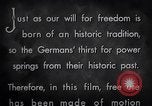
U.S. Army orientation film "Here is Germany" showing the contrast in life in Germany pre-war and during World War 2
U.S. Army training film titled 'Here is Germany'. Circa 1930 - 1938 views of pre-war German countryside, and German cities including Berlin and others before destruction in World War 2. Shots include famous German landmarks and buildings in major cities including Brandenburg Gate and Victory Column sculpture close-ups and other monuments all before bombing of World War II. Lifestyle of German people with families and children in their routine lives in the decade of 1930 before the war. Farmers working fields, mined coal transported by rail, potatoes poured from a full sack, a boy shepherd with geese; a farmer counting pigs descending a ramp at a farm. City port or harbor scene with ships and a modern looking railroad train arriving at a station, sign on side reads Deutsche Reichsbahn (German Reich Railway). High speed highway roads like the Autobahn. German cruise ship at sea. Aerial view of airport with "Berlin" sign on ground. German schools, offices, factories and markets. German woman braiding a girl's hair. German woman taking in washed clothing from a clothesline. German men, women, and children cleaning and polishing work areas and possessions. A German library with people studying and others at book shelves. German classroom with a teacher instructing children and writing on a blackboard. Scenes of German musicians and symphony orchestra and musical instruments, artisans, masons, cooks. Busy roads with cars. Narrator then presents a darker other side, showing an arms factory during rearmament of Germany, German soldiers escorting away a religious priest. German military officials. Scenes circa 1945 of victims of German armies and of the concentration camps. Lumps of dead bodies from massive public shootings, a man being tortured, burning chambers, prisoners of war, concentration camps, human ovens, gas chambers. Survivors of the German custody in relief camps of Red Cross. Evidence of atrocities committed by Nazi Germany. Articles made of human skin and bones. Daily utility items like toys and brushes made from human body parts. Scenes of survivors of concentration camps. Polish people dead from Nazi atrocities at Lublin Castle. Italians and Belgians murdered by Germans, American POWs murdered by Germans. Scenes return again to 1930s views of peaceful German citizens and German lifestyle juxtaposed with views of German soldiers and military actions in World War 2. Some famous Americans of German roots: Wendell Willkie, Admiral Chester Nimitz, Henry J. Kaiser. Narrator talking about American customs and values. View of two teenage American boy students viewing a housing area and taking notes. One of the teenage boys is African American. Some men gathered at a bar in an American town. A man holding a long fly fishing pole preparing to depart on a fishing trip. Woman neighbors in discussion. Young American women walking down a sidewalk in an American town as a group of American boys watch and admire them.