


 Francais
 Deutsch
 Italiano
Refine Your Search
Kiribati Gilbert Islands 1943 stock footage and images
- Showing 2359 to 2364 of 6726 results more
more Hide
Hide
United States Navy's radioman, George Tweed is rescued and U.S. destroyer crew in Guam.
Film titled, 'Return to Guam'. Map shows location of Guam in the Pacific Ocean. Japanese installations on the island are shelled by American destroyer (DD). Light flashes are noticed on a peak of a nearby hill on the island. Sailors aboard the DD look through binoculars. A reply signal is sent form the DD. Sailors board a boat and head cautiously toward the island. A white man swims toward the boat. He is taken aboard. The rescued man was found to be a radioman of the United States Navy (USN), named George Tweed who was hiding on the island for the past 31 months. George Tweed eats food with the Destroyer crew after being rescued. Destroyers underway in the Pacific. View of the American naval fleet underway in the Pacific. View of cannons and crew aboard an allied vessel. Crewmen pile up heavy 14inch shells and 40mm ammunition on the deck of the warship. (World War II period).
As the United States enters World War II, U.S. military forces are seen, deployed in various places throughout the world.
American troops are seen in arctic gear moving on skis through blustery snowy weather in Iceland, during World War 2. They were sent in 1941 to relieve British troops occupying Iceland since 1940, during World War II. A guard post at the American camp, with Quonset Hut in background. Closeup of U.S. sentry in arctic gear holding rifle with bayonet affixed. View from above, of numerous tents partially covered with snow in the American camp. Change of scene shows U.S. troops disembarking from transport ships at the British Isles. They march with their combat gear onto a square where Army trucks wait to transport them inland. Another scene shows the American troops, viewed from behind, parading in London. Other scenes show them marching in various areas of London. Saint Paul’s cathedral is seen in the background of one scene. A large number of American M3 Stuart Light tanks move on a railroad train in Britain. Scene shifts to the Middle East, where railroad cars and various military supplies for Russia are be offloaded from American ships. A Russian officer is seen signing receipts for war materiel, from a U.S. Army Technical Sergeant. A row of American Army trucks are lined up behind them. The Russian and American exchange salutes, and shake hands. Next, a troop ship carrying American troops is seen arriving at a port in India, where they disembark with their gear. An American Army Sergeant in a pith helmet pays attention to a little Indian girl. Scene shifts to China, in 1942, where Brigadier General Claire Lee Chennault, Commander of the China Air Task Force, of the Tenth Air Force, that replaced the American Volunteer Group (Flying Tigers), is seen with Brigadier General Caleb V. Haynes, Commander of the India Air Task Force. A colonel joins their discussions. A Consolidated B-24 Liberator bomber is parked behind them. View of Curtiss P-40 Warhawk fighter planes, with Flying Tiger markings, parked on a flight line. A B-24 bomber landing on a runway, between hills, deep in China. Closeup of Nationalist China Generalissimo Chiang Kai-Shek, saluting. Huge numbers of Chinese troops assembling in a formation. Next, an expeditionary force of American troops is seen arriving on a troop ship in Australia. They line the ship’s deck and wave. General Douglas MacArthur arriving in Australia to assume the office of Supreme Commander, South West Pacific Area (SWPA). .Glimpses of U.S. Navy activities in Australia: setting up defenses of islands; unpacking a Kingfisher float plane and making it ready for use on a desert island. The final segments of the film show American forces in August ,1942 sailing to Adak in the Aleutian Islands, to strengthen American defenses there. Troops seen descending by rope ladder from the American transport ship USS J Franklin Bell (PA-34), into her landing craft for deployment on Adak Island. Scenes of landing craft reaching the beach and offloading troops, vehicles, and supplies. View of beach filled with supplies. One landing craft is clearly marked with ""P34" showing that it belongs to the USS J Franklin Bell ( later reclassified as APA-16).
Review of American growth and development from 18th Century to present; also U.S. assisting Latin America.
Mixture of reenactments for older 18th and19th Century life scenes in America, and actual footage from the 20th century. Workers cut timber with an axe. Cattle-drawn carriage passes. Laying log roads. Building a railroad. View of Chinese railroad laborer. Stringing telegraph wire on log poles. Steam locomotive pulls passenger train and belches black smoke. Reenactment of farmers ("Minute Men") assembling and marching off to meet the British in American Revolutionary War. Facsimile of United States Declaration of Independence. Actual footage from the early 1900s (circa 1910) of newly arriving immigrants arriving at Ellis Island for processing, including men, women, and children. Two boys pose for the camera smiling. Immigrants with their luggage in hand walk on docks of Ellis Island to or from processing areas. View of the Statue of Liberty on Bedloes Island and the words inscribed on statue of Liberty. Immigrants at Ellis Island. Diverse group of peoples raising their right hands as they take oath and become U.S. Citizens. Myriad different faces of Americans, including men, women, and children and people of different ethnic backgrounds including Asian, African American, and white. Three children gathered around a seated elderly man as he reads to them. Citizens deliberating on local development matters. Congress in session. Women voting registrars checking names as as voters arrive to cast their ballots in an election, and people entering voting booths to vote. Views of new 1965 Ford and Chrysler and other automobiles including sedans and station wagons. New Ford tractors on display. 1965 "concept" and "space age" automobiles on display from General Motors at a car show. Reenactment of engineers using time and motion studies in a factory. Workers in different kinds of factories and manufacturing plants in the the early 20th century (1910s, 1920s, and 1930s) employing mass assembly line methods for the creation of goods. Various machines operated in factory. Workers engaged in mass production. Finished goods display in shops. Sales person selling curling irons. Another selling a flat iron.Two women and an early version clothes washer. A woman tries out vacuum cleaner as salesman helps her. Men making sinks and tubs. A crew of women tightens fasteners on assembly line, using "Yankee" screwdrivers. Warehouse men moving crates and a shipping warehouse filled with boxes and busy workers. One scoots with his foot on a hand cart. Workers leaving factory at end of work shift. Grain harvester at work. Laboratories for medicine, industrial, and plant research, with scenes of scientists and technicans running experiments and views of test tubes, beakers, flasks, and measurement apparatus. Image of globe spinning. An African city and women near a market selling goods and moving good held high on their heads. A Latin American city. American cooperation with hispanic people on civic projects. Families lined up at a health clinic for babies. One baby is being weighed. Americans including US Army soldiers working with Latin Americans on a construction project.
U.S. personnel march Japanese personnel and take care of civilians during the Pacific campaign of World War II.
Japanese prisoners march and are interrogated on an island by U.S. personnel during the Pacific campaign of World War II. U.S. personnel aboard a ship look towards AKA (Attack Cargo Ship) ships at anchor in mid background. Task Force vessels in a harbor off the island. Men roll fuel drums from an LST (Landing Ship Tank) in background. Men walk over the beach. Small bulldozer underway in background. Japanese prisoners are marched over the beach. Marines in foreground. A Japanese prisoner is interrogated. A photographer shoots movies on the island. Japanese prisoners walk in a single file through the compound. U.S. personnel take care of civilians. Number being painted on arms of civilians and their children. Faces of islanders.
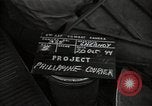
An American flying boat PBY Catalina carrying soldiers and correspondents in flight to Mindanao,Philippines.
The soldiers and war correspondents being transferred aboard the U.S. Navy PBY Catalina of the 2d Emergency Rescue Squadron from Motorai Island in New Guinea to Mindanao in Philippines during World War II. The PBY Catalina in flight. The coastline of an island in view. Inhabited areas in the island and rocky terrain in the island. The aircraft in flight in the sky. Two aircraft in flight. A vessel in the ocean. Few vessels in the ocean water.
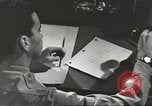
U.S. 1st Cavalry Division soldiers move to invade Los Negros in the South West Pacific during World War II.
An orientation film about the American campaign against the Japanese in the South West Pacific during World War II. A U.S. Army intelligence officer reads a document as he studies American strategy to attack Japanese positions on the Admiralty Island in the South West Pacific. An officer at a map of Los Negros. Aerial views of the island. An aircraft lands on sea and soldiers in rubber rafts move towards the island. Soldiers reconnoiter the island. An officer at a map and he makes a phone call to confirm the strategy to be followed for the attack in the South West Pacific. Nearly 800 soldiers of 1st Cavalry Division assemble for the attack. They embark onto Higgins boat at a beach and pull away. The soldiers get aboard a ship at sea. A convoy of U.S. ships underway to invade Los Negros. Officers aboard the ship confer. Naval guns being fired at the coast of Los Negros. Aircraft in flight as they provide an aerial cover. The soldiers get into landing crafts from a ship. The aircraft in flight.
CRITICALPAST.COM: About Us | Contact Us | FAQs - How to Order | License Agreement | My Account | My Lightboxes | Shopping Cart | Advanced Search | Featured Collections | Website Terms & Conditions | Privacy Policy ©2026 CriticalPast LLC.
License Agreement |
Terms & Conditions |
Privacy Policy
©2026 CriticalPast LLC.