


 Francais
 Deutsch
 Italiano
Refine Your Search
Kiska Aleutian Islands Alaska 1944 stock footage and images
- Showing 115 to 120 of 9823 results more
more Hide
Hide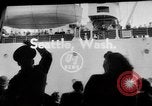
Sea otters get extra care and are first of their kind to survive in captivity in Seattle, Washington.
Sea otters stage a comeback with man's help at a zoo in Seattle, Washington. Robert John, Major of the Aleutian Islands, stands with a sea otter. The sea otter runs over deck and the Major catches him. Fur of sea otters are taken out from a bucket, which is got by exterminating otters. Sea otters in a cage and get care from man and are first of their kind to survive in captivity.
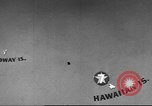
United States 8th Air Force B-17 Flying Fortress bomber planes destroy enemy targets in Germany during World War II.
U.S. Army Air Forces operations in Germany during World War 2. Animation of the Aleutian Islands in the North Pacific and location of U.S. 11th Air Force. Location of U.S. 6th Air Force. Location of U.S. 8th Air Force in England. Interiors of German armament and munitions factories shows armament works, steel works, and German war production workers. German factories making bomb shells, crankshafts, and other war materiel. U.S. Army Air Forces B-17 Flying Fortress in flight. B-17 drops bombs over German targets. German anti-aircraft gunners. Interior of the plane shows British air crews. Bombs being dropped. Mock ups of bombs exploding on German target. Fire in a German city. German search light crew at work. Bombs exploding in German cities. Rubble on street in German town.
Buoys being lowered during mine sweeping operations in the North Pacific Ocean during World War II.
Japanese mine sweeping operations in the North Pacific Ocean during World War II. The mine sweeping operations being carried out in the North Pacific Ocean near the Aleutian Islands. Buoys being dropped to mark a mined area. Dories being lowered. A Japanese look out sights through an instrument.
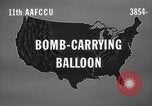
Japanese bomb balloons bound for the United States are shot down; examination of parachute and bomb apparatus
Evaluation of Japanese bomb-carrying balloons sent across the Pacific to the United States by Japan during World War 2. Gun camera footage of American fighter planes from Aleutian Island bases firing at Japanese balloons en route to the Pacific coast of the United States. A balloon bomb which reached the shores of the United States. but did not explode is examined by United States Army soldiers. They unfold the rice paper parachute portion of the balloon and examine its construction. Close-up views of the balloon control mechanism are shown, including a circular frame that would hold anti-personnel and incendiary bombs. Details of the wet cell battery and ballast weights are shown, including barometric aneroid switches which would operate to release ballast from simple hooks, as needed, to control balloon altitude. Narrator indicates it is believed the main purpose of the bombs was to start brush and forest fires.
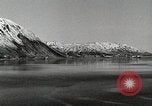
Icebreaker, USS Burton Island stops at Kodiak island to load equipment and then proceeds on mission towards King Island, Alaska
The icebreaker, USS Burton Island (AGB-1) en route to King Island in Alaska as a part of U.S. Navy annual winter ice reconnaissance mission. USS Burton Island stops at Womans Bay, Kodiak Island. Naval air station at the island. An aircraft pulls up into the hangar. Residential area in Kodiak. Snow covered mountains. The U.S. troop transport submarine, USS Perch (SSP-313) moves slowly on the surface, past the camera. The USS Perch crew lines her afterdeck. Notable on the USS Perch, is a large rounded watertight container for storing amphibious landing equipment. A helicopter being loaded aboard USS Burton Island. Crew fastens the helicopter securely in anticipation of rough seas through which she is later seen making way. Views of crew members removing rime ice from the deck, superstructure, and turret of a 5 inch gun. Small slabs of sea ice termed, "lilly pads," floating in the water. Rime Ice covering the railings of the USS Burton Island.
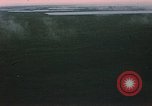
Aerial view of Alaskan terrain at Barter Island in Alaska.
Aerial view of Alaskan terrain near Barter Island in Alaska. Rivers flow through rolling tundra and kettle lakes.
CRITICALPAST.COM: About Us | Contact Us | FAQs - How to Order | License Agreement | My Account | My Lightboxes | Shopping Cart | Advanced Search | Featured Collections | Website Terms & Conditions | Privacy Policy ©2026 CriticalPast LLC.
License Agreement |
Terms & Conditions |
Privacy Policy
©2026 CriticalPast LLC.