


 Francais
 Deutsch
 Italiano
Refine Your Search
Kiska Aleutian Islands Alaska 1944 stock footage and images
- Showing 1801 to 1806 of 9821 results more
more Hide
Hide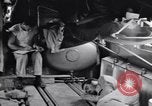
U.S. corpsmen treat wounded aboard a C-47 airplane flying over Munda airstrip,New Georgia Island, in World War II
U.S. 801st Medical Air Evacuation Squadron evacuates wounded soldiers from Munda airstrip on New Georgia Island in the Solomon Islands during World War 2. Interiors of a U.S. Army Air Force C-47 Skytrain transport airplane shows a medical corpsman giving water to a wounded soldier. A corpsman treats a patient with bandaged face and arms. Aerial view of a coastline. The C-47 approaches an airstrip, which appears to be Henderson Field on Guadalcanal, for landing. Litter patients are unloaded from the aircraft and placed into an ambulance.
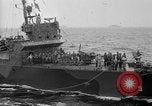
U.S. Marines land at the Solomon Islands and raise the U.S. flag during World War II.
United States Marines Corps on their way to invade the Japanese held Solomon Islands during World War II. A mail ship arrives and the Marines on the deck of the ship. U.S. Navy F4U Corsair aircraft in flight. Patrol boats underway. Marines on the bridge aboard a ship. The Marines climb down a landing net and come aboard a landing craft alongside the ship. Naval guns bombard Solomon coast. Landing crafts pull away. An aircraft in flight. Smoke rises from the coast due to bombarding. The landing crafts head towards a beach. Crafts arrive at the coast. Men put sand bags around a gun emplacement on the beach. A sign in Japanese. The United States flag being raised on the island.
U.S. Navy Commander Ashworth, crew member on B-29 that dropped atomic bomb on Nagasaki, interviewed at Tinian, Marianas Islands
Setting: North Field, Tinian,in Mariana Islands. Public Affairs Officer Major John F. Moynahan interviews Commander Frederick L. Ashworth of the U.S. Navy, who was the weaponeer on the B-29 called Bockscar (sometimes "Bock's Car") that dropped the atomic bomb on Nagasaki, Japan during World War II. He expressed initial concerns about not being able to bomb their primary target and having, instead, to proceed to their secondary target, Nagasaki.
Destroyed B-29, its parts and scattered debris viewed the day after it crashed on Tinian in the Northern Marianas Islands.
Remains of United States Army Air Forces B-29A Super fortress that crashed on March 30, 1945, at North Field, Tinian,in the Northern Mariana Islands, during World War 2. Scattered debris on ground. Remaining piece of tail section displays serial number 265283 indicating it is B-29 number 42-65283, nicknamed "Big Wheel," from the 9th Bomb Group, 99th Bomb Squadron. Reportedly, it experienced mechanical problems during a mission to drop mines in Japanese waters. After jettisoning its munitions, it returned to Tinian, but crashed on the shore. Of the 12 crew, only the radar operator survived.
Remains of a United States Army Air Forces B-29 Super fortress that crashed on Tinian in the Northern Mariana Islands., during World War II
Remains of USAAF B-29 number 42-65283 from the 9th Bomb Group, 99th Bomb Squadron, that crashed, 30 March 1945, in World War 2, on Tinian, Northern Mariana Islands. All crew members were immediately killed in the crash, except tail gunner, Sgt. Joseph C. Trullo, Jr., who initially survived but died of his injuries, five days later, and the sole survivor, Radio Operator, Sgt. James Langraf who was injured but eventually recovered. Air Force personnel inspect debris that is scattered across the crash site in sand dunes close to the ocean in the background.
Remains of crashed B-29 at crash site on Tinian in the Northern Mariana Islands in World War II
Remains of United States Army Air Forces B-29 Superfortress that crashed in Tinian, Northern Marianas Islands during World War 2. It was B-29 number 42-65283, nicknamed "Big Wheel," from the 9th Bomb Group, 99th Bomb Squadron. Opening scene shows remains of two engines and bent propellers from the crashed B-29. Ocean and a B-29 coming in for a landing are seen in background. Two destroyed engines and props along with partially intact empennage, are the only recognizable parts of the airplane. Aircraft debris is scattered close to the beach. Three U.S. Army Air Force personnel stand looking over the wreckage.
CRITICALPAST.COM: About Us | Contact Us | FAQs - How to Order | License Agreement | My Account | My Lightboxes | Shopping Cart | Advanced Search | Featured Collections | Website Terms & Conditions | Privacy Policy ©2026 CriticalPast LLC.
License Agreement |
Terms & Conditions |
Privacy Policy
©2026 CriticalPast LLC.