


 Francais
 Deutsch
 Italiano

Refine Your Search
Kiska Aleutian Islands Alaska 1944 stock footage and images
- Showing 3013 to 3018 of 9862 results more
 Hide
Color Sound
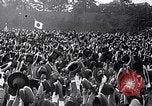
U.S. war effort is concentrated against Japan after the fall of Nazi Germany in World War II
Overlaid on scenes of fervently patriotic Japanese people waving flags and cheering, is slate reading: "Japan is firmly determined to fight a hundred years war to crush the United States." A huge explosion. Glimpse of U.S. Marine Flame Thrower Tank M67 directing flame on a Japanese bunker. U.S. marines charging in an amphibious assault on a Japanese held Pacific Island during World War 2. U.S. troops wading through surf from their landing craft, during amphibious assault. Marines fighting Japanese in Pacific Island jungle. Landing craft at beach in background. American flag being raised on a palm tree. Soldier saluting the American flag. General Douglas MacArthur wading ashore in the Philippines followed by staff officers and soldiers, including Filipinos. U.S. aircraft bombing Japanese held Corregidor in the Philippines. U.S. Navy ships bombarding the Philippine coast. American paratroopers of the 503rd Parachute Infantry Regiment, jumping at low altitude, from C-47 aircraft onto a critical hill known as "Topside" on Corregidor. Views from ground of paratroopers descending. and landing at the hilltop. U.S. troops in an amphibious assault, under fire. The American flag being formally raised as General MacArthur and other officers salute the flag. Marines in amphibious assault on Iwo Jima. A U.S. battleship firing at the coast. Explosions along the coast from Naval bombardment. Marines charging across the black sands of Iwo Jima. Marines firing a 75mm Pack Howitzer M1. Shells exploding at the base of Mount Suribachi. The famous flag raising by Marines on Iwo Jima. American forces attacking the Japanese Island of Okinawa. A Landing Ship Medium (R) firing rockets at Okinawa. Numerous explosions ashore. The USS LSM(R)-198 firing rockets. U.S. troops using a flame thrower to attack Japanese troops in a bunker. A Japanese defender is shot and tumbles down a hill from a fortification. American flag raising on Okinawa. Army officers salute the colors. A U.S. Navy destroyer firing its stern 8-inch guns. A Japanese warship struck by a bomb or shell, with flash of fire and explosion. More views of U.S. Navy warships bombarding Okinawa. A torpedo seen below the water as it is launched A Japanese ship exploding with fireball and huge cloud of smoke. Glimpse of helmsmen inside U.S. submarine. A formation of Douglas SBD Dauntless Dive Bomber aircraft peels off, and dives. A Japanese ship being strafed and bombed. It explodes. U.S. Army Air Forces B-29 bomber aircraft taking off from captured islands to attack Japan. A formation of B-29s in flight. B-29s flying over Japan. Mount Fuji is visible. B-29 raining bombs on Japan. View from aircraft as bombs strike, exploding on ground. Closeup of falling bomb. Huge clouds of smoke rising from struck targets. More views of B-29 aircraft in flight. Some leaving contrails at high altitude. View from bridge of U.S. battleship bow plunging into heavy seas that cover deck. (Ship's forward triple gun turrets are visible.) Aerial view of landing craft speeding toward a beach, leaving white wake in water. Glimpse of U.S. battleship, in camouflage paint, bombarding a shore. Closeup of twin 40mm Bofors anti aircraft guns being fired from U.S. Navy ship. A Japanese Kamikaze airplane on fire, falling through flak clouds. A Japanese Mitsubishi G4M bomber aircraft flying low past a U.S. Aircraft Carrier. U.S. Navy sailors on a ship's deck firing a twin 40mm bofors gun. A Japanese Kamikaze airplane hit and in flames as it falls. A squadron of U.S. aircraft in formation. Gun camera film of Japanese airplane bursting into flames while being shot at by U.S. aircraft. Flaming aircraft falling straight down towards the water and splashing on contact. U.S. troops wade through surf as they leave Landing Ship Infantry Large USS LCI(L)-337. Troops rush past a beached Landing Vehicle Tracked (LVT) on sand beach. Troops in tracked landing vehicles approaching the shore from a cove. White smoke in the area. A banner erected at shore reading: "CIC." Explosions nearby. Soldiers using a flame thrower. Scene shifts to U.S. Secretary of War, Henry Lewis Stimson, speaking from his office in Washington, DC. He speaks of destroying Japan's armed forces and war fighting capability. A soldier shouting with a beached LVT behind him. American soldiers firing small arms from sheltered positions. An artillery soldier closing the breech of a heavy gun after loading it. Montage of scenes similar to all seen already. A liberty bell and "V" for victory is shown.

Attack on Marianas Saipan-Tinian-Guam
"Marianas Turkey Shoot". Strafing and explosion on Mariana Islands by United States Task Force. View of coastal areas of island. Bomb hits on bay. Strafing on islands. Dock areas burning. Smoke rises from island. Explosions on the buildings on water front. Japanese planes being shot down. Enemy fighter planes explodes. Plane catches on fire and heads towards water. Pilot jumping from aircraft. Transport type plane strafed. (World War II period).
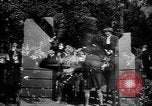
Review of American growth and development from 18th Century to present; also U.S. assisting Latin America.
Mixture of reenactments for older 18th and19th Century life scenes in America, and actual footage from the 20th century. Workers cut timber with an axe. Cattle-drawn carriage passes. Laying log roads. Building a railroad. View of Chinese railroad laborer. Stringing telegraph wire on log poles. Steam locomotive pulls passenger train and belches black smoke. Reenactment of farmers ("Minute Men") assembling and marching off to meet the British in American Revolutionary War. Facsimile of United States Declaration of Independence. Actual footage from the early 1900s (circa 1910) of newly arriving immigrants arriving at Ellis Island for processing, including men, women, and children. Two boys pose for the camera smiling. Immigrants with their luggage in hand walk on docks of Ellis Island to or from processing areas. View of the Statue of Liberty on Bedloes Island and the words inscribed on statue of Liberty. Immigrants at Ellis Island. Diverse group of peoples raising their right hands as they take oath and become U.S. Citizens. Myriad different faces of Americans, including men, women, and children and people of different ethnic backgrounds including Asian, African American, and white. Three children gathered around a seated elderly man as he reads to them. Citizens deliberating on local development matters. Congress in session. Women voting registrars checking names as as voters arrive to cast their ballots in an election, and people entering voting booths to vote. Views of new 1965 Ford and Chrysler and other automobiles including sedans and station wagons. New Ford tractors on display. 1965 "concept" and "space age" automobiles on display from General Motors at a car show. Reenactment of engineers using time and motion studies in a factory. Workers in different kinds of factories and manufacturing plants in the the early 20th century (1910s, 1920s, and 1930s) employing mass assembly line methods for the creation of goods. Various machines operated in factory. Workers engaged in mass production. Finished goods display in shops. Sales person selling curling irons. Another selling a flat iron.Two women and an early version clothes washer. A woman tries out vacuum cleaner as salesman helps her. Men making sinks and tubs. A crew of women tightens fasteners on assembly line, using "Yankee" screwdrivers. Warehouse men moving crates and a shipping warehouse filled with boxes and busy workers. One scoots with his foot on a hand cart. Workers leaving factory at end of work shift. Grain harvester at work. Laboratories for medicine, industrial, and plant research, with scenes of scientists and technicans running experiments and views of test tubes, beakers, flasks, and measurement apparatus. Image of globe spinning. An African city and women near a market selling goods and moving good held high on their heads. A Latin American city. American cooperation with hispanic people on civic projects. Families lined up at a health clinic for babies. One baby is being weighed. Americans including US Army soldiers working with Latin Americans on a construction project.
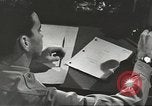
U.S. 1st Cavalry Division soldiers move to invade Los Negros in the South West Pacific during World War II.
An orientation film about the American campaign against the Japanese in the South West Pacific during World War II. A U.S. Army intelligence officer reads a document as he studies American strategy to attack Japanese positions on the Admiralty Island in the South West Pacific. An officer at a map of Los Negros. Aerial views of the island. An aircraft lands on sea and soldiers in rubber rafts move towards the island. Soldiers reconnoiter the island. An officer at a map and he makes a phone call to confirm the strategy to be followed for the attack in the South West Pacific. Nearly 800 soldiers of 1st Cavalry Division assemble for the attack. They embark onto Higgins boat at a beach and pull away. The soldiers get aboard a ship at sea. A convoy of U.S. ships underway to invade Los Negros. Officers aboard the ship confer. Naval guns being fired at the coast of Los Negros. Aircraft in flight as they provide an aerial cover. The soldiers get into landing crafts from a ship. The aircraft in flight.
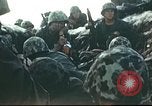
Wounded U.S. soldiers being treated during Pacific campaign of World War II, Pacific Ocean Theater.
U.S. soldiers land on an enemy island and being wounded in action during a Pacific campaign of World War II. U.S. troops care for wounded soldiers being hit during initial enemy attacks. Another wounded soldier being carried on a stretcher inland. Wounded soldier being placed on a jeep. Shell blasts on the island. Jeep pulls away. U.S. tanks advance on island. Wounded soldiers of U.S. army being brought at a field hospital. First aid and plasma being given to wounded soldier by medics. Leg of a wounded soldier affected by gangrene being treated. Wounded soldiers being loaded into ambulances and evacuated. Enemy shells fire on island as smoke rises from explosions.
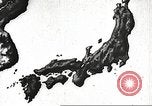
A Japanese film describes her Empire ambitions in the early 1930s
Film opens with animated map showing Japan and its nearby Asian mainland neighbors. Arrows from Japan point to areas and islands that Japan considers part of the Japanese empire. In addition to Pacific islands, they include Asian mainland places, Manchuria, and the Sakhalin Islands. The map shows the Northern limit of Japan's territorial reach with a line drawn on the map at about 47 degrees North latitude. The map shows the reach of Japan's empire extending South to include all of Manchuria and in the Pacific to encompass all the scattered islands in the Pacific accessible to Japan. The map begins drawing a circular boundary to the East encompassing all these areas of the Japanese Empire. Film shifts to Japanese navy warships patrolling the Eastern Pacific boundaries of the Empire, and bi-wing aircraft flying in formation overhead. Rising sun symbol seen on underwings of biplanes. Admiral Tōgō Heihachirō who was later Commander-in-Chief of the Combined Japanese Fleet during the Russo-Japanese War is seen seen as a young Admiral in 1895. Next, he is seen in 1934 at the age of 86, coming out of a barn and walking toward the camera. He is bent over and walks slowly, dressed in woolens and wearing thick eye glasses. (He died on May 30, 1934.)
CRITICALPAST.COM: About Us | Contact Us | FAQs - How to Order | License Agreement | My Account | My Lightboxes | Shopping Cart | Advanced Search | Featured Collections | Website Terms & Conditions | Privacy Policy ©2026 CriticalPast LLC.
License Agreement |
Terms & Conditions |
Privacy Policy
©2026 CriticalPast LLC.