


 Francais
 Deutsch
 Italiano
Refine Your Search
Kiska Aleutian Islands Alaska 1944 stock footage and images
- Showing 307 to 312 of 9823 results more
more Hide
Hide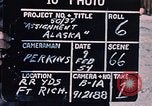
U.S. Army railroad train traveling in Fort Richardson, Alaska
A railroad train being pulled by a U.S. Army Alco S-2 locomotive, immediately followed by an Alaska Railroad ventilated refrigerator car and several other freight cars. The ground is snow-covered. A tall power pole is seen beside the track. Another take shows train stopped for a soldier, dressed in cold weather gear, who climbs aboard the locomotive. The train begins moving while he is on the steps. The freight cars in the train are seen to display Alaska Railroad labels. A flat car carries shipping containers.
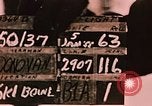
Skiers at the Ski bowl, Fort Richardson, Alaska.
Sign reads "Arctic valley, Ski Bowl, Fort Richardson, Alaska". Skiers at the ski bowl, Fort Richardson, Alaska. Scramble hold of the ski tow.
A grizzly bear with its two young ones as they move up a slope in Alaska, United States.
Carpenter -Whitney expedition in Alaska, United States. Snow covered mountains in Alaska, United States. A grizzly bear along with its young ones. A bear family moves up a slope. Sheep bone spread near the den of the bear.
A grizzly bear moves about against snow covered mountains in Alaska, United States
Carpenter -Whitney expedition in Alaska, United States. Snow covered mountains in Alaska, United States. A grizzly bear moves about against snow covered mountains. The bear stays at a distance. But suddenly decides to come closer and challenge the camerman, who stops filming when the bear gets too close.
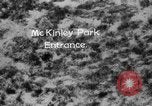
Vehicles move on a newly constructed highway in Alaska, United States.
McKinley National Park in Alaska, United States. A car moves slowly over rough dirt road at rustic entrance gate of the McKinley Park in Alaska. Sign reads: "Gateway to McKinley National Park." Several cars and a tourist bus driving on an improved dirt road in the Park. Flowers growing at side of the road. Several log cabins and platform tent at a permanent site in the park. A car parked at edge of rutted dirt road
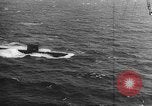
News stories of 1958 including polar cruise of USS Nautilus and statehood of Alaska
Aerial view of the USS Nautilus (SSN-571), world's first operational nuclear-powered submarine, underway on the surface and then submerging. View of helmsman below in the Nautilus. Aerial view of frozen arctic ocean with deep crevasses, as narrator mentions the Nautilus traveling submerged, beneath the North Pole on August 3, 1958. The boat's Captain, Commander William R. Anderson, is seen in uniform. More views of the Nautilus moving on the surface, including one with crew members standing on deck. Next, a newspaper headline is shown, announcing Alaska's statehood. Small boy and girl sitting in the grass holding a flag displaying map of Alaska and reading: "Alaska 49th State." Automobile traffic driving into Anchorage, Alaska. Banner stretched across the road reads: "Anchorage. All-America City." Pedestrians jam the sidewalks as the city celebrates its new statehood. A float displaying a huge moose has sign on its side reading: "49th. Hey Texas. Now I'm the biggest Bull..." Young Alaskans ride in a convertible automobile. A huge 48-star American flag covers the front of a building. It has a large extra star appended to it. Closeup of the flag.
CRITICALPAST.COM: About Us | Contact Us | FAQs - How to Order | License Agreement | My Account | My Lightboxes | Shopping Cart | Advanced Search | Featured Collections | Website Terms & Conditions | Privacy Policy ©2026 CriticalPast LLC.
License Agreement |
Terms & Conditions |
Privacy Policy
©2026 CriticalPast LLC.