


 Francais
 Deutsch
 Italiano

Refine Your Search
Kodiak Alaska USA 1953 stock footage and images
- Showing 655 to 660 of 25628 results more
 Hide
Color Sound

Destruction in coastal northeast USA from the 1944 "Great Atlantic Hurricane" (First example of a named hurricane in the US)
Views of The Great Atlantic Hurricane lashing at northeast United States areas (after having already hit the North Carolina Outer Banks), and views of the aftermath and early cleanup following the storm. Regions shown include Atlantic City, Long Island (where it came ashore as a category 3 hurricane on September 15, 1944), New York City suburbs, and parts of New England. High surf flooding boardwalks and coastal cities. Trees bent over and snapped in high winds. People walking with difficulty in the high winds. Streets of towns submerged in water. Coastal docks destroyed and large boats scattered high onto shore areas. Trees, poles, and wires downed over roads and homes. Entire homes moved off of their foundations and placed down the street. The "Great Atlantic Hurricane" was the first example of a named hurricane by the Miami Hurricane Warning Office, which later became the National Hurricane Center. The name was meant to reflect the hurricane's size and intensity.
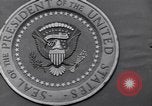
Secretary of State George C. Marshall going for talks, as a representative of the President of USA.
Secretary of State George C. Marshall arrives with President Harry Truman in a car at an airport. The Secretary talks with persons there. President shakes hands with him and bids goodbye. He moves to an airplane which displays on the door an official seal of the President of United States. The Secretary waves goodbye towards the people at the airport. The plane takes off.
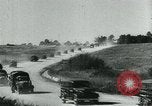
WW2 USA training film about protecting cryptographic messages
A United States military convoy on a road during WWII. Some footage dramatized. Aerial view of convoy from fighter plane. Smoke screen dispersed by plane next to military convoy. Fast moving tanks drive through smoke screen. A very fast tank takes air as it jumps over large mound and comes crashing to the ground. A tank blasted by howitzers loses its tread in explosion. Major Stewart Doyle talks to officers and notes that "it is the duty of every officer when capture is imminent to destroy all codes, documents, and cypher device settings...." In dramatization, a United States army officer transcribes a radio message onto a piece of paper and hands it to a soldier. The soldier, wearing goggles, gets onto a motorcycle and speeds away. View of German sniper shooting motorcycle messenger speeding down road. German soldier steals message bag. German cryptographic decipher team working. Close up of clock as time changes in montage. German radio officer receives message. Convoy on road. German pilots receive command in office. Allied convoy being attacked by fighter planes. Major Doyle reminds viewers to "know your rules on cryptographic security measures...."

Cotton Carnival parade in Memphis Tennessee, USA
Cotton Carnival in Memphis. A series of parties staged at Carnival. Current year's selected King, Queen and Royal Court of carnival. Presentations and parade by all cotton producing states. Decorated floats go by in a night time parade as crowd cheers. Floats have elaborate artwork and kings and queens. Flags of cotton producing states seen on many floats, including Georgia 1956 flag incorporating the Confederate battle flag on the Georgia float.
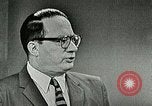
Philip Hauser briefs George Stone on U.S. census from 1820 to 1931 in USA; also some Wall Street depression scenes
George Stone and Dr Philip Hauser at the presentation of U.S. census around 1960. A slide of U.S. map appears on the screen. 1820 and population figures are marked on part of the map inhabited at that time. The reasons for the increase in the population are discussed by George Stone and Dr Philip Hauser. In the next slide census figures of 1830 appears. Concern for the handicapped lead to including of deaf, dumb and blind category in this census is shown. Dr Philip Hauser shows cartoons appearing in newspapers of that time to George Stone. In the next slide, census figures of 1850 and 7 classes of occupation of people are seen. A percentage representation of various occupations in the population is given in the next slide. The stress on accuracy of 1850 census is seen in the next slide. A comparison of number of occupations of males and females from 1840 to 1870 is shown in the next slide. Census of 1930 is mentioned in the next slide. 1931 is shown as a Special Unemployment Census. Newspaper headlines about stock market crash is seen. Around clip timecode 8:13 are images of Wall Street New York Stock Exchange floor near time of stock market crash. Wall Street region in New York City filled with people and views of lines or queues for homeless, unemployed, or food relief during the Great Depression.
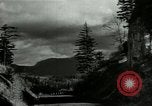
American landscape views 1930s; contributions of U.S. soldiers in the history and development of the USA.
The involvement of the American soldier in the history and growth of the United States from early 1900s until roughly 1938 before World War 2. Views of western United States countryside and mountain areas, including Mount Hood in Oregon, as seen from a slow moving car or other vehicle on a roadway. Wide, expansive landscape views in the U.S. Two Confederate and one Union uniformed veteran soldiers of the American Civil War walk together in the Arlington National Cemetery, in Virginia. U.S. Army soldiers marching at a an Army base, likely early 1930s, and wearing World War 1 era helmets. U.S. Army soldiers marching in a parade in Washington DC with U.S. Capitol in the background. Views of cities and towns in which U.S. Army posts were established, in the United States. Wide view of downtown Colorado Springs, Colorado, with Antlers Hotel in the distance and Pikes Peak in the far distance. Next shot is an unidentified downtown main street in the U.S. 1930s, followed by a scene of an industrial plant with a large water tower and snow covered low mountains in the distance. Next scene is the San Francisco skyline in the 1930s with the Bay Bridge in the far distance. Army troops and cavalry creating trails and paths, and eventually railroads, in wilderness areas of the United States. A railroad locomotive approaching beside the camera position at high speed, and then passing by pulling train cars. View of the Presidio Army Base and the Golden Gate Bridge, California. Subtle references to U.S. Army accomplishments, including curbing Mississippi River floods (Corps of Engineers) and conquering Yellow Fever (Army Doctor Walter Reed). Point of view (POV) shot from moving railroad train in a Colorado canyon; a side wheeler River boat on the Mississippi River; a sugar cane field in Cuba. View of locks in the Panama Canal. Statue of World War I soldiers.
CRITICALPAST.COM: About Us | Contact Us | FAQs - How to Order | License Agreement | My Account | My Lightboxes | Shopping Cart | Advanced Search | Featured Collections | Website Terms & Conditions | Privacy Policy ©2026 CriticalPast LLC.
License Agreement |
Terms & Conditions |
Privacy Policy
©2026 CriticalPast LLC.