


 Francais
 Deutsch
 Italiano

Refine Your Search
Leipzig Germany 1945 stock footage and images
- Showing 193 to 198 of 10470 results more
 Hide
Color Sound
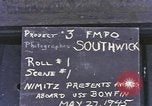
U.S. Navy Fleet Admiral Chester William Nimitz presenting awards to officers and sailors aboard USS Bowfin in Guam, during World War II
United States Navy Fleet Admiral Chester William Nimitz, aboard the USS Bowfin (SS-287) in Apra Harbor, Guam, during World War 2. He is there to decorate the Captain and crew of the boat. Admiral Nimitz is seen at a microphone, addressing officers and sailors. Cameramen taking the photographs of the event. Navy band playing in the background. Admiral Nimitz presents the Navy Cross to Commander Alexander Kelly Tyree, for extraordinary heroism in the line of his profession as Commanding Officer of the U.S.S. Bowfin (SS-287), on the Seventh War Patrol of that submarine during the period 25 January 1945 to 25 March 1945. Admiral Nimitz then proceeds to decorate more officers and sailors from the crew. Nimitz returns to the microphone, reads a citation, and decorates several more crew members. He and other officers hold long hand salutes as the ceremony is concluding. Admiral Nimitz then announces the end of the ceremony and walks away. Camera focuses on a sailor with medal pinned on his shirt.
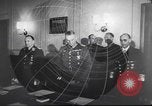
German surrender, UN founding, and Chiefs of Counsel meet before conducting Nuremberg and other trials after World War 2.
A film on preparations that are made for prosecution of axis war criminals following World War 2. Ratification of the surrender documents (from surrender two days earlier at Reims) held at Soviet headquarters in Karlshorst, Berlin, on May 9, 1945. German officers Colonel-General Hans-Jürgen Stumpff as the representative of the Luftwaffe, Field Marshal Wilhelm Keitel as Chief of Staff of OKW, and Admiral Hans-Georg von Friedeburg as Commander-in-Chief of the Kriegsmarine enter room and are seated. View of Keitel signing the surrender document. Scene change to Hall of the United Nations Conference, held in San Francisco from April 25 to June 26, 1945, with delegates from 50 Allied nations creating the United Nations. This was officially the United Nations Conference on International Organization (UNCIO). Leaders of various United Nations countries address delegates present in the War Memorial Opera House of San Francisco, including Edward Stettinius Jr of the United States. Next: A meeting of the military tribunal Chiefs of Counsel of many nations, including France, Russia, Great Britain and the United States, held in London, England, United Kingdom. They sign the International Military Tribunal Charter governing how the major war criminals from World War 2 would be tried.
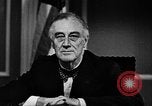
The funeral and interment of President Franklin D. Roosevelt.
President Franklin D. Roosevelt, looking frail, after his election to a 4th term, late in 1944. Newspapers announce his death, on April 12, 1945. View from high above, of funeral procession for Franklin D. Roosevelt. Crowds of mourners line sidewalks in Washington, DC, along the funeral route. Members of the military, in the crowd, salute as the flag-covered coffin of the President passes. Military pallbearers carry the coffin into the White House for a funeral service in the East Room. On April 15, 1945, Pallbearers carry Roosevelt’s coffin to a gravesite at the Roosevelt family home, Springwood, in Hyde Park, New York. Eleanor Roosevelt at President Roosevelt’s gravesite (4097 Albany Post Rd, Hyde Park, NY 12538, United States) with her children, including sons, James and Elliott, both in military uniforms.
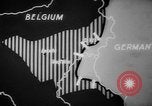
British and American troops join together for attack during Battle of the Bulge, scenes from Malmedy massacre and Houffalize (WW2)
Map points to Allied positions during Battle of the Bulge in World War II. British soldiers walk in a trench on the prong of the attack south of La Roche en Ardenne (La Roche-en-Ardenne or sometimes just Laroche). Trench in the snow covered area. British soldiers wear warm clothes and try to stay warm in the trench. British soldier knocks hole in ice and draws water into a bucket. British soldiers wash and shave with the freezing water. They heat water and use it to make cups of tea. They move on tanks to location where British and American forces meet and greet. The soldiers talk amongst themselves. On 14 January 1945 armored recce cars of the 2nd Derbyshire Yeomanry, 51st Highland Division, meet GI's of the 347th Infantry, 87th U.S. Infantry Division, near Ortheuville. The first link up between troops of VIII Corps and British 30 Corps. Another encounter between British soldiers, dressed in white camouflage smocks, with Americans of the 87th U.S. Infantry Division at Champlon. Later that same day. Field Marshal Montgomery wearing a new beret, commands the northern forces. British soldiers advance on a roadway and supplies move on vehicles. Houses in the background. U.S. 3rd Army soldiers shovel snow during a blizzard, clearing the way for trucks with supplies and mail to pass. Large tractors with snow plow attachments clear snow. On January 14, 1945, American forces gently sweep snow from the bodies of American soldiers at Malmedy who had surrendered to the Germans a month prior but were then massacred. (These were mostly U.S. forces of the American 285th Field Artillery Observation Battalion) German prisoners of war look on apprehensively as the Americans uncover the victims of the Malmedy Massacre. American soldiers look at from a snow covered hillside into the village of Houffalize in Belgium. A twisted sign for Houffalize is seen, and wreckage and destruction in the town. Close views of wrecked and burned homes in Houffalize. Destroyed tanks with one tipped in a river
Damaged buildings and casualties after atomic bomb raid over Hiroshima in Japan during World War 2.
U.S. Strategic bombing survey film about the situation in Japan after atomic bombing in World War 2. Film titled 'Effects of Atomic Bomb on Hiroshima and Nagasaki'. Map of Japan. Location of Hiroshima. City of Hiroshima. Camera pans over view of the city of Hiroshima before the atomic bomb destroyed the city. Buildings and huts in city of Hiroshima pre-destruction. Portrayal of events on August 6, 1945: Sentry standing on a platform. Sentry stands near 'bell' air raid alarm. Sentry in dugout cave. Narrator relates that bomb was dropped. Still image of Hiroshima mushroom cloud explosion seen. Views of destroyed Hiroshima (from September 1945). Bomb damage to large concrete building. Ruins of the city. Damaged street cars in street. Hiroshima station. Hiroshima Prefecture office building damaged by blast. Damaged buildings. Statistics of casualty and damage.
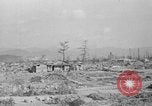
Devastation in Hiroshima and Nagasaki following atomic bomb attacks in World War 2, and view of atomic bomb blast over Nagasaki
Devastated area in north eastern Hiroshima following August 6, 1945 atomic bomb attack in World War 2. Simple shacks and buildings are being built using rubble material after the devastation of Hiroshima. Damage at Higashi station. Newspaper headlines about the atomic bomb attack on Hiroshima, and the warning to Japan by the President of the United States. A map of Japan shows the location of Nagasaki. Scenes of Japanese workers in arms factories building torpedoes and munitions, some wearing kokumin-fuku worker uniform. Workers in an assembly line munitions factory of Mitsubishi. A map shows a torpedo plant in the north and a steel and an arms plant in the south, then plots the center point between them as the U.S. target for the "Fat Man" atomic bomb attack. View of the atomic bomb explosion over Nagasaki on August 9, 1945, as seen from the B-29 bomber "Bockscar" (sometime called Bock's Car or Bocks Car). Mushroom cloud rises up to the sky. Wing of the B-29 bomber in the foreground. An aerial view of rubble and destroyed buildings in Nagasaki following the atomic bomb attack. Destroyed Mitsubishi steel plants beside the sea.
CRITICALPAST.COM: About Us | Contact Us | FAQs - How to Order | License Agreement | My Account | My Lightboxes | Shopping Cart | Advanced Search | Featured Collections | Website Terms & Conditions | Privacy Policy ©2026 CriticalPast LLC.
License Agreement |
Terms & Conditions |
Privacy Policy
©2026 CriticalPast LLC.