


 Francais
 Deutsch
 Italiano
Refine Your Search
Long Beach California USA 1960 stock footage and images
- Showing 379 to 384 of 27665 results more
more Hide
Hide
American economy strengthens after the Great Depression; also growth and prosperity and civil rights reform in 1950s and 1960s.
Chronicles recovery in America after the Great Depression in the United States, from roughly 1933-1967, but with emphasis on the earlier years of that period. Pre-war work programs such as the Works Progress Administration (WPA) help with employment. Farmers work in their fields with tractors. Officials in an office discuss and prepare graphs. Workers drill and work at a construction site. The 1933 Homeowners Loan Corporation sparks new home building. View of new homes being built and new suburban neighborhoods. Brief scene of bombing at Pearl Harbor. American warships launching from shipyards during World War II. Women war production workers work in factories in the United States. Post-war Marshall Plan aid being sent to European countries. Crates of supplies marked for European countries. Industrial output booming again, and scenes of industrial factories and plants with smoke pouring from chimneys and pollution from stacks. Large pool typists room filled with female typists and clerical workers busy at work in government agency. Close up views of hands of women operating typewriters. Reforms for housing projects, African American Civil Rights and measures taken to stabilize unemployment, with scenes of successive Presidents signing reform bills, including Truman, Eisenhower, and Kennedy. A ship departs from a harbor with goods. A convoy of vehicles on a road. Various Federal buildings in Washington DC. The White House building. An aerial view of an American town and of a factory with pollution smoke emitting from stacks. Letters being delivered to elderly women. People enter a medical clinic and wait in the clinic waiting room. Racially integrated classroom of older high school students or university students, with white and African American students, and both young men and women. A young white woman worker and a young African American working in a machine shop or possibly an academic shop class. A white and a African American man share a sandwich and views of white and black people together in integrated classrooms and factories as segregation begins to wane. Elementary school children in a classroom drawing pictures.

A 1960 newsreel retrospective shows 1935 demonstration of a combination police revolver and movie camera.
Combination revolver and miniature movie camera invented by O.W. Atkins of Los Angeles. 1935 film opens showing a policeman holding a revolver (unloaded) pointed directly at the camera. A small camera is attached under the gun barrel. A side view of the revolver shows a cutaway of the movie camera attached underneath. The camera's mechanism moves the film. Next, a police officer is seen standing and pointing the gun-camera. Then in an enactment, a round camera view, ostensibly from the gun-camera, shows a man running toward the officer and being shot down by him. Next, a man in civilian clothes examines a strip of motion picture film from the gun-camera.
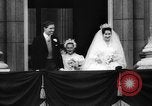
Marriages and births from various royal families in 1960
Princess Margaret of Britain waves towards a large crowd of people in England after her marriage to Antony Charles Robert Armstrong-Jones, a commoner photographer later styled as the 1st Earl of Snowdon. British crowd cheering for Princess Margaret. Scene change to King Baudouin of Belgium as he marries Doña Fabiola de Mora y Aragón of Spain during a traditional Catholic ceremony at the Cathedral of St. Michael and St. Gudula (Place Sainte-Gudule, 1000 Bruxelles, Belgium) in Brussels, Belgium. Queen of England Elizabeth and her husband Prince Phillip introduce little toddler Prince Andrew, sitting with his family on shore of a lake. Next scene shows Crown Prince Akihito of Japan playing with his newborn son Prince Naruhito at the Tokyo Imperial Palace (1-1 Chiyoda, Chiyoda City, Tokyo 100-8111, Japan). The next scene is Mohammad Reza Pahlavi, the Shah of Iran, with his wife, Farah Pahlavi, at a ceremony after the birth of their first son, Reza Pahlavi, the Crown Prince of Iran. Final scene is United States President John Kennedy and his wife Jacqueline in a hospital on the birth of their son John Fitzgerald Kennedy Jr.
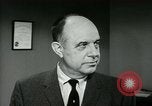
Engineers planning computer information center for processing data in the United States; 1960s attitudes toward woman workers.
Engineer's problem of retrieving information in the United States. Dramatization depicts: actress portrayed as engineer named Julie Stone leaves Chief George A Price's office. Chief interacts with engineer Pete Newton about the information center. Book rack in the background. View of a information center building. Men enter a Univac data center computer room. They confer while over a terminal labeled "UNIVAC Thin Film Memory" . Close up view of reel to reel computer and punch tapes running. Chief and Pete walk out from the information center. Men enter elevator while boss points to his watch. They meet Mr Cook. Cook discusses the sources of information for engineers. Pete asks about the transistors to solve designing problems. Cook calls his assistant and hands her a message. Assistant arrives and hands documents to Cook. Pete looks at the documents about the designing problems and references of design manuals. They return to their office. Pete enters Julie's office and hands her the reference documents. Engineer Harry seated at her cabin. Julie opens drawer and hands him documents about transistors for design problems. Julie and Pete subtly express romantic interest in one another. Chief enters Julie's office and hands her a reference paper about construction problems. Men interact. Julie searches for documents to help Chief solve his problem. She finds and hands him the documents. The men refer to woman worker Julie as "My girl" (consistent with era of inequality, sexism, and sexual harassment in workplace).

Parts and systems of electronic computers for bookkeeping, in an early 1960s computer room in the United States.
A film on bookkeeping services and use of early model computer technology to improve efficiency of banking services in the United States. A man seated at a desk while at work. Early model computer central processor in operation. A bank check being placed in the loading mechanism of a "reader-sorter" machine. The machine reads symbols printed in magnetic ink. The bank identification number of the check is checked. After checking the identification number, documents are read. Information contained in the magnetic symbols is checked. The documents are sorted. The information is placed on a magnetic tape. Close-up views and wider views of of computer magnetic tape and magnetic tape drive machines. Next, the information is processed and sent to a high speed printer for immediate examination. Man wearing glasses examines pages from the printer as it runs a continuous feed paper roll. Sorting of the documents. The documents are arranged in numerical order by the machine. A woman works loading magnetic tape reels on the tape drive machine. The master file containing complete data of each account is worked upon. Views of lights on the early model computer. The computer reads an identification number. Several information and transactions of the customers are added to previous transactions. Another master file is created using the information. It records the information of the customer account. Other information like that of overdrafts and closed accounts is also recorded. The customer statement is prepared. Customer information and opening balance is recorded from a tape. Information about the current balance is also recorded. A woman works on a reader sorter machine in operation. It sorts the checks. Close-up view of printer running continuous feed paper and printing transaction information. Tape unit containing complete information of all accounts is printed. View of an analog clock and a hour glass with sand in it. Narrator states that the computer will take 3 or 4 hours to complete the accounting for up to 30,000 daily deposit transactions, which would formerly take 60 man hours for the same operation. Views of the computer central processor unit (CPU) and views of the computer operator's console. A man seated at the console desk works. Three men wearing business suits, who are employees or officers of the Merchandise National Bank of Chicago, are seeing viewing blueprints and discussing.

Documentary film of South Bronx, New York City, in 1960s
Film opens with view of Movie marquee showing film:"Echenme al vampiro * Evangelina Elizondo* en Rapto al Sol." Latin American music is heard in background. Various business signs are seen, for Gilroy & McLoughlin Bar & Grill,cabaret; Hair straightened; Various other shop windows showing womens clothing; Bric- a -brac including large photo of President John F. Kennedy and his wife, Jacqueline; Religious items; Restaurant serving "CuchiFritos, y, Pasteles;"clothing on sale; Musicians and entertainers advertised; and numerous other similar storefront views. Views of busy sidewalk merchants selling variety of goods. What appears to be a section of the Cross Bronx Expressway, under construction above the street, in the background. Grocer operating outdoor fruit and vegetable outlet on the sidewalk. Many customers gathered around him. Pedestrians on crowded sidewalk. A little girl dressed in white (perhaps for a first communion). A man dispensing shaved ice or "sno-cone" drinks from a sidewalk cart. Furniture for sale displayed on sidewalk in front of a store. A man and woman looking it over. A couple with a small baby. Scene shifts fo a quiet street and sidewalk where a couple walks and a boy rides a bicycle. The street and sidewalk look wet. View of roof tops and back yards with clothes on lines to dry. Camera pans over roof tops. More clothes lines and families seen seated on fire escapes. A boy picking up items near a large heap of trash in a vacant lot. Children playing various games on an empty street. Two old women walking slowly on the walkway. Women with small children conversing on a building stoop. Young men gathering together and "rough housing." They are copied by small boys who fight with one another. Young man and woman with a baby stroll on the sidewalk.
CRITICALPAST.COM: About Us | Contact Us | FAQs - How to Order | License Agreement | My Account | My Lightboxes | Shopping Cart | Advanced Search | Featured Collections | Website Terms & Conditions | Privacy Policy ©2026 CriticalPast LLC.
License Agreement |
Terms & Conditions |
Privacy Policy
©2026 CriticalPast LLC.