


 Francais
 Deutsch
 Italiano
Refine Your Search
Long Beach California USA 1960 stock footage and images
- Showing 4783 to 4788 of 27665 results more
more Hide
Hide
Men practicing rifle shooting in a field, hitting the target boards.
Men practicing rifle shooting in Long Branch, Ontario. They pose holding the rifles. They practice shooting the rifle in a field. Target boards in the foreground. They hit the target boards. Trees in the background.

African American men and women wearing their Sunday Best as they wait at a public school inTennessee USA.
Well-dressed black people waiting at a public school near a Tennessee administration emergency relief camp. Some Some of them are chatting as they wait outside the building.
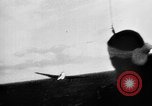
Japanese planes attack Pearl Harbor in Hawaii, USA.
Events related to the bombing of Pearl Harbor. Japanese crewmen shout. Japanese planes take off from deck of an aircraft carrier. Japanese planes drop bombs on Pearl Harbor. USS Arizona explodes. Ship burns in the harbor. Thick black smoke rises from the burning ships. View of wrecked U.S. aircraft. (World War II period).

United States President Woodrow Wilson at his Summer White House, Shadow Lawn, in New Jersey
United States President Woodrow Wilson and his party enter a car and leaves the White House in Washington DC for his Summer White House (or "Summer Capitol"), Shadow Lawn, in Long Branch New Jersey. Well-wishers at the White House stand and wave as the car departs the dirt road driveway of the White House, and a 2nd car with a security detail follows. View of Shadow Lawn, the estate of Joseph Benedict Greenhut. (The estate shown here was originally built in 1903 by John A. McCall of New York Life Insurance Company. He sold it to Greenhut. It was later destroyed by fire, and a mansion belonging to F.W. Woolworth President Hubert T. Parsons was built on the site. That estate is now part of Monmouth College). Large group of people gathered on the front lawn of Shadow Lawn to hear President Wilson speak at a 1916 campaign event. He is introduced and then approaches the podium as people cheer. The estate and podium area at the front of a soaring exterior portico is decorated with many American flags and swags.
Scenes cursorily illustrating the development of airplanes from 1908 to 1943, from a German perspective.
German slates refer to the dream of "Northern" people to fly, fulfilled by aircraft development. Scenes from Paris airshow in 1908, when it was a feature of the automobile show that year. Hangars bear names of aircraft companies: Bleriot; Vetze and others, with historic vintage airplanes of the period parked on the grass in front of each. A man plays with a dog in the grass. Spectators are seated in stands set up in the background. Scene shifts to 1935, where a long row of German aircraft are shown parked with engines running. Then it shifts to 1943, during World War 2, with a long line of German Messerschmitt aircraft parked with engines running. An animated map shows air lines of communication emanating from center of Germany and extending throughout Europe. Huge formations of German warplanes are seen in flight.

Some rocket motor designs of 1930s and speculation about future of rocketry
Liquid Rocket motor design drawings of various pioneers in the field, from the American Rocket Society, including: Constantin Paul van Lent (aka Constantin Tselentis,aka Constantin Lent, aka Dr. Constantin Paul van Lent) 1936; Alfred Africano, 1937; Reed,1937; Wild,1938; H.F. Pierce and Nathan Carver, 1938. Slates refer to the post World War I period through about 1938, as the beginnings of rocket flight, and the immediate subsequent period as the second phase of achievement that could lead to high altitude and long range rocket missiles and even manned spaceships. Slate suggests that future of rocketry is limited only by our imagination. Next are imaginary, science fiction scenes like a science fiction movie, showing a major city, in Germany, as a rocket ship travels away from it, and eventually showing Europe, and the earth from outer space, as the rocket travels into the blackness, beyond. Slate comments about eternal longings related to human flight.
CRITICALPAST.COM: About Us | Contact Us | FAQs - How to Order | License Agreement | My Account | My Lightboxes | Shopping Cart | Advanced Search | Featured Collections | Website Terms & Conditions | Privacy Policy ©2026 CriticalPast LLC.
License Agreement |
Terms & Conditions |
Privacy Policy
©2026 CriticalPast LLC.