


 Francais
 Deutsch
 Italiano
Refine Your Search
Long Beach California USA 1960 stock footage and images
- Showing 5731 to 5736 of 27665 results more
more Hide
Hide
Ukrainians and Belorussians, who fled to France to escape poor treatment under Polish domination, return home after 20 years.
The Soviet ship Vyacheslav Molotov is seen, docked at the French port of Le Havre. A crane raises cargo onto the ship. Ukrainian and Belorussian passengers stand on the pier, ready to board the ship that will take them to their former hometowns. One woman walks up the gangplank with a flag and a carryall displaying the image of Joseph stalin. On the pier, French Army officers process the embarking passengers, as a Soviet Army officer stands nearby. Closeup of documents being stamped. (Narrator states that these refugees fled their homes for France, 20 years earlier, when they were under the domination of Poland.) The Soviet officer encouraging passengers up the gangplank. View from high on the ship, of passengers clustered around the processing station. Camera pans up to the ship's funnel, where Soviet hammer and sicle is displayed. View from behind people waving on the dock, of the passengers lining the railing of the ship, waving goodbye as the ship slowly begins to move forward and then is seen underway. Scene fades to reopen showing the ship in waters of the Black Sea approaching the port of Odessa, Ukraine. Buildings seen upon cliffs overlooking the port. Several views of the passengers assembled on deck looking toward shore. Closeups of passengers and their flags. A Ukrainian woman gives a speech about her joy at homecoming. Other passengers applaud. A man holds up a homemade sign reading (in Russian) "LONG LIVE SOVIET-HOMELAND I-EE-GOVERNMENT." Passengers disembarking down the gangplank, carrying flags and riding in open small trucks away from the ship.
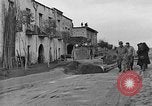
Italian workers, British Troops, U.S. soldiers and Italian soldiers clear ash and cinders from a village in Italy.
Eruption of Mount Vesuvius, Italy. United States Army bulldozer clears main military road after eruption. Men stand on the street and watch as the bulldozer pushes piles of cinder. Buildings on side of the road. A long line of trucks follows the cleared path. The trucks are loaded with road equipment. United States soldiers alight from trucks. The soldiers help clear the railroad tracks. Italian workers, children, British Army Troops and Italian soldiers aid in clearing ash from vital areas. Farmers clear heavy layers of ash and cinders from roof tops. Bulldozer pushes huge piles of cinder. Women look from the windows of their home. (World War II period).
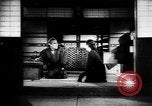
A Japanese household and a Japanese boy carries the ashes of his dead brother (WW2)
A dramatization depicts Japanese psyche and living habits in World War II. A Japanese household. A Japanese woman pleads to her father to give her permission to go to war as she is a nurse. The father does not seem happy. The father looks at his daughter's photograph when he is alone and keeps money for her before she goes. The father gets startled at a Maneki Neko cat jack-in-a-box toy. A Japanese man returns to home after a long time. He kneels and bows to his mother. A Japanese boy in school uniform carries the ashes of his dead brother. The boy cries privately.
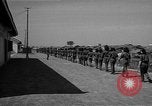
The Vietnamese WACs issue uniforms to the women recruits in Saigon, Vietnam.
Vietnamese Women's Army Corps stationed in Saigon, Vietnam. The WACs walk in long columns in a compound. A concrete building in view. American WACs Major Kathleen I. Wilkes and Sergeant Betty L. Adams serve as advisors of the Vietnam Women's Army Corps. They help the Vietnamese WACs. The Vietnamese WACs issue uniforms to the women recruits. Several new recruits wear native dress. Blouses are held against the girls for possible fit. Sergeant Adams tries a jacket on a new recruit. A Vietnamese woman works at a sewing machine. Major Wilkes, Sergeant Adams, Vietnamese WAC Sergeant and a Vietnamese girl walk out of the building. (Vietnam War period).
United States Navy Medical Civic Action Program is set on the porch of a Vietnamese school.
United States Navy Medical Civic Action Program (MedCAP) in Vietnam. The MedCAP is set on the porch of a Vietnamese school. Villagers line up for a medical examination. The villagers are examined with a stethoscope. A child is given treatment. Several villagers sit on the porch and wait for their turns. The medical officers write on cards. Tablets and ointments are kept in medical boxes. Women stand with children. Men and women stand in long lines for a check-up.
United States Navy Medical Civic Action Program team departs from a village in Vietnam.
United States Navy Medical Civic Action Program ((MedCAP) ) is set on the porch of a Vietnamese school in Vietnam. Villagers line up for the medical examination. The villagers are examined with a stethoscope. The medical officers write on cards. Tablets and ointments are kept in medical boxes. Women stand with children. Men and women stand in long lines for check-up. The MedCAP team departs. The medical officers board native boats. The team members are transported in native boats to the Swift Boats (patrol boats) anchored offshore. U.S. flag on the boats.
CRITICALPAST.COM: About Us | Contact Us | FAQs - How to Order | License Agreement | My Account | My Lightboxes | Shopping Cart | Advanced Search | Featured Collections | Website Terms & Conditions | Privacy Policy ©2026 CriticalPast LLC.
License Agreement |
Terms & Conditions |
Privacy Policy
©2026 CriticalPast LLC.