


 Francais
 Deutsch
 Italiano
Refine Your Search
Long Binh Vietnam 1969 stock footage and images
- Showing 643 to 648 of 5707 results more
more Hide
Hide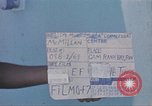
Patients read books and listen to music at the 6th convalescent center in Cam Ranh Bay, Vietnam.
Facilities of the 6th convalescent center in Cam Ranh Bay, Vietnam. Interior of a library. A patient looks through books on shelves. He selects a book and reads. Other patients seated in chairs reading books at the library. Some patients listen to stereo tapes or music using headphones and reel to reel tape players.
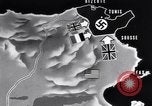
Allied Forces defeat Axis forces in Tunisia during World War II
The final battle of Tunisia, North Africa during World War 2. An animated map shows Allied Forces moving on all sides pressing forward against German forces still remaining in Northern Tunisia. in World War 2. Map outlines battles of Hill 609, Longstop Hill, Goubellat Plain, and Dejebel Mansour, and Takrouna. U.S. forces move 200 miles from the south to confront German forces in the north. Views of U.S. soldiers in trucks and M3 half-tracks, and towing heavy artillery with a tractor. Views of hills where Germans are positioned, west of Tunis and Bizerte. Allied guns firing. French forces sweeping for mines and digging some up with bayonets. French General Alphonse Juin confers with his staff as they review a large map laid out on a jeep. Brief view of French infantry in the field and gunners firing artillery. German Panzer IV tanks moving to counter British attacks. German tanks and artillery firing barrages against the British. Camera pans over destroyed German armor. British 78th Division attacks Longstop Hill. A long line of British infantry moving single file up a hillside. British soldiers firing Vickers machine guns from protected positions and infantry moving uphill, carrying small arms and Bren light machine guns. British troops scaling steep hills, using ropes, as shells burst close to them. One throws a hand grenade that explodes on the hilltop. After reaching the hilltop, the infantry scamper down the other side and continue moving forward, firing their weapons. Several dead German soldiers are seen as the British troops overrun the German positions. British engineers and pioneers working with caterpillar tractors and shovels to build roads. Later, trucks are seen using a new road. In the meantime U.S. troops are seen arriving to commence their assault on Hill 609. It begins with long range artillery firing from camouflaged positions and shells exploding all over on Hill 609. It continues into the night. View of soldiers in artillery headquarters, under a tent illuminated by lanterns. Long sequence of nighttime artillery fire. Medical Corps doctors treating wounded as the nighttime artillery barrages continue. U.S. infantry digging in after taking Hill 609. View of American soldiers walking up Hill 609. View of British Field Marshal Bernard Montgomery consulting with staff officers in the field. British 8th Army commander, Lieutenant General Sir Oliver William Hargreaves Leese, looking through binoculars as he stands with staff members at the front. Scene shifts to U.S. airmen arming machine guns on a parked P-38 fighter plane. Others roughly handling bombs to be placed into U.S. bombers. Bomber with nose art of devil riding a bomb and name "Hell a Poppin." Air crews arrive by jeeps at their B-25 Mitchell bombers and others arrive at their B-17 bombers. View of B-25 number 41-13202 named "Idaho Lassie" of the 321st BG, 445th BS, 12th Air Force. Engines running on bombers and on a British spitfire fighter plane. Formations of Allied aircraft, including B-24 liberator bombers, Martin B-26 Marauder bombers, British spitfire fighters, and B-17 Flying fortress bombers. British and American armor moving forward firing guns. French artillery firing and French infantry advancing. French machine gunners in white hats. U.S. B-24 Liberator aircraft dropping bombs. German fighter planes attacking allied bomber formations. Gunners in the bombers firing at them. Gun camera view of German fighter being shot down. More views of Allied aircraft bombing and strafing. Map shows American forces reaching Bizerte, the British capturing Tunis and German forces split and defeated.
Various "firsts" in U.S. aviation history from 1918 through 1924; early history of flight and vintage flight scenes
Shows several aviation "firsts" accomplished by U.S. Army Air Service aviators in the period from 1918 through 1924. A close formation of biplanes in flight. President and Mrs. Woodrow Wilson chat with Major Fleet, Officer in charge, on the occasion of the first air mail flight, inaugurated on May 15,1918 between Washington DC and New York.The mail is loaded into the Curtis JN-4 aircraft. Pilot in the cockpit. The aircraft takes off and in flight. Air Service. Mention of aviators helping spot forest fires. Smoke rising from forest fires and mountain ranges. In 1920, U.S. Army Captain St. Clair Streett is seen with some of his Squadron who flew four De Havilland DH-4 aircraft 9,000 miles, from New York City to Nome, Alaska. Two of the men play with pet dogs. Their itinerary is painted on the side of one of the aircraft, along with the names of pilot and mechanic (C.E. Crumline and J.E. Long). In 1923 the first non stop coast-to-coast flight was made in the Fokker T-2 aircraft. . A sign on the aircraft reads 'Army Air Service non stop coast to coast'.First Lieutenants Oakley O.Kelly and John A. Macready board the aircraft, at Roosevelt Field, Long Island, New York, on May 2, 1923. Their Fokker T-2 in flight. Their arrival at Rockwell Field, on Coronado Island (San Diego) California. In 1924, Lt. Russell Maughan is seen boarding his P-1 Hawk airplane at Mitchel Field, on Long Island, New York, and taking off , bound for Crissy Field at the Presidio, San Francisco, California. His goal is the first dawn-to-dusk, coast-to-coast flight. Views of his P-1 Hawk airplane flying over Manhattan, New York City.
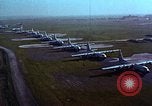
Mass troop movement of U.S. Army soldiers and tanks to positions in Europe during Cold War.
Scenes of American airlift techniques for mass troop and equipment movement during the Cold War. Map shows plan for movement of a full combat ready division (16,000 men) to Europe. Various USAF MATS (Military Air Transport Service) aircraft seen: Low aerial view of long line of C-130 aircraft parked on airfield. U.S. soldiers boarding long line of USAF airplanes. View of a Boeing C-135 Stratolifter taking off. Scenes of American soldiers reading and playing cards during air travel. Aerial view of three F-105 fighter aircraft in flight. U.S. Army soldiers exiting C-124 aircraft through large rear doors and loading trucks with equipment. A long convoy of U.S. tanks and armored equipment and troop carrier vehicles on European roads as soldier directs movement of the same.

High school students express their views about the navy and a boy interested in navy is interviewed in the United States.
A U.S. Navy recruitment film about high school students' interest in joining the United States Navy. The film is titled "The Navy?" An interviewer asks high school students what they think about the navy. The students are wearing typical mid 1970s fashions. Some of them have long hair and a "hippie" look. Some of the teenage kids say it is important to have a Navy and some say it is a waste of money and is destructive. A long hair teenager says that we don't need ships anymore. Several teenage girls express support for Navy careers. An African American boy standing in front of a school bus talks positively about a Navy career and how he doesn't want to be hanging around on the corner anymore. About the importance of the Navy and desire to join it students give varying answers. Interviewer discusses the Navy with a group of students. A boy interested in joining the Navy is seen playing basketball and watching television. His mother says that joining navy would be the best thing for him. He discusses about his life and why he wants to join the navy. The boy, who has long hippie style hair, is seen working on a car with a friend. He is seen jumping across the tops of railroad cars of a parked train. He throws a stone from a bridge, and is seen walking along deserted railroad tracks.
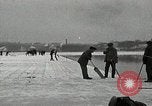
Workers cutting ice blocks from a frozen lake during the winter in the United States
A group of men work cutting and transporting blocks of ice from a frozen lake in winter. Teams of horses pull long saws across the frozen lake surface, creating a pattern of partially cut blocks, which other men then cut through using long-handled hand saws. Other men employ long poles with metal tips to dislodge, pry, and raise the cut blocks from the water. A town is seen in the far distance across the lake.
CRITICALPAST.COM: About Us | Contact Us | FAQs - How to Order | License Agreement | My Account | My Lightboxes | Shopping Cart | Advanced Search | Featured Collections | Website Terms & Conditions | Privacy Policy ©2026 CriticalPast LLC.
License Agreement |
Terms & Conditions |
Privacy Policy
©2026 CriticalPast LLC.