


 Francais
 Deutsch
 Italiano
Refine Your Search
Long Binh Vietnam 1969 stock footage and images
- Showing 685 to 690 of 5707 results more
more Hide
Hide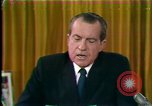
U.S. President Richard Nixon addresses nation about Vietnam War, from White House, Washington DC.
Stand of U.S. President Richard Nixon on Vietnam War. President Nixon addresses the nation about the Vietnam War from White House. He explains what has been described as "The Nixon Doctrine" regarding U.S. involvement in war, foreign policy support, and defense of freedom. He discusses the concept of helping other nations fight wars, rather than fighting wars for them. He illustrates this approach in describing U.S. efforts in Vietnam. He promises that 20% of U.S. combat forces will return by mid December. He notes he will not reveal withdrawal decisions that will compromise efforts at the Paris talks. He indicates he will pursue a path seeking a just peace through a negotiated settlement or through continued vietnamization.
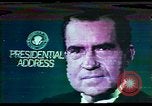
United States President Richard Nixon addresses the nation about the Vietnam War from White House, Washington DC.
News correspondent reads news about stand of U.S. President Richard Nixon on Vietnam War. President Nixon addresses the nation about the Vietnam War from White House. He details how United States got involved in the war. Nixon says that time has come to end the battle in Vietnam. (This became known as Nixon's "Silent Majority" speech.)
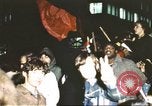
Anti-war activists carry banners and flags and demonstrate in Washington DC against the Vietnam War.
A moratorium in Washington DC to end the Vietnam War. Peace activists and pacifist demonstrators gathered on a street at night as they march to protest against the Vietnam War. People carry banners and red flags. People milling about in a street. People carry a banner that reads "Stop the war against Vietnam and Black America" (referring to African Americans). They march down the street at night.
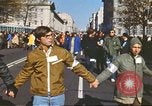
Demonstrators approach the Washington Monument marching during a moratorium to end the Vietnam War.
Peace activists and pacifist demonstrators amassed in Washington DC during a moratorium to end the Vietnam War. Anti-war demonstrators move down a street. Peace seeking people hold hands as they walk down a street in protest of the war. A man on a motorcycle ride down the street. The Washington Monument (2 15th St NW, Washington, DC 20024, United States). People march during the rally. A man carries a large wooden cross down the middle of Constitution Avenue. People form a human chain and march in a line down the street at the rally. A banner reads "Clergy Layman concerned about Vietnam." Another banner reads ' No deals in Vietnam U.S. get out now'. People milling about at the Washington Monument. A man carrying a megaphone walk among a large crowd.
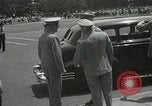
U.S. military officers, government officials, and family members at General John Pershing's funeral in Washington DC.
The state funeral for United States Army, General of the Armies John J Pershing in Washington DC. U.S. Army General Omar Bradley greets a civilian who shakes hands with other officers present. The casket is removed from the car and pallbearers proceed with it up the U.S. Capitol steps. The late General's son, sister, Secretary of State George C Marshall and others in the background. A long line of citizens enter the Capitol building to view the body. Several crippled veterans entering the building. Citizens entering the Capitol. A long line of people waiting to enter. Men, women, children, soldiers, sailors, veterans, nuns, and African American citizens waiting in line. Four men standing in the line.
Scenes cursorily illustrating the development of airplanes from 1908 to 1943, from a German perspective.
German slates refer to the dream of "Northern" people to fly, fulfilled by aircraft development. Scenes from Paris airshow in 1908, when it was a feature of the automobile show that year. Hangars bear names of aircraft companies: Bleriot; Vetze and others, with historic vintage airplanes of the period parked on the grass in front of each. A man plays with a dog in the grass. Spectators are seated in stands set up in the background. Scene shifts to 1935, where a long row of German aircraft are shown parked with engines running. Then it shifts to 1943, during World War 2, with a long line of German Messerschmitt aircraft parked with engines running. An animated map shows air lines of communication emanating from center of Germany and extending throughout Europe. Huge formations of German warplanes are seen in flight.
CRITICALPAST.COM: About Us | Contact Us | FAQs - How to Order | License Agreement | My Account | My Lightboxes | Shopping Cart | Advanced Search | Featured Collections | Website Terms & Conditions | Privacy Policy ©2026 CriticalPast LLC.
License Agreement |
Terms & Conditions |
Privacy Policy
©2026 CriticalPast LLC.