


 Francais
 Deutsch
 Italiano
Refine Your Search
Long Binh Vietnam 1969 stock footage and images
- Showing 2107 to 2112 of 5714 results more
more Hide
Hide
Continued struggle after Dust Bowl: Winds blow away top soil; Desperate migrant farmers during Great Depression
U.S. Department of Agriculture documentary depicts how rural America used machines to achieve production at a terrible cost to the land and people including erosion and poverty. The Dust Bowl in the Great Plains. Top soil is blown away in a storm. Barren land. Soil washed into the Arkansas River. Layers of soil in the river. Wasted land and rivers due to sheet erosion. Soil destruction, barren land and farms. Texas: A town called "Go Forth" or "Goforth" founded by cotton farmers long ago. Abandoned houses, damaged roads, and unemployed desperate farmers are seen. Emaciated cows search for food. On the edge of the town, migrant landless farmers sit by a fire near a car. Rains and water erode the soil. A sign in a barren eroded patch reads 'Abernathy Furniture Co.'. The wind blows away the top soil.

Deserted streets, closed stores and Merchandize Mart in Chicago after the assassination of President Kennedy.
A national television report on public reaction to U.S. President John Fitzgerald Kennedy's assassination in the United States. Chicago: The deserted Main Street during and after the funeral of John F Kennedy. Cars and pedestrians on the street. Closed stores. The Chicago Shopping and Commercial District. A notice in a store window reads 'Day of mourning for President John F Kennedy'. A woman with her baby stops by a store window to look at a picture of President Kennedy with an 'In Memoriam' message. A crowd around a television set watches the news about Kennedy's funeral. The Kennedy family-owned Merchandise Mart (222 Merchandise Mart Plaza Chicago, Illinois) in The Loop. Soldiers lower the United States flag to half-mast. A large crowd outside St. Peter's Catholic Church (110 W Madison St, Chicago, IL 60602, United States) in the Loop wait in long lines for the Mass while others inside pray. A school classroom inside a closed school. African American students put on their own close circuit television to pay tribute to Kennedy. A teacher and students speak about the late President and his life. An advertisement billboard sign reads the date of President Kennedy's assassination as a sign of respect and tribute.
USAF Brig. Gen. Pfautz introduces a USAF documentary on Soviet military equipment and its use.
United States Air Force Soviet Awareness Program titled 'Heirs of Victory' depicts Soviet military equipment and its use in terms of purpose and jurisdiction. Introduction by Brigadier General James C. Pfautz, Deputy Assistant Chief of Staff, Intelligence, Headquarters U.S. Air Force. Brig. Gen. Pfautz gives details about the subject, translation, narration, and editing. The Soviet Communist hammer and sickle symbol. A Soviet long winged early warning radar keeps a watch in the sky. Soviet Air Force MiG-25 (Mikoyan-Gurevich) interceptor bombers with air to air missiles. Pilots board aircraft and they take off. The aircraft in flight. Soviet missiles and rockets protect the borders. World War II Soviet Air Force fighter pilot Nikolai Kozmoff talks to highly trained young Soviet pilots at a air base.
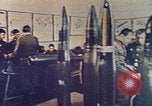
Modern Soviet military equipment including the FROG-7 launcher, T-62 battle tank, MiG-27, MiG-23 and Su-17 Fitter.
United States Air Force Soviet Awareness Program depicts Soviet military equipment and its use in terms of purpose and jurisdiction. Soviet Army soldiers learn about weapons in a class. Soldiers advance in a field. Soviet soldiers prepare the FROG-7 erector launcher with a warhead. A Soviet T-62 standard main battle tank with infrared night driving equipment, a 115mm tank gun and a 12.7mm antiaircraft heavy machine gun. Modern Soviet hovercraft, armed vehicles, surface to air missiles, electronic equipment, and automated systems. Soviet weapons fired resulting in explosions and fire. Tanks advance through fields. Soviet amphibious crafts advance through a water body. Amphibious personnel carriers detect and neutralize mines during an operation in Bangladesh, Aisa. Soviet Navy sailors aboard the carrier. A Soviet Air Force MiG-27 Flogger prepared for take off. A ground crewman helps the pilot strap up into the cockpit. Soviet Air Force MiG-23 Flogger and Sukhoi Su-17 Fitter take off for combat. The avionics system and weapons specifications of the aircraft. The aircraft in flight, drop bombs and attack. Fire and explosions. Soviet Long Range Aviation bomber aircraft carrying bombs take off. The aircraft fleet in flight over mountains. Pilots in the cockpits. Aerial refueling under progress. Aircraft with lights on lands on a snow covered runway.

A young hippie woman hugs an elderly man with a sign around his neck in Haight-Ashbury, San Francisco.
The Hippie culture in San Francisco's Haight-Ashbury district, California. An elderly man in a white cap with a sign hanging from a chain around his neck. The cap reads 'Bo Maverick'. The placard reads 'Ashbury-Haight'. Young hippies on the sidewalk. Pedestrians stop and talk to the old man. People observe him. A young hippie woman hugs him and stands with him. A young long haired hippie man in a poncho looks on. Cars and pedestrians on the road in the background. The old man with his arm around the girl as she eats an apple. The young man in a poncho smoking.
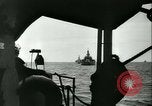
U.S. Signal Corps officers and soldiers use mine detectors, modern radars, and meteorological equipment during World War II.
The role and contribution of the U.S. Army Signal Corps in combat and war. U.S. shuttle ships loaded with signal communication supplies for U.S. and Allied troops in the European Theater make their way in the Atlantic ocean. The Squier Laboratory at Camp Alfred Vail in Fort Monmouth, New Jersey. A technician works on signal communication equipment in the laboratory. U.S. soldiers use mine detectors in the European Theater during World War II. The mine detectors detect metallic, non-metallic mines, wooden box mines, and mines in glass containers. Artillery soldiers bury large microphones into the ground in advance zones. The microphones relay back information on enemy artillery. Soldiers receive the information on radio sets. U.S. aircraft on a training flight simulating real combat situation: The aircraft lost in heavy rain and rough weather, looking for the location of Boston. The pilot switches on a modern advanced radar. The radar waves pierce thick clouds, are reflected by Earth's surface and display an image on the scope. The image shows the clear location of Boston harbor directly under the aircraft. U.S. bombers attack over the Channel coast on D-Day (6 June, 1944). U.S. soldiers employ meteorological equipment for long range weather forecast in the European Theater during World War II. Soldiers release a hydrogen balloon into the sky. Another soldier uses an apparatus to take readings of atmospheric conditions behind enemy lines. An aircraft drops an automatic weather station called SCM-18-TI by parachute into enemy territory. The timed mechanism sends out weather data in codes. The interior of the automatic weather station lying open in a field.
CRITICALPAST.COM: About Us | Contact Us | FAQs - How to Order | License Agreement | My Account | My Lightboxes | Shopping Cart | Advanced Search | Featured Collections | Website Terms & Conditions | Privacy Policy ©2026 CriticalPast LLC.
License Agreement |
Terms & Conditions |
Privacy Policy
©2026 CriticalPast LLC.