


 Francais
 Deutsch
 Italiano
Refine Your Search
M4-training stock footage and images
- Showing 679 to 684 of 8248 results more
more Hide
Hide
Documentary titled 'Copenhagen, Gay and Vivacious' showing buildings, markets and monuments of Copenhagen, Denmark.
Aerial views of Copenhagen, Denmark. Swedish Fokker F.XXII passenger airplane, named "Lappland," at the airport. Danish Airline Fokker F.VII passenger airplane. It taxis quickly, and stops in front of the airport terminal. Woman passenger deplanes. Luggage is removed from aft of the cabin. A German Lufthansa Junkers JU-52 with wheel pants, taxis, and parks. Passengers and a uniformed crew member disembark from the plane. The name "A.B. Aerotransport" printed on Fokker F.XXII. A steam locomotive pulls a passenger train into railroad station (possibly leaving and not stopping). A passenger ocean liner docks. Cars, taxis and buses meet the ship. Passengers disembarking from ocean liner. Taxi carrying passengers to hotel. A finely dressed, wealthy man and woman sign in at hotel desk, as bellman or bellhop brings luggage into hotel lobby. The couple peruse a booklet showing sights in Copenhagen and discuss them in English. View of the Copenhagen City Hall (Rådhuspladsen 1, 1550 København, Denmark). Trams and cars driving past and pedestrians on sidewalks. View of clock tower on City Hall. View from high above Town Hall Square (City Hall Square 1599 Copenhagen, Denmark). Rack filled with bicycles. A messenger heading off on a bicycle. An open-air market, with many farmers' and mongers' small trucks parked in lines. Numerous customers visiting the marketplace. Flower sellers' stalls along sidewalk. Fishing boats at the pier in Nyhavn (New Harbor). People eating at tables and women preparing foods for sale. Tram operators boarding their cars and driving away. Tram operators boarding their cars and driving away. Boats in a canal and a rowboat moving through a picturesque arch under a bridge. Diners at long tables in a restaurant. A policeman. Tower of Saint Nicholas Church, now presently known as the “Nikolaj, Copenhagen Contemporary Art Center” (Nikolaj Plads 10, 1067 København K, Denmark). View of Frederik's Church (Frederiksgade 4, 1265 København, Denmark). Church of Our Lady (Vor Frue Kirke, Nørregade 8, 1165 København, Denmark). Statue of Moses near the Church of Our Lady. An Expressionist style church, the Grundvig Memorial Church (På Bjerget 14B, 2400 København NV, Denmark). Gefion Fountain (Churchillparken, 1263 København K, Denmark). Hans Christian Andersen statue (Rådhuspladsen, 1550 København V, Denmark) near Tivoli Gardens. The equestrian statue of King Christian IX Monument (Christiansborg Ridebane 25, 1218 København, Denmark) by Anne Marie Carl-Nielsen, the first equestrian statue of a monarch created by a woman sculptor. Statue of King Frederick VII (Christiansborg Slotsplads 1, 1218 København, Denmark). The equestrian statue of Archbishop Absalon (Højbro Pl., 1200 København, Denmark), the founder of Copenhagen. Statue of King Frederick V (Amalienborg Slotsplads, 1257 København K, Denmark). Formal gateway with Doric columns. King Frederick IX and Queen Ingrid of Denmark in open coach. Drawbridge opening for small sailboat. Man feeding birds on the park. A bored driver presses car horn. Cars waiting for drawbridge to lower down.
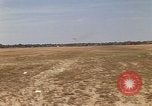
Aerial activity at Royal Thai Airbase, Ubon, Thailand, during the Vietnam War
A USAF F-4C aircraft makes long low approach and landing, with use of drogue chute at Ubon Royal Thai Airbase, in Thailand. during the Vietnam War. Next a two-seater training version of CAC Sabre aircraft from 79 Squadron, Royal Australian Air Force, is seen taxing beside the active runway. Pilot is in front cockpit only. A U.S. Air Force Kaman HH-43F Huskie (K-600) helicopter is seen carrying cargo underneath in a sling. It is passed by a fire truck moving near the active runwy. Final scene shows a McDonald F-101 Voodoo aircraft landing.
Food and gasoline rationing practices in the United States during World War II.
Food and gasoline ration in United States during World War II. People lined up outside a grocery store. Signs in the stores show lack of supplies. People at the counters. Gasoline Ration Card's close view. Women and men at the stores. Cars at a fueling station in Washington DC. A service station attendant pumps gas into a waiting automobile that has proper ration cards to receive the fuel. The U.S. Capitol building is visible in the background behind the car being fueled. Roads and streets with very little traffic due to gas rationing. View of pigs hanging from hooks in a meat processing plant, and being moved by meat packing workers along the processing line. Sign at the grocery store window reads 'Tuesday is meatless and also is eat-less'. Housewife in kitchen pouring fat through strainer and saving the fat oil for war effort. Young woman turns in a can of fat at the market and receives coupon for extra meat points and 4 dollars per pound of fat. Woman in kitchen crushes a tin can and puts it in a scrap metal bin to return to store for recycling. Giant trucks dumping tin collected for recycling into waiting rail boxcars. Cargo trains filled with scrap aluminum moving along railway tracks. At conclusion of World War II, sign at the fuel station reads 'Gas Rationing off No Stamps Required'. Man fuels a car. Late 1930s and mid 1940s era cars move on the road.
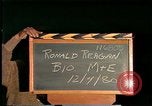
A film sketch about U.S. President Ronald Reagan and tracing his personal history and career leading to the Presidency in the 1980 election.
Opening scene shows U.S. President Ronald Reagan holding a little girl, and then standing with officials and Secret Service agents, as he prepares to enter a car. Closeup of him smiling. Closeup of President Reagan signing his autograph for spectators in a crowd. Next, Reagan and his wife Nancy are seen on November 4, 1980 waving to supporters at the Century Plaza Hotel, celebrating his election victory as the 40th U.S. President. The President elect says a few words of thanks to them. Views of the crowd cheering. Adopted son, Michael Reagan holds his son Cameron as he and his wife, Colleen Reagan, join Ronald and Nancy Reagan on the stage, followed by daughter Patricia Reagan and son Ron Reagan. The crowd cheers the President elect and his family. At this point the film begins showing images about Ronald Regan's life, starting with baby pictures; his parents; Tampico, Illinois, where he was born; Dixon, where he is seen in a school picture and with boyhood friends. A photograph of "Dutch" Reagan President of his High School Class. Reagan in photo with other members of the Eureka College football team, in Eureka, Illinois. The seal of the college. Pictures of Reagan with college classmates and teammates. Reagan posing in bathing suit when he was swimming team coach. Young Reagan, after graduation, as a sports announcer, sitting at a microphone labeled: "WHO" in Davenport, Iowa. The broadcasting tower of that radio station. A Track and field event taking place. Reagan posing with a pipe in his mouth, at the WHO radio station in Des Moines, Iowa. A baseball game in progress before a full stadium of spectators. In 1937, a Chicago baseball team is seen boarding a ship to a Spring training camp in California. (Narrator states Reagan accompanied them.) Aerial view of buildings at the First National Studios (home of Warner Brothers) in Hollywood. Ronald and Nancy Reagan, circa 1952, being applauded at a gathering when he was President of the Screen Actors Guild. Views of Reagan in U.S. Army uniform. A U.S. Army C-47 aircraft taking off from a field under attack, with fires burning and smoke rising (possibly during Japanese December 7, 1941 attack on installations in Pearl Harbor, Hawaii). U.S. Airmen standing on a ramp next to a Douglas C-47B-1-DL transport aircraft (tail number: 43-16145). What appears to be a ViP version of a B-50 aircraft parked on a ramp with an honor guard at the stairway. Ronald Reagan, in uniform, signing up for active duty. Later, Captain Reagan, U.S. Army Air Forces, is seen with other uniformed men at a gathering in Warner Brothers studios. The entrance of Paramount Pictures studios in Hollywood. A large group of studio employees walking between buildings. Reagan speaking, as President, of the Screen Actors Guild, at an outdoor gathering. Actor Robert Young and film industry executives stand nearby. Reagan, as Chairman of the Motion Picture Industry Council, addresses a dinner gathering of that organization. He is also seen testifying before he House Committee on Un-American activities Committee (HUAC) on October 23, 1947.
Film tracing the growth of the United States from 1607 to World War II
Waves crashing on a rocky shore. View of Plymouth Rock, with "1620" engraved on it. Coastline with hills and sea. A forest and primitive house of sticks. A church with watch tower. Reenactment of early immigrants felling trees and busy in a 17th Century settlement in Massachusetts. View upward of tall tree. Column on a building in Virginia; portico and clock on a building in Rhode Island;and a church in Carolina.The minuteman statue in Battle Green, Lexington,Massachusetts. Image of colonist James Otis. Statue of Thomas Jefferson. Image of Thomas Paine. Statue of Patrick Henry. Reenactment of British Red Coats charging up a hill during the American revolution. John Trumbull's painting, the "Declaration of Independence, July 4, 1776" in the Capitol Rotunda, Washington,DC. A copy of the document. Reenactment of General Washington's troops and snowy encampment at Valley Forge, in 1777. The colonial troops marching in the snow.Painting of George Washington praying in a glen. Painting by John Trumbull of Lord Cornwallis surrendering to George Washington at Yorktown, Virginia, October 17, 1781. The Constitution of the United States in the National Archives, Washington, DC. Liberty bell swinging. Early American flag with 13 stars and 13 stripes. Animated map showing the original 13 States. Reenactment of early settlers, in wagon trains, pushing Westward from the original colonies. New States being added to the animated map, until all 48 continental American States are filled in. An American flag displaying 48 States.
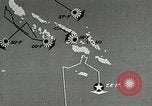
Steps taken by United States Task Forces and Japanese strategy during the Battle of Coral Sea in the Pacific Ocean.
A United States Navy Training Film about the Battle of Coral Sea. Air search conducted by Japanese commandant forces. Commander of 4th fleet analyzes the situation. Duties and work of a commander. Allied and Japanese forces in the Coral Sea. Position of Task Force (TF)-17 support force. Final phase of the battle. Destroyers included in TF-17. Wrong decisions taken by TF 17 discussed. Bombers and torpedoes included in battle. Pilot reports the position of Japanese TF after an air search. Air group in flight. Fighter planes and divers included in the battle. Torpedoes and guns fire at enemy airplanes. Increased air fighter group which includes air patrol group from New York. Time and radar showing the position of TF. Position of TF17's support group. Bombers encounter TF-17 support group. Flight of Australian planes and Japanese counter attack.
CRITICALPAST.COM: About Us | Contact Us | FAQs - How to Order | License Agreement | My Account | My Lightboxes | Shopping Cart | Advanced Search | Featured Collections | Website Terms & Conditions | Privacy Policy ©2026 CriticalPast LLC.
License Agreement |
Terms & Conditions |
Privacy Policy
©2026 CriticalPast LLC.