


 Francais
 Deutsch
 Italiano
Refine Your Search
M4-training stock footage and images
- Showing 7033 to 7038 of 8218 results more
more Hide
Hide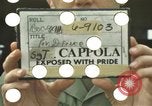
A man of United States Air Force Security Police in a jeep passes through a perimeter area at Tan Son Nhut Air Base in Vietnam.
Activities of members of USAF (United States Air Force) SP (Security Police) in providing perimeter defense for Tan Son Nhut Air Base in Vietnam during the Vietnam War. Interiors of a bunker in the perimeter area shows faces of SPs and muzzles of a .50 caliber machine gun and an M-60 machine gun. An SP in a moving jeep scans the perimeter area. Bunkers and barbed wire as seen from the moving jeep. U.S. MIM-23 Hawk missile site as seen through barbed wires.
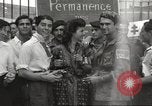
The leader of the FFI Marc Rainaut talks with a female member of the FFI and a U.S. soldier in Saint Tropez, France.
U.S. soldiers talk with French partisans in Saint-Tropez, France during World War II. The leader of the FFI (French Forces of the Interior) M. Marc Rainaut and Mme. Nicole Celebonovitch, a member of the FFI converse with U.S. Pvt (Private) Winifred D. Eason (Atlanta, Georgia) of the 509th Parachute Battalion, whose life was saved by the partisans.
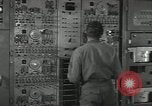
Excerpt from film citing advances in technology enhancing U.S. armed forces
U.S. Army soldier technician, wearing headset, monitors a battery of instruments and recordin devices. A soldier operates a television camera with "Signal Corps Television" written on its side, as it records field operation of a Landing Vehicle Tracked (LVT) and an M47 (Patton II) medium tank. View of images being transmitted and received at headquarters. View of a military aircraft releasing an air-to air missile. It tracks and strikes a drone target aircraft that explodes and falls in flames.
United States Army Parachute Team demonstrates sky diving techniques
Portion of film titled: 'The Big Picture' about the U.S. Army Parachute Team. Captain James M. Perry, Commander of the team, explains that, as an Agency of the Continental Army Command, the Team represents the Army in Sports Parachute Competition (AKA Skydiving). He talks about the achievements of U.S. Army parachute team. He states that the team has represented the country in International Sports Parachute competitions. He discusses history of the parachute, showing a model of earliest parachute design attributed to Leonardo Da Vinci, noting it was never tested. At a blackboard, he points out illustration of a parachute used successfully by French balloonist, Andre Jacques Garnerin in 1797. He notes that Benjamin Franklin witnessed that event and was influenced to conceive the idea of its military use. Change of scene shows Captain Perry reviewing the members of the Army Parachute Team on the tarmac in front of a C-123 aircraft, which they then board by way of the rear cargo ramp. View of the team inside the aircraft cabin. At altitude, team members exit via the rear cargo door and sky dive toward earth. They execute maneuvers, including some in formation while in free-fall. Smoke seen from smoke grenades as they descend. The team members open their chutes at just above the 2200 foot altitude, and maneuver their checkered chutes to precise landings.

History of U.S. Army 3rd Infantry Division and its role in the Korean War.
Sergeant Stuart Queen of the U.S. Army introduces a film about the 3rd Infantry Division. He turns to Audie Murphy, the most combat decorated soldier of World War 2, seated beside him, who is now a film star, but still active as a Captain in the 36th Infantry Division of the Texas National Guard. Captain Murphy speaks about the U.S. 3rd Infantry Division. View of the Division parading for the Joint Chiefs of Staff, at Fort Benning Georgia, in Summer, 1949. Animated map shows Korea and surrounding countries of China and Japan, on June 25, 1950. View zooms in on the 38th parallel marking separation of North and South Korea. Views of North Korean troops moving against South Korea. Buildings being blown up. Armed troops of the People's Army of North Korea prodding civilians out of their homes. South Korean troops riding in an American-provided army truck, join others organizing to resist the invaders. South Korean troops in battle gear preparing to engage the North Koreans. Next, as part of United Nations response to the North Korean aggression, elements of the U.S. 3rd Infantry Division are seen arriving in November, 1950, and deploying along the East Coast of the Korean peninsula, to engage the North Korean army along its left flank. Battery of American M114 155 mm howitzers firing. American troops advancing along muddy road in snowy environment in December, 1950. Entry of Chinese forces into the conflict causes Americans to assume a defensive posture. Korean troops preparing to move elswhere.Smoke rising from battles in the background. Views of American defensive positions on the perimeter of the coastal city of Hungnam, to cover the withdrawal of units and equipment the U.S. 10th Corps, seen entering landing craft from the USS Montague (AKA-98) for evacuation from the beachhead
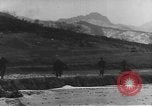
U.S. 8th Army forces battle their way to Seoul during the Korean War. Lieutenant General Ridgeway takes command.
Operations of United States troops in Korea during the Korean War. U.S. soldiers advance towards a battlefield. Smoke from firing and bombardment on the battlefield. Wrecked equipment and rubble on the ground. Prisoners of war are questioned by a soldier. Tanks advance on the battlefield and soldiers fire rifles. Mountains in the foreground. American forces enter the capital city of Seoul and set up a 155mm howitzer next to Government-General of Chōsen Building (also called the Japanese General Government Building or the Seoul Building, built by the Japanese in 1926). View of the sandbagged howitzer firing at North Korean targets. An aerial view of the battlefield. U.S. Army Lieutenant General General B. Matthew Ridgway, newly appointed Commanding General of the U.S. Eighth Army, arrives on a U.S. C-54 transport plane, to assume command in Seoul. As he steps from the plane, he is greeted by Major General William M. Hogen and another officer.
CRITICALPAST.COM: About Us | Contact Us | FAQs - How to Order | License Agreement | My Account | My Lightboxes | Shopping Cart | Advanced Search | Featured Collections | Website Terms & Conditions | Privacy Policy ©2026 CriticalPast LLC.
License Agreement |
Terms & Conditions |
Privacy Policy
©2026 CriticalPast LLC.