


 Francais
 Deutsch
 Italiano
Refine Your Search
M4-training stock footage and images
- Showing 7447 to 7452 of 8218 results more
more Hide
Hide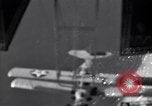
Consolidated N2Y-1 airplane flies under and tries to hook on to USS Akron at Lakehurst, New Jersey, United States.
Consolidated N2Y-1 airplane tries to hook-on to USS Akron (ZRS-4) Zeppelin dirigible at Lakehurst, New Jersey in the United States. USS Akron in flight. The Consolidated N2Y-1 flies under the airship and maneuvers in attempts to hook on to the USS Akron.
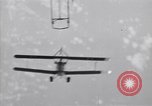
Consolidated N2Y-1 airplane flies under the USS Akron, in flight, and attempts to hook on to it.
Consolidated N2Y-1airplane tries to hook-on to USS Akron (ZRS-4) Zeppelin Dirigible, at Lakehurst, New Jersey, United States. USS Akron in flight. Consolidated N2Y-1makes repeated attempts to hook on to USS Akron. A Consolidated N2Y-1 hooks onto the airship and releases. Another succeeds in hooking to and releasing from the Akron.
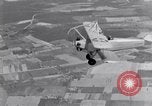
U.S. Navy pilots, in Consolidated N2Y-1aircraft, practice hooking up to the USS Akron in flight
Maneuvers of the USS Akron (ZRS-4), helium filled airship off the Jersey Coast in the United States. A Consolidated N2Y-1, with trapeze hookup equipment, in flight. The plane is released from a trapeze on the USS Akron. The airship in flight. An aircraft hooked to trapeze on the USS Akron. Another plane follows the USS Akron. The USS Akron with a plane hooked onto the trapeze. Another plane follows directly beneath it. Structure of the USS Akron in flight.
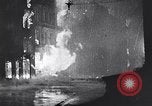
Churches on fire and water is pumped from the river Thames to fight fires in London, England during Nazi blitz in World War II.
The work of London's fire guards during a German blitzkrieg incendiary bomb raid in Britain during World War II. Bombs fall and fire breaks out at night. Nighttime views following the Luftwaffe attack. London buildings and churches are on fire. St. Lawrence Jewry Church (Guildhall Yard, London EC2V 5AA, United Kingdom) on Gresham Street, designed by Christopher Wren, in ruins. Views of damage to St. Brides Church (Fleet St, London EC4Y 8AU, United Kingdom) on Fleet Street. Firemen spray water on the buildings and churches. Firefighters team up to connect 6,000 feet of 3 1/2-inch firehose from fire boats in the Thames River, to reach burning buildings of London. Firemen seen in relay lines connecting fire hoses and working to extinguish blazing fires.
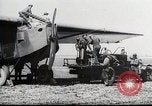
Various historic aircraft, and a map shows the future commercial air routes of the world.
History and development of aviation in the United States and elsewhere in the world in the early 20th century.Ground crew fueling a German made Fokker T-2 airplane from gasoline cans. Lieutenants Oakley Kelly and John Macready, in 1923, standing by their Fokker T-2 aircraft, upon which is painted: "Army Air Services, Non Stop, Coast to Coast." Fokker T-2 airplane taking off. Army officers looking at several biplanes parked, without propellers. A JN-4H (Jenny) airplane in flight. American military engineers or Seabees building an airfield in the Pacific during World War 2. B-25 aircraft sits in middle of construction activity. Crew under a C-47 in snow in the Arctic. A map shows the future commercial air routes of the world.
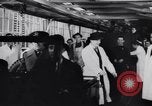
Ford Motor Company delivers first of 1500 jeeps to the U.S. Army in World War II
Opening scene shows U.S. Army Brigadier General Charles H. Bonesteel, Commander of the VI Corps Area, seated in a new jeep with Ford Motor Company President, Edsel Ford, at the wheel in a Ford Motor Company factory in during World War 2. This jeep is the first in an order for 1500 jeeps being delivered by Ford to the U.S. Army. Ford Company executives in business suits, covered by white lab coats are in the background, along with regular factory workers. One executive signals for the jeep to be moved ahead, out of the factory. Next, the film shows jeeps being demonstrated at the Ford Motor testing ground. Army officers and Ford Company executives line a ridge overlooking the test ground as drivers take several jeeps through their paces in demanding circumstances. Scene shifts to Fort Benning, Georgia, where jeeps of the Army's 4th Division are seen driving along a dirt road towing small field artillery pieces. Several are also seen driving (without artillery pieces) through dense woods and other obstacles at the Army base.
CRITICALPAST.COM: About Us | Contact Us | FAQs - How to Order | License Agreement | My Account | My Lightboxes | Shopping Cart | Advanced Search | Featured Collections | Website Terms & Conditions | Privacy Policy ©2026 CriticalPast LLC.
License Agreement |
Terms & Conditions |
Privacy Policy
©2026 CriticalPast LLC.